

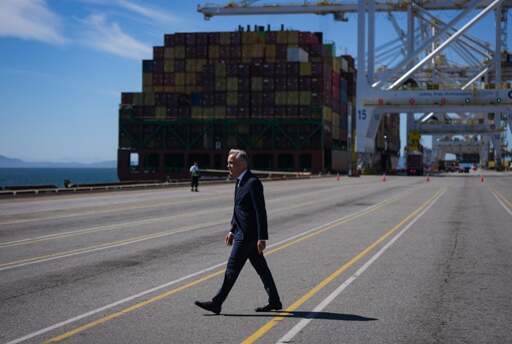
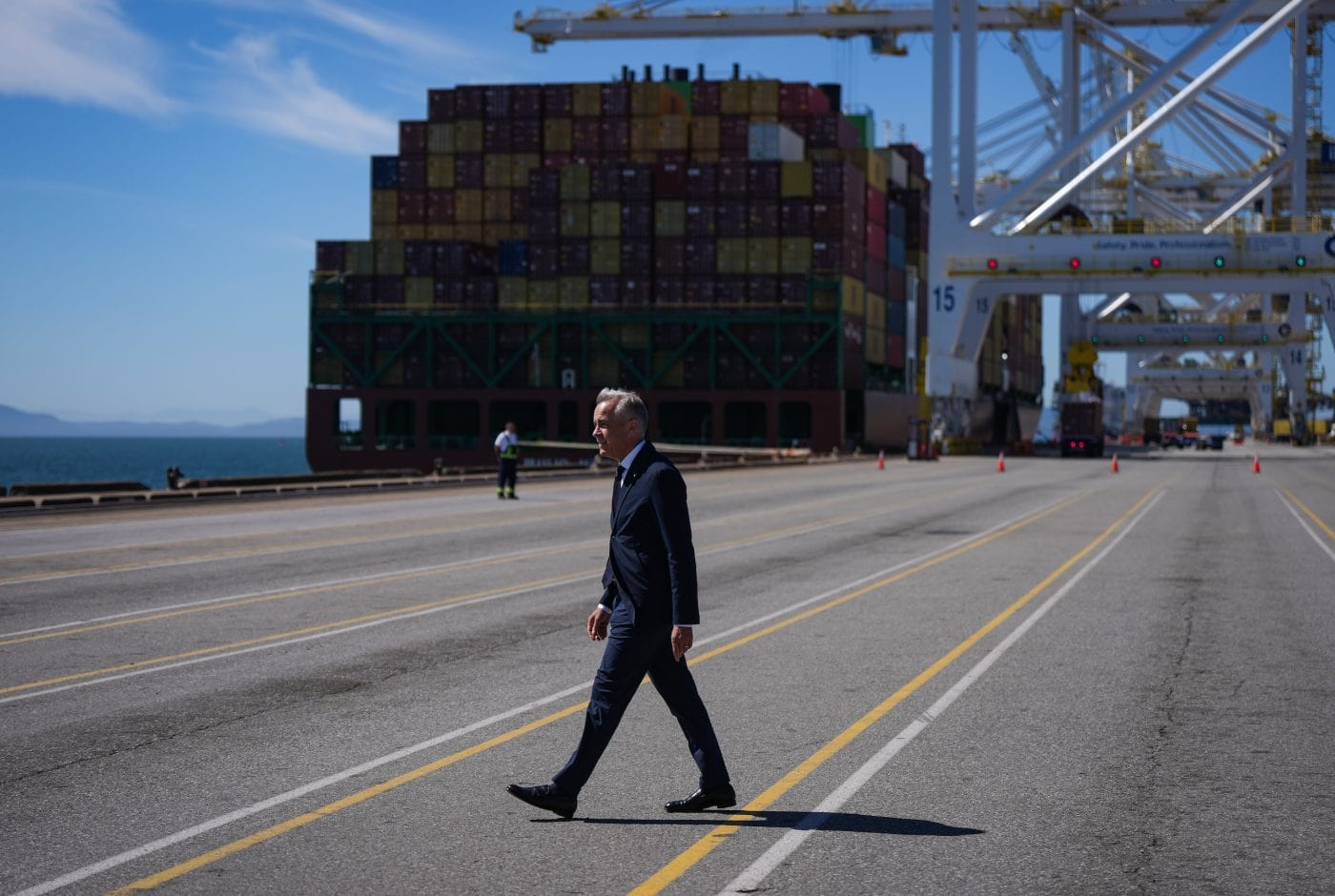
Photo: Darryl Dyck / The Canadian Press
When Senator Michèle Audette questioned the Canadian government over its latest plan to fast-track industrial projects, she started by speaking in Innu-Aimun.
For the senator, an Indigenous women’s rights advocate who was a commissioner in the National Inquiry into Missing and Murdered Indigenous Women and Girls, speaking the language was a way to centre her Innu community’s past, as Canada tries to shape its future.
“It was to remind, in that important space, that there was a moment when the government had tried to erase us through legislation and policies,” Sen. Audette, who comes from the First Nation of Innu Takuaikan Uashat Mak Mani-Utenam in eastern Quebec, told The Narwhal in an interview.
The people she was reminding were a trio of federal ministers who had appeared at a special Senate hearing on Oct. 6 to answer questions about Prime Minister Mark Carney’s Bill C-39, the Building Canada Strong Act.
The 243-page omnibus bill is the latest step in the government’s controversial reshaping of how major projects are scrutinized and approved in Canada. Major projects are things like mines, ports or pipelines, and can affect everything from watersheds to wildlife and can lead to changes in greenhouse gas emissions and public health.
Among other changes, the bill would centralize many Indigenous consultations under a new hub within the Impact Assessment Agency of Canada, limit environmental assessments of all projects subject to federal reviews to a maximum of one year, and consolidate all required permits into a single decision issued by a single minister after consulting with colleagues.
It would also let projects inside designated zones, deemed “regions of national interest,” bypass normal approval processes, allowing some to start before the assessment is complete and empowering the government to change or remove conditions that have already been imposed on a project.
Carney’s government has said the bill is a response to complaints from workers, investors, communities and Indigenous groups that approval processes are too slow. It said new legislation is needed to get federal authorities to work together more effectively, so big projects are built faster.
“This in no way reduces our responsibility to assess projects against environmental standards or to fulfill our obligations to Indigenous Peoples,” Privy Council president Dominic LeBlanc, who is responsible for the government’s major projects and free trade push, told the senators.
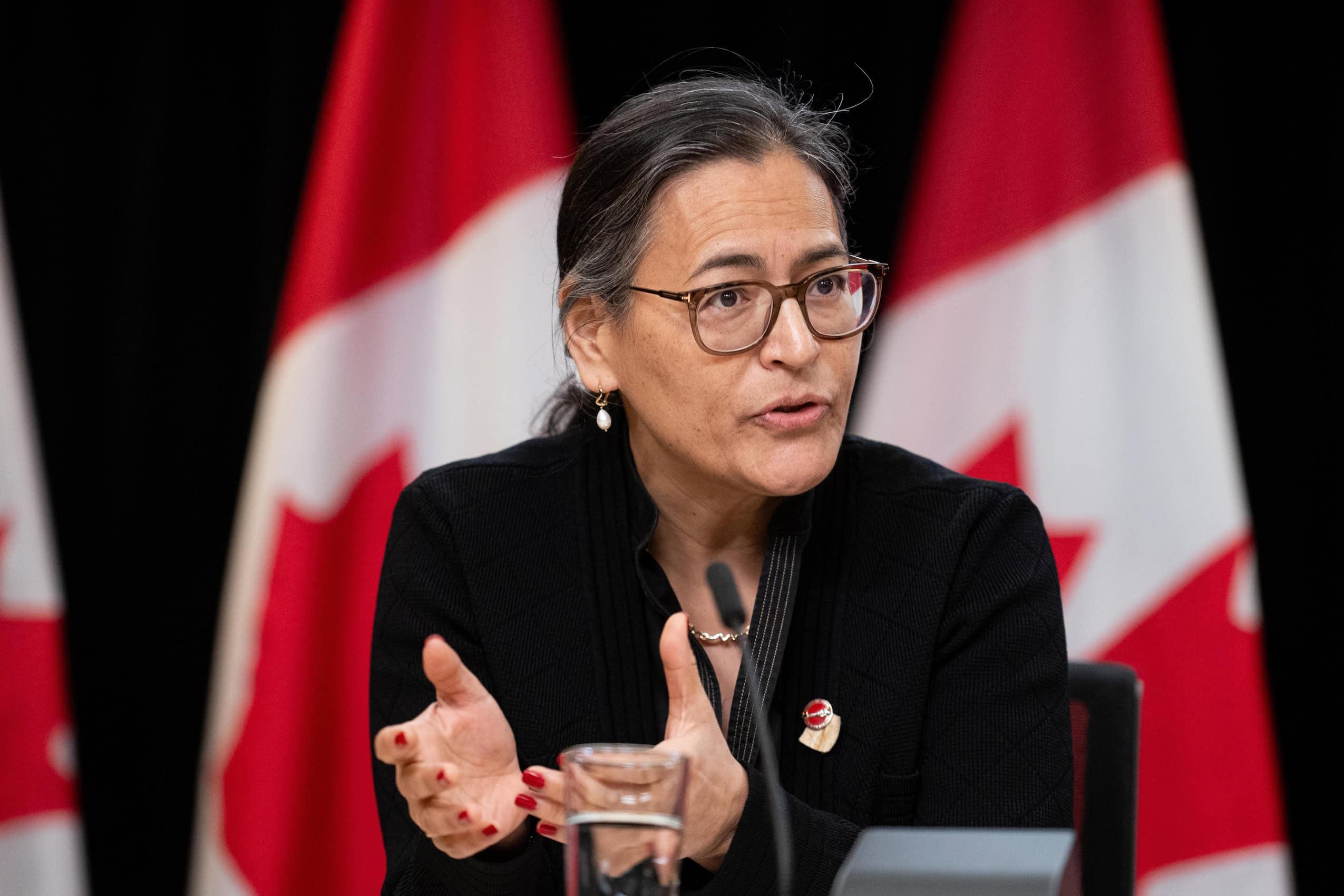
Senator Michèle Audette asked the government if its examination of “regions of national interest” would include not only directly affected Indigenous Peoples but also those “upstream and downstream who will feel the environmental, social and economic impacts.” Photo: Spencer Colby / The Canadian Press
But a wide swath of Indigenous leadership across the country has united in opposition to what they perceive as the bill’s infringement on the constitutional rights that guarantee an ability to influence decisions that affect their territories.
Many have also recoiled at the majority government’s hurry to transform its bill into law before the end of the year. Special committees in the House of Commons and Senate have been set up to examine the bill simultaneously, instead of the standard procedure where committees at each level take up a bill in succession.
“Prime Minister Carney is weaponizing the parliamentary process and his majority to force the bill through Parliament [and] override the inherent, Treaty and constitutionally protected rights of First Nations,” a joint statement from the Chiefs of Ontario, the British Columbia Assembly of First Nations, the Assembly of First Nations Quebec-Labrador and the Nishnawbe Aski Nation of northern Ontario said on Oct. 8.
“This extraordinary maneuver has one purpose: to push the most consequential economic legislation in a generation through Parliament before First Nations, or anyone else, can meaningfully scrutinize it. It is fundamentally antidemocratic.”
Senator questions Bill C-39’s introduction of ‘regions of national interest’
The Carney government has given itself broad discretion to determine what exactly is in the “national interest.”
Last year’s Building Canada Act, which first established this special designation for projects, laid out different elements the government “may consider” when determining “national interest” status.
These are: Canada’s autonomy, resilience and security; the economic or other benefits to the country, the likelihood of the project’s success, how it advances Indigenous interests and how it contributes to clean growth or tackling climate change. But the government also allowed itself to consider “any factor” it deemed relevant, and these elements are not required to all be met as a prerequisite to projects being given the “national interest” designation.
In fact, the first project the Carney government listed was the West Coast Oil pipeline, now named Pacific Link, which the Canadian Climate Institute expects will usher in 20 million tonnes per year of new greenhouse gas emissions — not exactly the type of project that tackles climate change. Meanwhile, the Institute for Energy Economics and Financial Analysis has said the economics of the pipeline are also debatable.
The new bill extends the same set of broad parameters and discretion to determining “regions of national interest.”
As she questioned the federal ministers who had come to answer questions on Bill C-39, Sen. Audette asked if their examination of these regions would include “not only the Indigenous Peoples who are directly affected by the projects but also those upstream and downstream who will feel the environmental, social and economic impacts.”
She told The Narwhal she is concerned the bill may frame Indigenous consultations over these zones as primarily being related to development. Some First Nations’ traditional territories cover vast areas and may overlap with the zones, for instance, even if their actual reserves may not.
“They’ll say, ‘Oh, there’s no First Nation, there’s no reserve on that road,’ but go back before it became Canada, we were there,” she said. “We are still there. We never surrendered.”
The government has said “national interest” regions could be anything from an industrial area to one earmarked for “energy production” or a telecommunications network. The label could even be applied without a specific project in mind, but for “future development needs.”
It said it would first carry out a regional assessment to consider cumulative impacts of development in the area, which would include Indigenous consultations, before designating a zone.
“We don’t want to be a third party or a stakeholder,” Sen. Audette said. “Even if you don’t see a reserve, we are involved, and we want to make sure that what you do, we are at the same level, on the same page.”
In his response to the senator on Oct. 6, Transport Minister Steven MacKinnon, who is also the bill’s sponsor, said First Nations would be involved “at the very beginning of the process, from the conception stage onwards.” He also said he and LeBlanc have already “experienced a lot of very positive feedback from rights holders” about the government’s new approval process for projects.
Canada’s environmental standards and shortened timelines for project approvals questioned by senators
Senator Suze Youance, a civil engineer, told the federal ministers she felt Bill C-39’s shortening of approval timelines was “causing a lot of concern among environmental groups and for certain communities.”
She asked whether the government had considered changing its proposed process “in order to find an acceptable middle ground between economic haste and environmental prudence.”
LeBlanc responded, “The way we reconcile those priorities is reflected in our commitment to act rigorously and in the fact that environmental standards have not changed, nor have our responsibilities toward Indigenous Rights holders.”
Senator Rosa Galvez, an expert on pollution and health who introduced legislation to align the financial sector with climate objectives, said that while Canada has been slow at building some projects, the reason “was not always because of environmental concerns or Indigenous Peoples’ rights. It was also due to a lack of investment.”
She said, during some previous nation-building moments in Canada’s history, reforms that were meant to simplify the regulatory process actually “brought new forms of fragmentation.”
“How will scientific independence be maintained when a specialized regulator assumes greater responsibility for environmental reviews?” she asked.
LeBlanc said the responsibility around oversight evaluation was not being diminished and that the regulators that are responsible will still work with other federal, provincial and independent agencies, and include public consultations.
“The public participation process under any of these agencies doing these reviews has not been changed,” LeBlanc said. “Public participation remains.”
The Narwhal’s reporters are telling environment stories you won’t read about anywhere else. Stay in the loop by signing up for our free weekly dose of independent journalism.
From The Narwhal | News on Climate Change, Environmental Issues in Canada via This RSS Feed.