

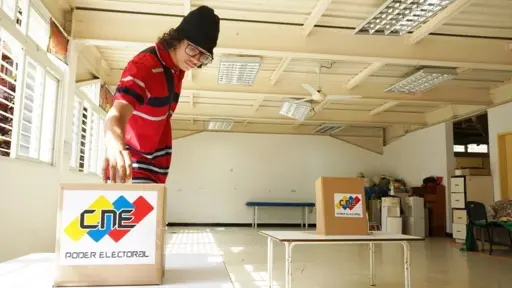
Caracas (OrinocoTribune.com)—Venezuelans voted this Sunday, October 18, in the second National Popular Consultation of 2026, selecting community projects for direct public financing across 5,418 communes and communal circuits. The process gives organized communities responsibility for deciding local investment priorities and carrying out the selected works, advancing communal self-government within the Chavista project.
The consultation is the eighth held nationally since 2024. Before voting day, residents discussed their communities’ needs in assemblies and selected proposals covering water supply, electricity, school and healthcare facilities, roads, agriculture, and other productive activities. Nationwide, 37,205 communal proposals were submitted, alongside 428 projects from condominium boards participating formally for the first time.
From earthquake response to renewed consultation
Following the first consultation of 2026 on March 8, a second vote was initially scheduled for July 12. However, the communes requested its postponement after the June 24 earthquakes. Venezuelan authorities redirected the resources allocated for that consultation toward assistance and housing reconstruction for affected families. The vote was subsequently rescheduled for October.
The preparation involved 48,086 communal councils, whose assemblies established the priorities submitted to residents. This organization connects the identification of a problem with a proposal, a community vote, and direct financing for its execution, rather than leaving local investment decisions exclusively to administrative offices.
On Wednesday, October 14, Venezuela submitted its proposed national budget to the National Assembly. According to Planning Minister Ricardo Menéndez, the proposal draws on the Concrete Action Agendas developed by grassroots organizations. These territorial diagnoses identify needs that also inform national spending priorities.
On Friday, October 16, Acting President Delcy Rodríguez visited the Villa Zoila commune’s mission base in Caracas’ Cota 905 neighborhood. She emphasized that the budget for the coming fiscal year incorporates proposals developed through communes and other community organizations, and called on residents to participate in Sunday’s vote and ensure the proper use of public resources.
During that visit, Rodríguez reported that water-related proposals accounted for approximately 14% of the projects submitted. Other priorities included roads, street lighting, electricity, and productive activities. The proposals address everyday needs identified by residents themselves, including repairs to water systems, schools, and community healthcare facilities.
On Saturday, October 17, United Socialist Party of Venezuela (PSUV) General Secretary Diosdado Cabello renewed his call for participation. He described the consultation as a demonstration that “the Bolivarian Revolution continues with its methods, with its own policies, and always alongside the people.” His message emphasized Venezuela’s right to develop its own political institutions through grassroots organization and the transfer of decision-making power to communes.
Sunday’s vote expands participation
For Sunday’s consultation, 11,495 voting centers were enabled nationwide, with technical support from the National Electoral Council (CNE). Residents aged 15 and older could participate by presenting their identity card. The procedure consisted of identifying themselves, selecting a project on the ballot, depositing it in the ballot box, and signing the voting register. Centers were to remain open while voters remained in line.
The inclusion of condominium boards extended the process to additional apartment buildings and residential communities. Minister Menéndez explained that their proposals include needs such as elevator repairs and roof waterproofing, connecting these organizations with public planning and the industrial capacity required to undertake the work.
Official reports also documented participation by Indigenous communities in Amazonas, including Manapiare and remote settlements. In La Guaira, residents in 80 communes chose among 522 proposals, primarily concerning public services, social infrastructure, and roads. Meanwhile, Telesur reported that two new Indigenous communes associated with Guayana Esequiba joined the consultation for the first time.
Speaking from Lara state on Sunday, Ángel Prado, who heads the communes portfolio, confirmed that each commune or communal circuit would select one priority project. He said the proposals had already been debated in assemblies and that residents would decide which should receive financing.
Venezuela: 5,418 Communes to Vote on 37,205 Projects in National Popular Consultation
Prado announced that financing would begin on Monday, October 19, with communities expected to execute the selected works during the final quarter of the year. The next stage therefore places responsibility on both Venezuelan institutions and organized residents: transferring the funds and completing the projects approved through the vote.
Photo gallery
Photos by Telesur, Ministry for Communes, VTV, Ciudad VLC, and Globovision.


Special for Orinoco Tribune by staff
OT/JRE/XX
From Orinoco Tribune via This RSS Feed.