

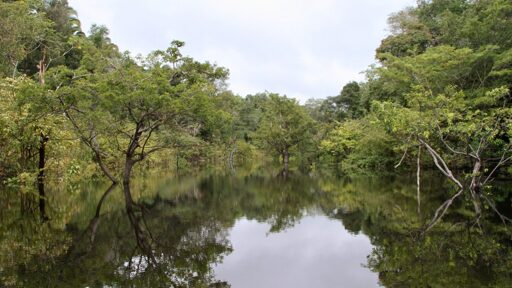
Every year, Amazonian rivers spill over their banks and flood the forests around them for months. These wetlands cover around 30% of the Brazilian Amazon and are often home to riverine families, who live in adapted homes built on stilts. They fish and plant crops with the natural ebb and flow of the rivers. But a new study has found that more than 6% of the total area of Amazon floodplain forests and other wetland areas has been cleared over the last 40 years. Nearly a third of that destruction occurred between 2015 and 2024. “When we think about 6%, we may get the impression that it’s small, but the converted area is basically the size of Belgium,” lead author Guilherme Lobo, a researcher at the State University of Campinas in Brazil, told Mongabay by phone. Researchers compared wetland clearing across 13 types of land designations and found huge differences. Public land not yet assigned by the government to any specific use had the largest share of human-converted wetland: a median of nearly 14% had been deforested. According to Lobo, people burn these lands to show they’re in use, hoping to claim a land title later. According to a 2026 study by Imazon, a Brazil-based research institute, federal and state land laws create incentives for such land-grabbing practices, locally called grilagem. Undesignated public land is routinely granted to the people who clear it, with deforestation used as proof of the productive use of the land to justify the land title…This article was originally published on Mongabay
From Conservation news via This RSS Feed.