

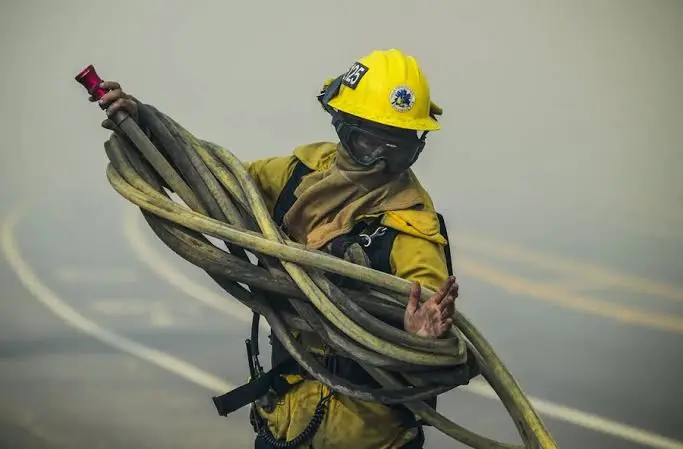
Wainwright explosion at a Canadian military base kills at least seven and injures dozens as officials rule out terrorism and investigate the deadly fire.
Related: Carney Warns Against External Attempts to Divide Canada
Wainwright Explosion Kills at Least Seven at Canadian Base
The Wainwright explosion at Canadian Forces Base Wainwright in Alberta has left at least seven people dead and dozens injured, according to reports by CBC News and Global News.
The incident occurred on Saturday, October 17, during a live-fire training exercise at the military base, located approximately 200 kilometers southeast of Edmonton.
Canada’s Department of National Defence confirmed that a fire broke out in the training area at approximately 4:00 p.m. local time. The Canadian Armed Forces said the blaze resulted in fatalities and injuries but has not yet released an official casualty count.
Military sources cited by Canadian media said the explosion occurred when a munition used during the training exercise struck a natural gas line or gas well.
The impact reportedly triggered a large detonation and a fast-moving fire that spread beyond the boundaries of the training area.
High winds, with gusts reaching up to 100 kilometers per hour, helped the flames spread rapidly through dry grassland and nearby rural areas.
The Canadian Armed Forces said emergency responders from military and civilian agencies worked quickly to contain the fire and assist those affected.
By Saturday evening, the Municipal District of Wainwright said the fire was being held and that property and critical infrastructure had been protected. Authorities did not order an evacuation of residents in the surrounding area.
The Department of National Defence said the full extent of the impact remains under assessment. It added that casualty details will not be released until relatives have been notified.
The government has ruled out terrorism as a possible cause. Officials said there were no indications that the explosion was connected to an attack or deliberate act of violence.
The incident has nevertheless prompted a major investigation involving the Canadian Armed Forces, the Department of National Defence and the Royal Canadian Mounted Police.
🔥🇨🇦 Un “incidente grave” provocó un gran incendio en la base militar canadiense de Wainwright, Alberta.#teleSUR #Canadá pic.twitter.com/y9jylOuH7P
— teleSUR TV (@teleSURtv) October 18, 2026
Wainwright Explosion Triggers Major Emergency Response
Canadian Armed Forces statement | Alberta Health Services
The Wainwright explosion activated emergency protocols across hospitals in the Edmonton region.
Local health authorities declared a code orange alert, a designation used for external disasters or mass-casualty incidents.
Injured personnel were transported to hospitals including the University of Alberta Hospital and the Royal Alexandra Hospital in Edmonton.
Medical teams prepared for a large number of patients with burns, trauma injuries and respiratory problems caused by smoke and toxic gases.
Firefighters faced difficult conditions because the fire involved both explosive material and hydrocarbon infrastructure.
The combination of live ammunition, natural gas and dry vegetation created a complex emergency that required coordination among military firefighters, civilian fire departments and specialized rescue teams.
Strong winds made the fire difficult to control and increased the risk that flames could spread to nearby communities.
Authorities asked residents to avoid the area so that emergency vehicles could move freely and rescue operations could continue without obstruction.
The Wainwright area is home to one of Canada’s largest military training facilities. The base is used for live-fire exercises involving tanks, artillery, infantry units and other military equipment.
CFB Wainwright is also an important NATO training site. Allied forces from several countries use the installation for exercises designed to improve interoperability and combat readiness.
The base covers a vast rural area and includes training ranges, administrative facilities, housing and support infrastructure.
The explosion occurred during a routine training exercise, according to the Department of National Defence. Officials have not identified the unit involved or the type of munition used.
Investigators will need to determine whether the incident resulted from an error in targeting, a malfunction in the munition, inadequate safety procedures or an unexpected hazard related to the gas infrastructure.
The Canadian Armed Forces said the immediate priority is supporting those affected and notifying their families.
The names of the victims have not been released. Officials said identification and notification procedures are ongoing.
Prime Minister Mark Carney confirmed on Sunday that four service members had died. He said dozens more were seriously injured and described the fire as one of the worst peacetime tragedies affecting Canada’s military on domestic soil.
“Our thoughts are with all the brave women and men affected,” Carney said.
The prime minister said his government was working closely with the Government of Alberta and local authorities.
He added that he and Alberta Premier Danielle Smith were in close contact, along with their respective ministers and relevant officials.
Defence Minister David McGuinty traveled to Edmonton on Sunday to monitor the investigation. He said the situation remained “very active and delicate.”
McGuinty said the Royal Canadian Mounted Police were participating in the investigation and that authorities would provide further information once the facts had been established.
🇨🇦 Al menos siete muertos y decenas de heridos dejó una explosión e incendio en la base militar CBF Wainwright en Alberta. #teleSUR #Canada pic.twitter.com/tSvGpCS0Bi
— teleSUR TV (@teleSURtv) October 18, 2026
Canada Investigates Military Training Safety
Canadian Armed Forces | Royal Canadian Mounted Police
The Wainwright explosion has raised questions about safety procedures during live-fire exercises at military bases.
Live-fire training is essential for preparing soldiers for combat operations, but it also carries significant risks when it takes place near explosive or flammable infrastructure.
Military authorities regularly conduct risk assessments before exercises to identify hazards, establish safety zones and coordinate emergency responses.
Investigators will examine whether those procedures were followed and whether the presence of gas infrastructure near the training area was properly identified.
They will also review weather conditions, ammunition handling, communication between units and the response of emergency teams.
The investigation could lead to changes in training protocols, safety distances, mapping procedures or the coordination between military and civilian authorities.
The incident occurred during a period when Canada has been increasing military preparedness amid global security tensions.
Canada is a member of NATO and has supported allied operations in Europe and other regions. The country has also increased investment in defense capabilities in response to international instability.
CFB Wainwright plays a central role in that effort because it provides space for large-scale training exercises involving Canadian and allied forces.
The base has hosted soldiers from NATO member states and partner countries. Its facilities allow forces to train in conditions that cannot easily be reproduced at smaller installations.
The explosion could therefore affect training schedules and force readiness in the short term.
Military authorities may suspend certain exercises while investigators examine the site and review safety procedures.
The incident also highlights the risks faced by military personnel during routine operations. Training accidents can occur even when soldiers are not deployed in combat zones.
The Canadian Armed Forces has expressed condolences to the families of those killed and injured.
Officials have asked the public to avoid speculation while the investigation continues. They have also urged people to rely on official statements rather than unverified reports circulating on social media.
Geopolitical Context
The Wainwright explosion has implications for Canada’s military readiness and its role within NATO.
Canada has increased its defense commitments in recent years amid tensions involving Russia, the Middle East and the Indo-Pacific region.
The country has contributed troops, equipment and training resources to NATO operations, while also maintaining a military presence in international missions.
CFB Wainwright is important to those efforts because it allows Canadian and allied forces to conduct large-scale exercises under realistic conditions.
A major accident at the base could affect the planning of future exercises and require additional investment in safety infrastructure.
The incident also highlights the connection between military training and energy infrastructure. Canada is a major producer of oil and natural gas, and many military facilities are located near pipelines, wells and other energy installations.
That proximity creates risks that must be managed through mapping, safety zones and coordination between military authorities and energy companies.
The explosion may prompt a review of those procedures across Canadian military bases.
The tragedy also has domestic political implications. Alberta has been the scene of debates over energy policy, provincial autonomy and Canada’s federal structure.
The incident occurred one day before Albertans voted in a referendum on separation from Canada. The explosion could affect public attention and political discussion in the province.
For now, the government’s priority is to support the victims and determine the cause of the disaster.
The Canadian Armed Forces has said it will release additional information only after families have been notified. Until then, the full human and operational impact of the Wainwright explosion remains under assessment.
From teleSUR English via This RSS Feed.