

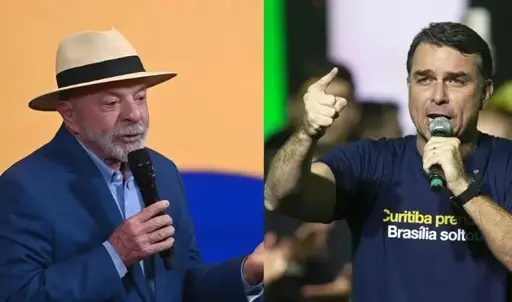
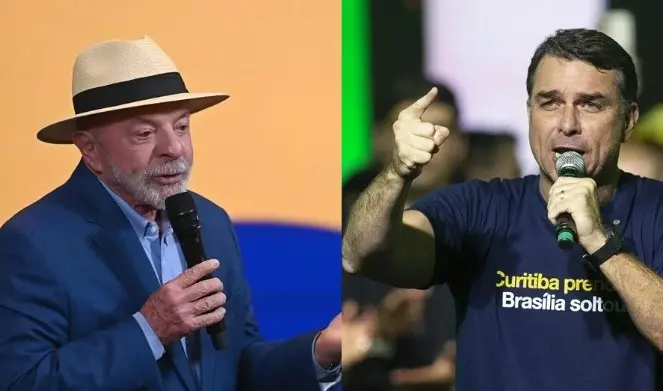
Lula Flávio Bolsonaro debate begins Sunday on Band as both candidates clash over Brazil’s future one week before the October 25 runoff.
Related: Lula Signs Constitutional Amendment Reducing Brazil’s Workweek to 40 Hours
Lula and Flávio Bolsonaro Face Off in First Debate
The Lula Flávio Bolsonaro debate takes place Sunday in São Paulo as Brazil’s presidential runoff enters its final week.
President Luiz Inácio Lula da Silva and Senator Flávio Bolsonaro will meet for the first time in a televised debate promoted by the Band television network.
The encounter is considered a crucial moment in the campaign, which will conclude with the runoff election on October 25.
The debate will be broadcast live from Band’s studios in São Paulo beginning at 8:00 p.m. Brasília time. It is expected to last approximately two hours.
The program will be transmitted through a media pool that includes Band, TV Gazeta, TV Cultura, Jovem Pan and the newspaper O Estado de S. Paulo.
The debate will also be available through BandNews TV, BandNews FM, Bandeirantes radio, Band’s YouTube channel, Band’s website and the BandPlay platform.
The two candidates have avoided a direct confrontation throughout the first round. Their decision to participate in Sunday’s debate therefore marks a significant change in campaign strategy.
During the first round, Lula chose not to participate in televised debates. Instead, he gave interviews to TV Record and the Flow podcast at times that coincided with other candidates’ debate appearances.
Flávio Bolsonaro, meanwhile, had conditioned his participation on Lula’s presence. As a result, the two candidates avoided facing each other directly during the first-round campaign.
The situation changed after both candidates advanced to the runoff. Lula said that debates had become more important because the contest is now one-on-one.
“Now it is important to have television debates, because now it is face to face, now it is one against one,” Lula said.
Flávio Bolsonaro also changed his position after Lula confirmed his attendance. The senator had initially rejected the invitation but later said he would participate.
He publicly challenged Lula on social media, saying that the president had agreed to attend only after Bolsonaro said he would not participate.
“Lula, you are so predictable, aren’t you? As soon as I said I would not go to the debate, the next minute you said you would go. Of course I’m going, I just wanted you to confirm it,” Bolsonaro wrote.
The exchange reflects the high level of tension between the two campaigns as Brazil approaches a closely contested runoff.
Lula Flávio Bolsonaro Debate Format Explained
Band presidential debate rules | Brazil’s Superior Electoral Court
The Lula Flávio Bolsonaro debate will include three main blocks.
The first and third blocks will begin with questions from journalists. The candidates will then have time for direct exchanges, allowing them to question one another, respond to criticism and offer rebuttals.
The second block will also include direct confrontation between the two candidates.
The format gives each candidate freedom to manage their speaking time during the direct exchanges. They may move around the studio, ask questions and respond to their opponent without following a fixed timetable for every intervention.
The format is designed to encourage direct confrontation rather than limiting the candidates to short scripted responses.
Band’s anchors Eduardo Oinegue and Adriana Araújo will moderate the debate and ask questions on behalf of the network.
The questions are expected to cover major policy issues, including the economy, health care, education, public security and social programs.
The candidates will also deliver opening statements and closing remarks. Those moments will allow them to present their main proposals and make direct appeals for votes.
A draw determined the order of responses and the candidates’ positions on stage. Flávio Bolsonaro will stand on the left side of the studio, while Lula will occupy the right side.
The debate will provide the first opportunity for viewers to compare the candidates’ personalities, arguments and responses under pressure.
The encounter is especially important because recent polls have shown a narrowing gap between the two candidates.
A Datafolha survey published on October 10 gave Lula 50 percent of valid votes in a runoff scenario, compared with 50 percent for Flávio Bolsonaro. The result indicated a technical tie.
A Quaest poll published on October 15 showed a similar result, with Lula receiving 49 percent and Bolsonaro 51 percent among valid votes. The difference was within the survey’s margin of error.
Those figures mean that the debate could influence undecided voters and those who may still change their minds.
The candidates will seek to define the terms of the campaign. Lula is expected to defend his government’s economic record, social programs and international diplomacy.
Flávio Bolsonaro is expected to criticize inflation, crime, public spending and the performance of the Workers’ Party government.
The debate may also address Brazil’s international relations, including its position on the war in the Middle East, relations with the United States and cooperation with Latin American countries.
The candidates’ contrasting visions of Brazil are likely to become a central issue. Lula represents a progressive project based on social inclusion, public investment and multilateral diplomacy.
Flávio Bolsonaro represents a conservative project that emphasizes public security, lower taxes, reduced state intervention and closer alignment with right-wing forces.
TV Globo Prepares Final Debate Before Runoff
TV Globo election coverage | Reuters coverage of Brazil’s election
Attention will quickly turn to the second Lula Flávio Bolsonaro debate, scheduled for October 23 on TV Globo.
The final debate will take place in Rio de Janeiro, two days before the runoff vote.
TV Globo is Brazil’s largest television network, and the debate is expected to reach a much larger audience than the Band encounter.
The program will be moderated by journalist César Tralli and broadcast after the network’s main evening news program, Jornal Nacional.
The debate will also be transmitted simultaneously by GloboNews and the G1 news portal. Viewers will be able to follow the event through TV Globo, GloboNews, G1 and Globoplay.
The Globo debate is expected to be the last major televised confrontation before Brazilians vote on October 25.
Both campaigns are still evaluating their final participation, although the event has been formally scheduled by the network.
The debate could be decisive if the race remains close. Candidates may use the final encounter to address undecided voters and reinforce their core messages.
The runoff campaign has been marked by intense mobilization in the streets, social media disputes and accusations between the two camps.
Lula’s supporters have accused Meta platforms of censoring accounts linked to the president, while Bolsonaro’s campaign has promoted claims of government bias and economic mismanagement.
The accusations have increased tensions and made the debates even more important as a space for direct confrontation.
The first-round campaign was marked by a lack of direct debates among the leading candidates. The runoff has changed that dynamic because the election is now limited to two contenders.
The debates give voters a clearer opportunity to evaluate each candidate’s proposals and responses to criticism.
They also allow candidates to correct false statements, challenge their opponents’ records and present their plans for government.
The outcome of the runoff will determine Brazil’s political direction for the next four years. It will also influence the country’s economic policy, environmental agenda and international relations.
Geopolitical Context
The Lula Flávio Bolsonaro debate has implications beyond Brazil because the country is Latin America’s largest economy and a major global agricultural producer.
The election will affect Brazil’s approach to climate policy, the Amazon, trade, regional integration and relations with China, the United States and the European Union.
Lula has promoted a more active role for Brazil in multilateral institutions and has sought closer ties with countries in the Global South.
His government has emphasized cooperation with China, support for regional integration and a diplomatic approach to international conflicts.
Flávio Bolsonaro’s campaign is associated with a more conservative foreign-policy orientation and closer alignment with right-wing governments and movements.
The election will therefore influence debates over Brazil’s role in the world and its relationship with the United States.
The runoff is also taking place amid heightened political polarization. The two campaigns represent competing visions of Brazil’s democracy, economy and social model.
Lula’s supporters see the election as an opportunity to preserve social programs and protect democratic institutions.
Flávio Bolsonaro’s supporters argue that Brazil needs a change in direction to address crime, inflation and economic stagnation.
The debates will provide voters with a final opportunity to compare those visions before casting their ballots.
The first debate on Band and the final encounter on TV Globo could play a decisive role in determining who will govern Brazil after October 25.
From teleSUR English via This RSS Feed.