

Cuba points out that contacts with the United States have not led to a serious dialogue, and denounces that U.S. oil restrictions are exacerbating the energy crisis and affecting the civilian population.
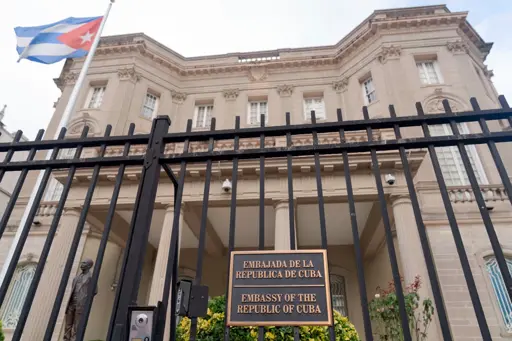
Cuba has stated that, despite recent contacts with Washington, it sees no progress toward a serious dialogue, while denouncing US restrictions on oil supplies as a form of collective punishment against the island’s population. The statement was made by Tanieris Diéguez, deputy chief of mission at the Cuban Embassy in the United States, in an interview with EFE.
Diéguez explained that Havana has maintained contact with the administration of President Donald Trump, but that it perceives no movement toward substantive negotiations. “We truly do not see any progress toward a serious dialogue—which is what we are willing to engage in,” the diplomat stated.
In March, Cuban President Miguel Díaz-Canel confirmed that talks were taking place with the US government. Since then, Washington has pushed for political and economic changes in Cuba.
When asked about potential threats of US military intervention—such as the operation that took place in Caracas—Diéguez noted that Cuba takes any statement from US authorities seriously, given that the United States is the world’s foremost military, nuclear, and economic power.
Nevertheless, she emphasized that Havana considers the defense of its independence to be its highest priority. “Our people will never allow that to be sidelined or subjugated under any circumstances,” she affirmed.
Impact of energy restrictions
The diplomat linked the worsening of Cuba’s energy crisis to the restrictions imposed by Washington on oil supplies—a situation exacerbated following the events in January involving Nicolás Maduro in Venezuela, the island’s primary fuel supplier.
According to Diéguez, fuel shortages and power outages are affecting essential services, including hospital care and surgical procedures. “This is a form of collective punishment; it is entirely contrary to international law and directly harms the Cuban people,” she denounced.
Cuba Accuses US of Blackmailing Countries on UN Vote Against Blockade
The official presented figures attributed to the impact of the situation: infant mortality has reportedly risen to nine deaths per 1,000 live births; 96,500 people are awaiting surgery, and 32,000 pregnant women are waiting for an ultrasound.
Diéguez also rejected US criticisms regarding Cuba’s economic management. “It is not a matter of ineptitude; rather, we have managed to put our scarce resources to work thanks to our organization,” she maintained.
International support
The Cuban representative expressed confidence that the international community will once again support the lifting of the US blockade during the annual vote at the United Nations General Assembly, scheduled for late October.
“Cuba does not feel alone. We have received the support of the vast majority of the international community,” Diéguez stated, noting that for more than three decades, resolutions against the blockade have secured overwhelming majorities.
In 2025, the Cuban-sponsored resolution received 165 votes in favor, seven against, and 12 abstentions in the General Assembly—though the text is non-binding.
Diéguez further asserted that the restrictions also harm US citizens by limiting their access to products from the Cuban biopharmaceutical industry. “Cuba deserves to live in peace,” she concluded.
(Telesur) by HGV/JF
From Orinoco Tribune via This RSS Feed.