

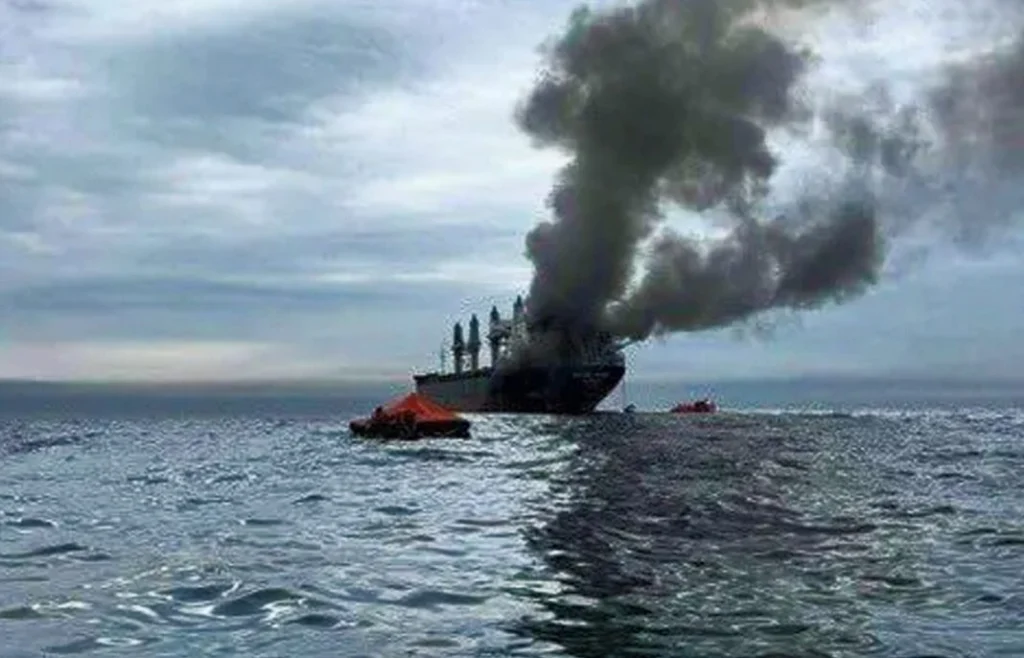
On Saturday, Iranian Revolutionary Guard Corps Navy reported another supertanker caught fire in the Strait of Hormuz after striking a naval mine. The announcement came hours after authorities reported a similar incident in this strategic maritime passage.
RELATED:
Iran Accuses U.S. of Oil Smuggling in Strait of Hormuz
“This morning, a second supertanker, which was navigating in an irregular manner, caught fire violently after colliding with a naval mine,” the military force stated in a release circulated by the Tasnim news agency.
According to Iranian authorities, the vessel was carrying more than two million barrels of crude oil; a powerful explosion occurred in the engine room following the collision, leaving the ship immobilized. The Revolutionary Guard did not identify the tanker’s flag.
The organization claimed that the ship attempted to traverse an unauthorized route after the U.S. military, through deception, induced it to turn off its positioning and radar systems. There is no response from Washington included in the available information regarding these claims.
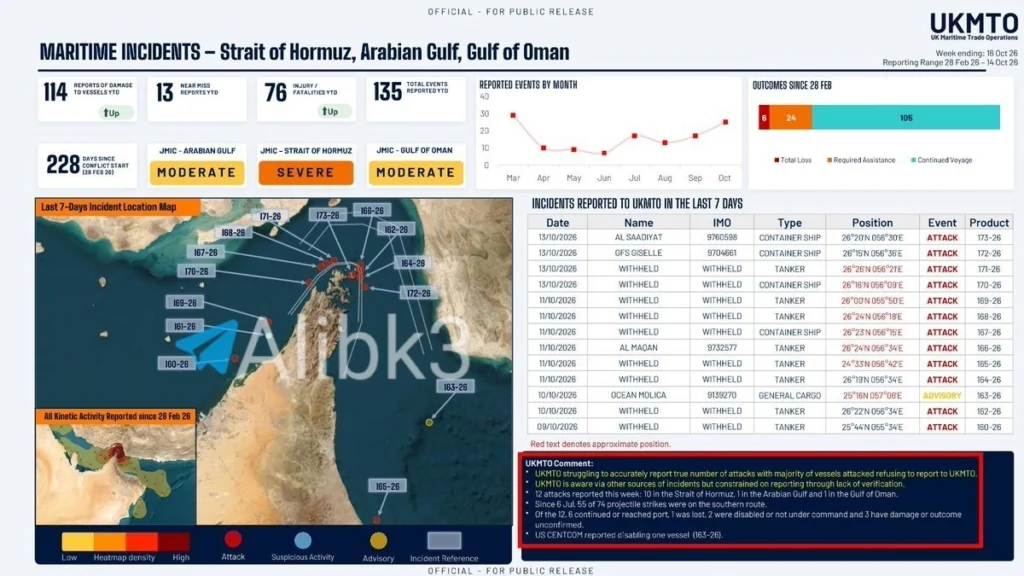
Earlier in the day, Iran had reported a fire on another crude-laden supertanker—also following a collision with a naval mine—while it was navigating with its navigation systems switched off. With this latest incident, Iranian authorities have reported at least six collisions involving vessels and naval mines in and around the Strait of Hormuz over the past week.
The Revolutionary Guard reiterated that the Strait of Hormuz is closed, warning that vessels failing to comply with its navigation rules risk striking naval mines and catching fire. This statement comes as the United States attempts to re-establish maritime transit along a route near Oman.
The Strait of Hormuz is one of the world’s most important energy chokepoints, and any disruption to traffic there can ripple through global oil markets.
A fresh wave of drone attacks on commercial vessels in the Black Sea, an alternative shipping route to the disrupted Strait of Hormuz, is deepening insecurity along the EU’s eastern flank and compounding pressure on a stretched global shipping network.https://t.co/uE3eUcAjWf
— teleSUR English (@telesurenglish) October 16, 2026
From teleSUR English via This RSS Feed.