

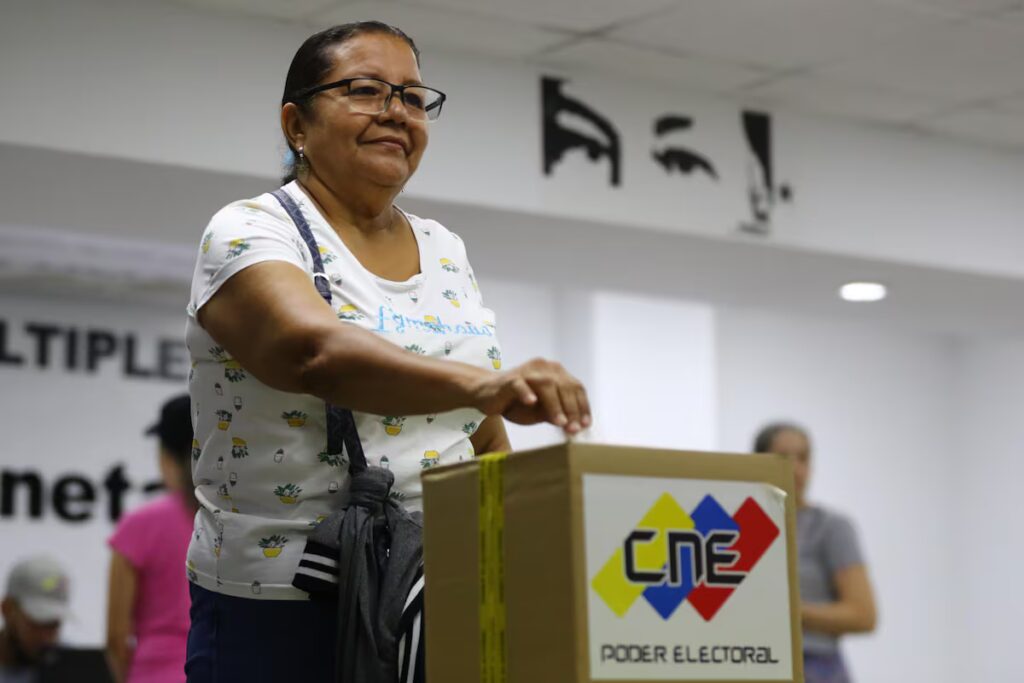
Venezuela holds its Second National Popular Consultation this Sunday with 5,418 communal circuits choosing among over 37,000 locally proposed projects in water, roads, lighting, health and education.
Venezuela will hold its second National Popular Consultation of the year on October 18, in which communes across the country will vote directly on 37,205 budget proposals, with each winning project set to receive an initial $10,000 administered by the community itself.
The vote covers 48,086 communal councils grouped into 5,418 territorial circuits, which the source describes as guaranteeing self-government at the neighborhood level.
RELATED: Venezuela Presents Venezuela Renace Plan Update 100 Days After Earthquakes
To facilitate participation, authorities have set up 11,495 voting centers and 12,769 polling tables nationwide. The process will be guarded by 13,000 members of the Republic Plan security deployment, with operational support from more than 36,000 communal members advised by the National Electoral Council (CNE).
Venezuelans will vote this Sunday on another National Popular Consultation. Each organized community will choose a project, according to local needs, that will receive 10k in state funding. Alongside communes, over 400 condominium boards are also participating pic.twitter.com/ecihlXWs8U
— Venezuelanalysis (@venanalysis) October 16, 2026
What Voters Will Decide
The proposals are tied to the government’s Concrete Action Agenda. The City and Services sector has the largest share, with 19,028 projects focused on water, electricity, roads and hospital infrastructure. The social area has 9,217 initiatives, and the economic sector has 4,887 proposals to boost local production.
Each project chosen by popular vote will receive an initial allocation of $10,000, to be managed and carried out directly by the commune. Institutional spokespeople said earlier editions closed with more than 80% successful executions, thanks to what they called the rigorous application of preventive social oversight.
#NotiMippCI 📰🗞| Servicios públicos lideran las propuestas para la Segunda Consulta Nacional de este domingo
Lea más ⏩ https://t.co/t60Hvhyyy8 pic.twitter.com/7XVGTAxA9X
— Ministerio de Comunicación e Información (@mippci_ven) October 16, 2026
Text reads: “Public services lead the proposals for this Sunday’s Second National Consultation.”
First Condominium Vote
One structural change stands out this year. More than 89 condominiums and horizontal property movements from Aragua, Miranda and the Capital District have joined the process formally. It is the first time these residential boards can put forward priority projects of their own, from elevator repairs to improvements in basic services inside buildings.
In the days before the vote, communes carried out house-to-house outreach to promote the proposals now heading to the ballot. That door-knocking campaign carried each initiative into homes and opened neighbor-to-neighbor debate over territorial priorities.
The Sunday vote will also promote the active participation of young people aged 15 and older, which authorities say favors generational renewal in local public management.
Acting President Delcy Rodríguez, speaking in at the Villa Zoila commune, emphasized that “the people are exercising a protagonistic and participatory form of democracy.”
“We are going to democracy, to participation and to the emotion that always comes with going to an election,” she said.
Rodríguez connected the vote to the delivery of the National Budget before the National Assembly. That spending plan, she explained, is built “from the communes.” Communes and community organizations take part in deciding where resources will be invested, an advance she said Venezuela must preserve.
The second edition of the year confirms the National Popular Consultation has moved beyond an isolated event. It now functions as a recurring mechanism of popular decision, with organized communes as the leading actors in local public spending, as a pillar of participatory democracy in Venezuela.
From teleSUR English via This RSS Feed.