

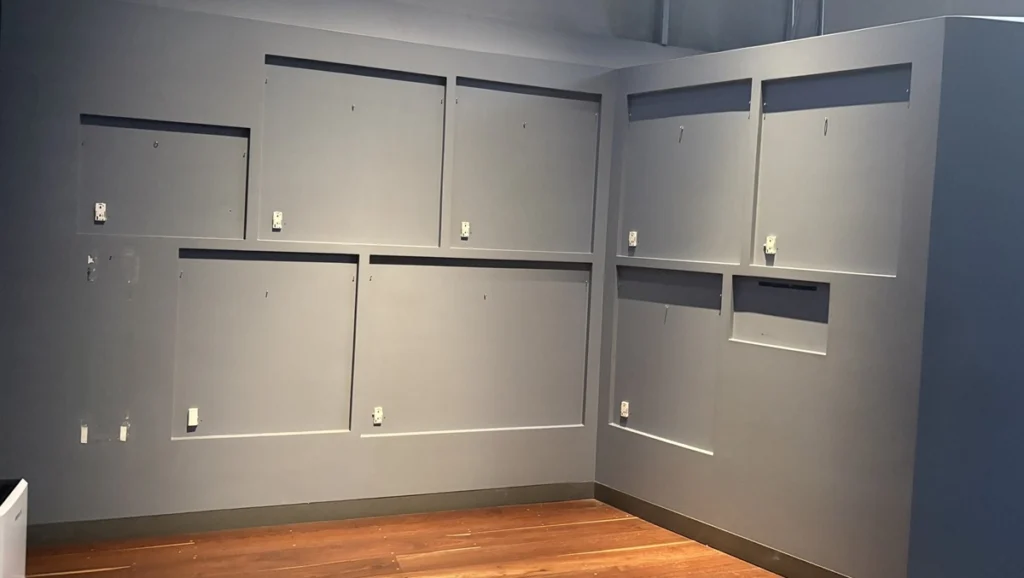
The National Museum Removes Progressive Artworks Calling Them ‘Political Indoctrination.’
On Friday, Colombian Culture Minister Paola Holguin defended the removal of more than 30 artworks related to feminist, LGTBI+ or peace themes from the National Museum in Bogota, arguing that those works are an instrument of political indoctrination.
RELATED:
UN Warns Colombia Protest Decree May Widen Police Use of Force
“The National Museum is one of the most important cultural centers in the country. It is the first institution of its kind in Colombia and one of the oldest in the Americas, whose purpose is to reflect the soul of the Nation.
The National Museum, as part of the State, has the purpose of conserving, restoring, protecting and socializing our culture. Its institutional vocation is not to serve as an instrument of political indoctrination, a focus for the dissemination of biased versions of our history, much less a multiplying medium for the government agenda,” stated the official of the far-right government presided over by Aberlardo de la Espriella.
“The National Museum CANNOT be a space for apologizing for crime or revictimization; it must observe the rights of victims to truth, justice, reparation and non-repetition. The National Museum is a space for all Colombians, which must ensure, among other things, the fundamental rights of children, which are prevalent according to Article 44 of the Constitution, and, therefore, must protect them from access to sensitive material.”
“The museology and curatorship of the different spaces under the Ministry are being evaluated and redesigned to fulfill the mission of safeguarding, researching, conserving and disseminating the cultural, historical and artistic heritage of the Nation, serving as spaces for memory, identity and social transformation,” Holguin concluded.
Las personas LGBTIQ+ no son una ideología que un Gobierno pueda sacar de una pared. Son parte de Colombia, de su historia y de sus luchas por la igualdad.
Retirar piezas del Museo Nacional que cuentan la historia del movimiento LGBTIQ+, del feminismo y de las luchas por la paz… pic.twitter.com/VB0LtEIsWS
— Mafe Carrascal Rojas (@MafeCarrascal) October 16, 2026
Legislator Mafe Carrascal Rojas’ text reads: “LGBTIQ+ people are not an ideology that a government can simply strip from a wall. They are an integral part of Colombia, its history, and its struggles for equality. Removing items from the National Museum that chronicle the history of the LGBTIQ+ movement, feminism, and the pursuit of peace is not a matter to be taken lightly.
Given that the president has announced a “cultural counter-revolution” against what he terms “wokeism,” we have reason to ask whether this is an attempt to render social struggles—and the rights won over decades—invisible. We cannot allow diversity to once again be treated as something that must be hidden.
The history of Colombia does not belong to any single president or ideological movement; it belongs to a diverse, pluralistic nation—a nation where LGBTIQ+ individuals have the right to exist, to live free from discrimination, and to have their histories and memories recognized.
The Culture Ministry and the National Museum must provide an explanation regarding the removal of these items, the criteria applied, and the measures in place to ensure this history is preserved. They will not succeed in erasing LGBTIQ+ people from the history of Colombia. Their lives matter, their struggles matter, and their rights are not up for negotiation.”
On Thursday, digital outlet La Silla Vacia reported that De la Espriella removed posters, photographs and objects from three rooms of the National Museum, related to the history of feminist and LGBTI movements, victims of political violence and the 2016 peace agreement signed between the State and the Revolutionary Armed Forces of Colombia (FARC).
Among the pieces removed were a gay pride flag belonging to activist Elizabeth Castillo, a poster from the presidential campaign of Bernardo Jaramillo Ossa, a Patriotic Union candidate assassinated in 1990, and the ‘Baligrafo,’ a pen made from a bullet with which the peace agreement was signed.
The removal of these works is part of the “Cultural Counterrevolution” announced by President De la Espriella, who ordered Holguin to remove from public spaces representations that he considers “apology for terrorism.”
Among such references are works alluding to Carlos Pizarro, former commander of the M-19 guerrilla and peace signatory assassinated in 1990 during that year’s presidential campaign.
During the administration of Gustavo Petro (2022-2026), Pizarro’s hat was declared Cultural Heritage of the Nation, but this recognition was recently suspended by a judicial decision.
La Silla Vacia noted that the order to remove the pieces came directly from the Culture Ministry and that officials participated in the selection of the elements taken down.
teleSUR/ JF
Source: EFE
From teleSUR English via This RSS Feed.