

The reform will benefit more than 37 million formally employed workers.
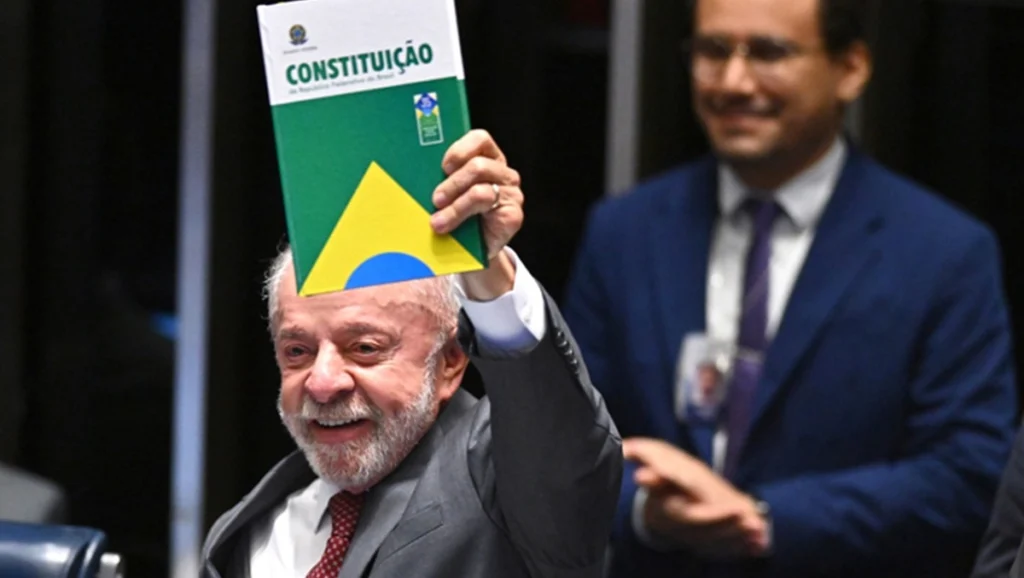
On Friday, President Luiz Inacio Lula da Silva attended a ceremony at the Brazilian Congress to promulgate the constitutional amendment reducing the workweek in the country.
RELATED:
Brazil Poll Shows Bolsonaro and Lula in Technical Tie
During his speech, Lula defended dialogue between institutions and stressed that the reduction of the workweek was made possible through negotiations between the executive branch and Parliament, an institution in which his Workers’ Party holds just 70 out of 513 seats in the Chamber of Deputies and 9 out of 81 seats in the Senate.
“Without democracy, there is no way out. It is dictatorship,” Lula said, stressing that although the Workers’ Party does not have a parliamentary majority, it has managed to advance initiatives with the support of other political forces because “there are no good or bad votes; it is the people who are voting.”
The progressive leader reiterated that reducing the workweek — from 44 to 40 hours, with two paid days off — is a measure intended to improve workers’ living conditions. He rejected arguments that the change could harm businesses.
O dia de hoje mostra que a democracia vale a pena.
O fim da escala 6 x 1 é uma conquista civilizatória.
O que fizemos hoje foi obedecer. Obedecer à vontade de um povo que foi para as ruas e cobrou de nós: mulheres, homens, trabalhadores, adolescentes e estudantes exigiram essa… pic.twitter.com/QEdFV6I4j7
— Lula (@LulaOficial) October 16, 2026
President Lula da Silva’s text reads: “Today proves that democracy is worth it. Ending the 6×1 work schedule is a civilizational achievement. What we have done today is heed a call—the will of a people who took to the streets and made a demand of us: women, men, workers, teenagers, and students all called for this measure. You have written an important chapter in our Constitution. It is now a Constitution that better reflects its citizens. Two days of rest each week mean greater dignity. Congratulations to everyone!”
In this regard, he recalled the criticism that accompanied the introduction of the year-end bonus in the early 1970s, when some conservative sectors alarmed the public by claiming that the measure would drive companies into bankruptcy.
Under Brazilian law, 60 days after the amendment’s promulgation, the five-day workweek and two-day rest period will take effect, with a maximum workweek of 42 hours. The reduction to 40 hours will be completed after another 12 months.
The measure was promulgated by Parliament President Davi Alcolumbre, with the parliamentary headquarters packed to capacity, nine days before the presidential runoff, in which Lula will face far-right Sen. Flavio Bolsonaro.
The approval of the initiative is seen as a political victory for Lula, who secured a key electoral boost in the final stretch before the runoff against his rival, who won the first round with 47% of the vote.
The measure, promoted during the campaign and strategically pushed through one week before the runoff election, had strong popular appeal because it benefits more than 37 million workers with formal employment contracts.
The results of the strategy began to emerge in polls released this week, which showed Lula narrowing the gap with Bolsonaro, who now leads him by two percentage points, although the two are technically tied.
teleSUR/JF
Source: EFE
From teleSUR English via This RSS Feed.