

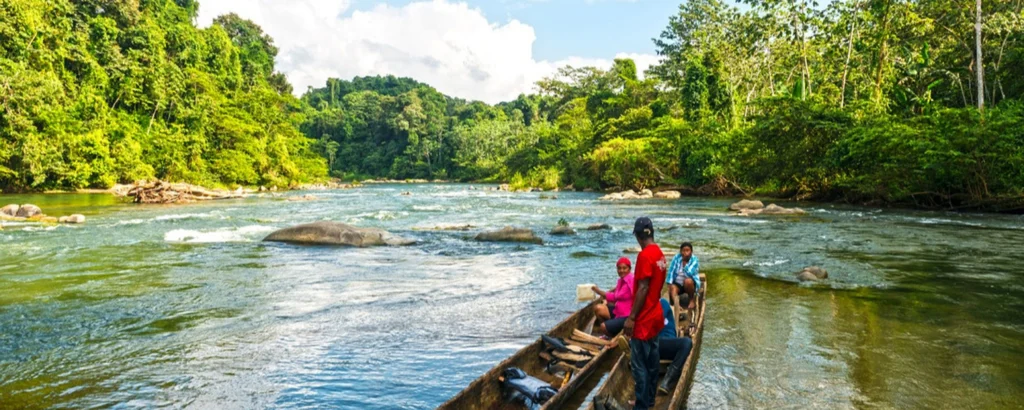
A mission of experts from the United Nations Educational, Scientific and Cultural Organization (UNESCO) will visit Honduras in late 2026 to evaluate protection, management, and conservation efforts in the Río Plátano Biosphere Reserve—the country’s largest protected area and a site currently inscribed on the List of World Heritage in Danger.
RELATED:
Panama Hosts the 2026 LATAM Congress of Marine Sciences
The announcement was made this Friday by Ángel Prado, Deputy Director of the Institute for Forest Conservation (ICF), who explained that the visit will aim to review activities undertaken to preserve the territory and to update the biosphere’s management plan for the next ten years.
Located in the Mosquitia region of northeastern Honduras, the Río Plátano Biosphere spans approximately 350,000 hectares and preserves one of the few remaining tracts of tropical rainforest in Central America. The site was added to the World Heritage List in 1982 and is home to indigenous communities that have maintained their traditional ways of life.
UNESCO placed the reserve on the List of World Heritage in Danger in June 2011, citing illicit land occupation. At the time, the organization also pointed to a breakdown in law and order in the area, the presence of drug traffickers, and the state’s limited capacity to manage the site effectively.
🚨#HechosEstelar | “Es necesaria la visita de la UNESCO a la Biósfera del Río Plátano”, expresó Mario Pinel, de la Plataforma Jóvenes contra el Cambio Climático, al destacar la importancia de proteger esta reserva natural y señalar que su conservación debe ser una misión de… pic.twitter.com/uegF3aKs3i
— TV Azteca Honduras (@aztecahonduras) October 16, 2026
The text reads, “A visit by UNESCO to the Río Plátano Biosphere is necessary,” stated Mario Pinel, of the Youth Against Climate Change Platform, as he highlighted the importance of protecting this natural reserve and noted that its conservation should be a mission for everyone.”
The ICF is coordinating efforts with the Secretariat of Natural Resources and the Honduran Armed Forces to address these risks. Authorities are also working with indigenous communities on organization and training initiatives aimed at strengthening the conservation of natural resources.
The protection of the Río Plátano area is linked to other natural areas in northeastern Honduras, such as the Tawahka Asangni Biosphere Reserve and Patuca National Park. These territories connect to the Bosawas Biosphere Reserve in Nicaragua and form part of one of the largest contiguous forest blocks in Latin America.
The UNESCO visit will allow for a review of the site’s management and the definition of actions that will guide its conservation over the next decade.
#FromTheSouth News Bits | Following the approval of the law to strengthen and promote the agro-industrial sector in Honduras, there has been a rise in evictions of communities resisting dispossession. pic.twitter.com/R4T1NaqHAR
— teleSUR English (@telesurenglish) September 7, 2026
From teleSUR English via This RSS Feed.