

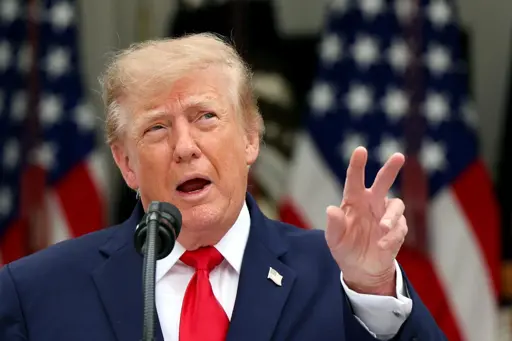
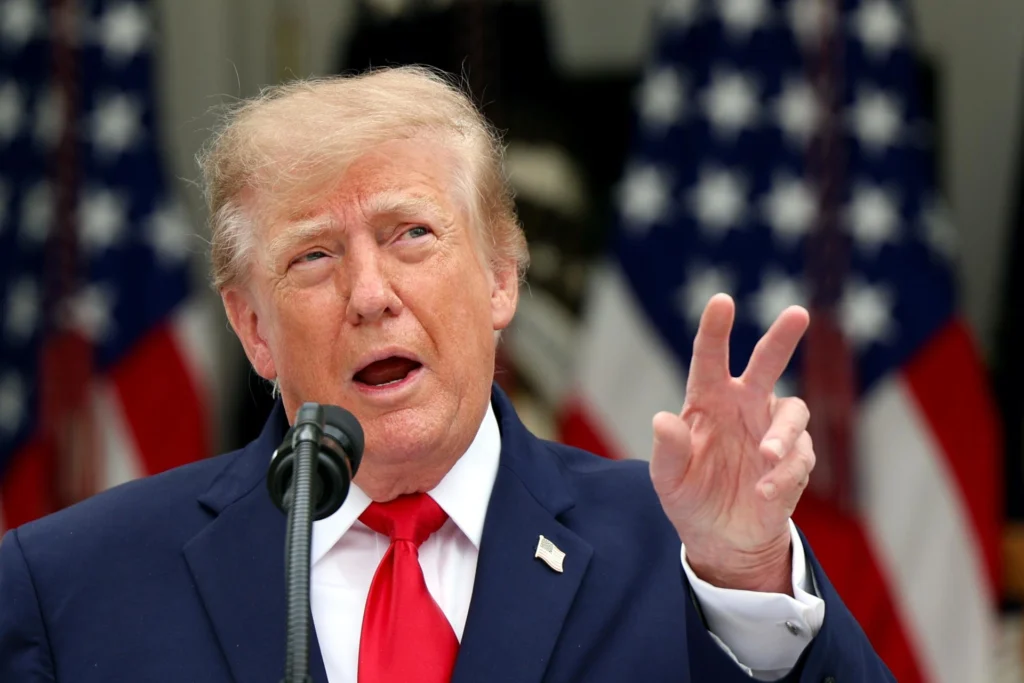
President Donald Trump reversed course Thursday and canceled the live broadcast of Nidal Malik Hasan’s execution, days after the Pentagon announced a plan that drew bipartisan rebuke and international condemnation.
Hasan was convicted of killing 13 people in 2009 at Fort Hood, the Army base in Texas. The Pentagon had announced last week that his execution would be shown live, a decision Trump said he supported “absolutely.”
Now the plan is gone. Had it gone forward, the public execution would have been the first in the United States since 1936.
RELATED: U.S. Secretary of War Announces Public Execution of 2009 Fort Hood Shooter
Trump offered a mixed explanation for the retreat. “Broadcasting the execution for everyone to see could have been a strong deterrent,” he said, “for the world to witness how the United States treats terrorists and scum like Hasan.”
The execution itself remains on the calendar. The Pentagon set the date for December 3, and Trump clarified that the immediate families of the victims may attend in person “if they so wish.”
Deterrent Argument Fades
The reversal came quickly. In early October, Secretary of War Pete Hegseth announced that Hasan’s execution would be public. Soon after, the Pentagon said it would be broadcast live. “We’ll make sure people can see it, that it’s public,” Hegseth told the conservative network Real America’s Voice News on October 7.
Trump said at the time that Hasan “deserved” to have his execution by firing squad shown in public because he “killed a lot of people.” Vice President JD Vance kept his distance and said he had no intention of watching the execution.
The announcement triggered an immediate reaction across the political spectrum. Republicans and Democrats alike warned that the images could be used to fuel radicalization.
Archbishop Paul S. Coakley, who leads the U.S. Conference of Catholic Bishops, condemned the administration’s plan and called it a “barbaric promotion of a culture of death that must be reconsidered.” House Speaker Mike Johnson, a Louisiana Republican, also leveled criticism at the proposal.
The historical stakes were high. The U.S. military has not executed a service member by firing squad since the Second World War. The last military execution took place on April 13, 1961, when Private John Bennett was hanged. Three other men sit on military death row at Fort Leavenworth in Kansas alongside Hasan. In 2008, President George W. Bush approved the execution of soldier Ronald Gray, but a judge suspended it and Gray remains at Leavenworth.
The prospect of transmitting the execution to millions of viewers drew sharp rejection abroad as well. Pope Leo XIV declared that capital punishment is “inadmissible” and said “effective penitentiary systems have been developed that protect citizens while not entirely depriving the guilty of the possibility of redemption.”
Torture Ban Breached
The Office of the United Nations High Commissioner for Human Rights issued the warning after officials floated the idea of staging public executions. The practices singled out include executions broadcast live, a format that transforms a judicial sentence into a public spectacle.
“Any move toward public executions constitutes cruel, inhuman and degrading treatment,” the office said. It also breaches the absolute prohibition of torture under international law. Under the International Covenant on Civil and Political Rights and the Convention against Torture, the ban is absolute. No war, no emergency and no domestic law can suspend it.
The warning carries direct weight in the case of Nidal Malik Hasan, a former Army psychiatrist who held the rank of major and now lives with partial paralysis. Hasan was shot by a civilian police officer at Fort Hood during the 2009 attack that left 13 people dead. He has remained partially paralyzed ever since.
At his military trial, Hasan admitted responsibility. He said he acted to prevent soldiers from deploying to Afghanistan to kill fellow Muslims. Hasan himself was about to be sent to that country. The admission was deliberate, not defensive. He framed the attack as an act of conscience, and he never disputed the facts. In 2013, a military court convicted him of premeditated murder and attempted murder. The panel sentenced him to death.
The reasoning reaches beyond a single prisoner. It protects the dignity of all people, even those convicted of the most serious crimes.
Trump abandoned the broadcast, but his framing never shifted. He still called Hasan a “terrorist” and “scum.” What collapsed was the spectacle, not the sentence. The execution still waits on the December 3 calendar, and the families of 13 victims still decide whether to watch it happen in person.
What began as a deterrent argument ended as a quiet retreat under pressure from his own party and from a world watching whether the United States would turn a state killing into a televised event for the first time in nine decades.
From teleSUR English via This RSS Feed.