

El Salvador’s President Nayib Bukele announced on October 13 his intention to release nearly 50% of the prisoners accused of collaborating with gangs in the country. According to the president, the measure would involve early release, albeit conditional.
“We have a plan that would benefit roughly 50% (give or take) of the prisoners in El Salvador who have collaborated with gangs … In other words, early release – meaning they are guilty but are released conditionally. Released under supervision,” Bukele told the press.
In this regard, he said that his government would evaluate the situation of each detainee to keep the country free from the structural violence that has plagued it for decades: “Considering that we come from a country where violence was part of everyday life and gangs were the real government, the real dictatorship. These people lived under that yoke, but it is not the same to be among those who enforced it as it is to simply survive that reality.”
If we take into account the figure provided by the authorities (according to which nearly 100,000 people are currently detained on various charges) this could mean the release of tens of thousands of people.
Domestic criticism of El Salvador’s mass incarceration
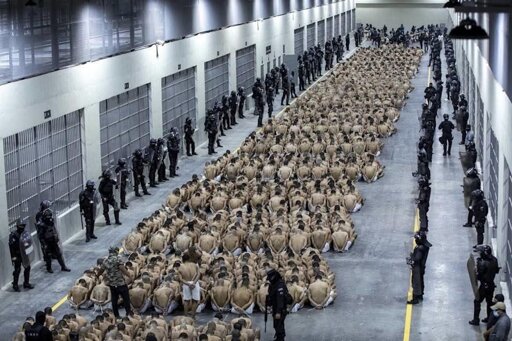
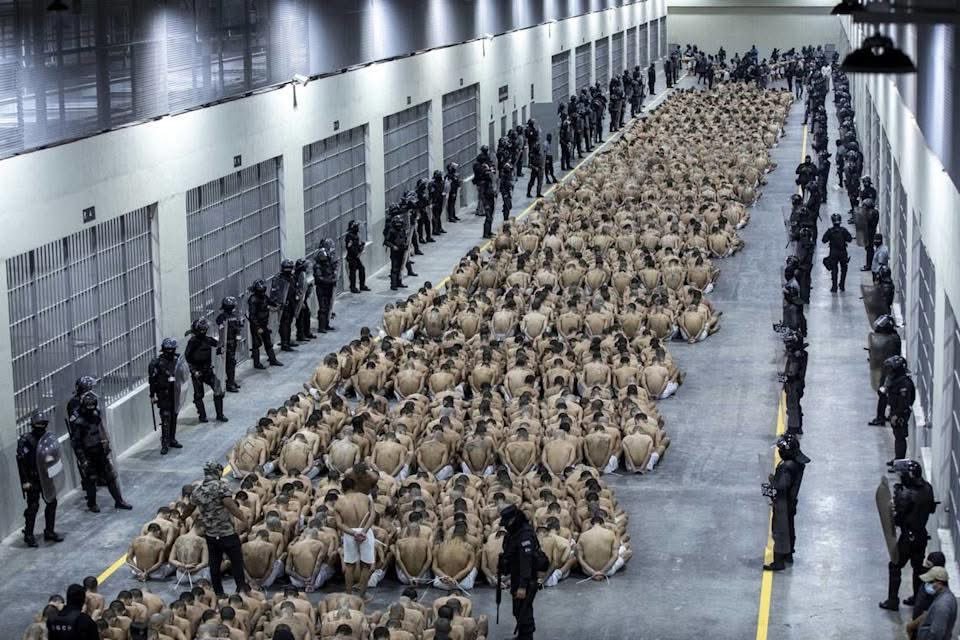
Before Bukele took office, El Salvador was in the throes of a severe crisis of insecurity and violence. His administration imposed a perpetual state of emergency that began in 2022 and has led to the imprisonment of thousands of Salvadorans accused of belonging to gangs (or “maras”) that controlled large swaths of the Central American country.
And while the pacification of the streets has been celebrated by a significant portion of the population, the harsh actions of the government and its police and military forces have drawn criticism from various human rights organizations, which have accused the government of excessive use of force, mistreatment of prisoners, and the unjust detention of individuals who do not belong to gangs.
Read more: CECOT: Bukele’s mega prison where “the only way out is in a coffin”
Another criticism has been leveled at the practice of mass trials, which charge and convict a large number of people at the same time. Rights groups say this has led to countless errors in the treatment of individual defendants. Added to this are allegations of arbitrary detentions, crimes against humanity, and disappearances.
International outrage at 252 Venezuelans detained in El Salvador
The prison system implemented by Bukele in El Salvador has also faced international criticism. The Central American country became a focal point of controversy when hundreds of people deported from the United States were detained in the Salvadoran prison system, which drew widespread criticism of the Bukele government.
Bukele, however, had defended the decision and reaffirmed his alliance with the Donald Trump administration and his participation in the Washington-led geopolitical and military initiative known as Shield of the Americas.
Read more: Maduro gov’t negotiates return of 252 Venezuelans detained by US in El Salvador
The news of the possible release of tens of thousands of detainees sparked even more intrigue, considering that Bukele’s announcement came immediately after his conversation with US Secretary of State Marco Rubio, in which they discussed combating “malign foreign influence.” However, it remains unclear how the two issues are linked, according to El País.
From BT News via This RSS Feed.