

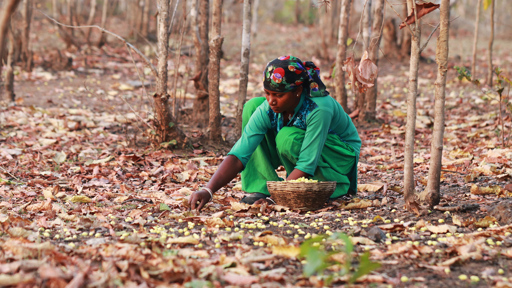
Every year between February and May, when mahua flowers begin to fall, Mamta Tigga collects them. Mamta comes from a village in Gumla in the Indian state of Jharkhand and has been collecting mahua (a flower from Madhuca longifolia), gethi kanda (or air potato, Dioscorea bulbifera) and tendu leaves from the Indian ebony tree (Diospyros melanoxylon) for the past three years. All of these plants are important sources of food, medicine and other traditional uses in her culture. Mamta is not just a tribal gatherer, but a homemaker and a mother of two children. Over the years, she has noticed a change in what the forest gives her. “There is less mahua than before,” she says, and the amount changes with the weather. When there is more heat, more mahua falls and when it rains, the mahua flower sheds off. “This year there was less mahua, between March to April we usually collect around 4-5 quintal [100 kilograms or 220 pounds] but this time due to excessive rain we got around 25 kg of mahua.” Forest produce is an essential source of income for families like Mamta’s. Her husband is a driver, and often, when they are short on money, the funds collected by selling mahua help them survive. But what happens when the resources people depend on begin to change, while the demand for those products continues to grow? A recent review in the journal Frontiers in Sustainable Food Systems examines this question in the Indian states of Jharkhand…This article was originally published on Mongabay
From Conservation news via This RSS Feed.