

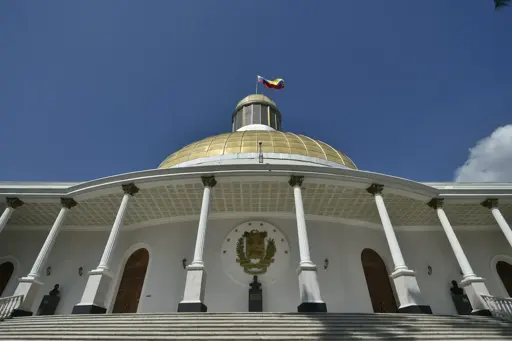
Caracas (OrinocoTribune.com)—Venezuela’s National Assembly has submitted a draft for the partial reform of the Constitutional Law Against Hatred, for Peaceful Coexistence, and for Tolerance, to the Supreme Court of Justice (TSJ) for review ahead of parliamentary debate and public consultation.
Assembly President Jorge Rodríguez announced the submission during the plenary session this Tuesday, October 13, reading a letter addressed to TSJ President Caryslia Beatriz Rodríguez. The draft, accompanied by its explanatory memorandum, was prepared by the special commission chaired by Pedro Infante, the Assembly’s first vice president and a United Socialist Party of Venezuela (PSUV) deputy for Miranda.
Decriminalization and safeguards against misuse
As Orinoco Tribune reported on September 30, Acting President Delcy Rodríguez requested the reform in a letter dated September 28, proposing a review of the law’s criminal provisions to strengthen democratic coexistence, respect for diversity, and confidence in public institutions.
The special commission was instated on October 5. Infante identified decriminalization, clearer legal definitions, and safeguards against improper enforcement as priorities. He also proposed changing the law’s name to emphasize education and the prevention of violence and political intolerance.
On October 6, Infante explained how decriminalization was going to help rehabilitate people prosecuted under the legislation, and rejected both the options of outright repeal and of leaving the law unchanged, arguing for a reform better suited to the current political situation.
Orlando Figuera Case: Venezuela’s Public Ministry Issues New Arrest Warrants
Origins and political context
The law was initially adopted in November 2017 following a wave of far-right opposition violence. Among the attacks was the killing of Orlando Figuera, a young Black Venezuelan burned alive by opposition demonstrators who labeled him as Chavista. Infante recalled that case as well as the deadly use of wires across roads during the Guarimbas that decapitated several motorbikers when explaining the legislation’s origins, but reported that political violence has since declined considerably.
The reform also intersects with ongoing political negotiations. In an October 8 interview with mainstream media, opposition negotiator Juan Miguel Matheus claimed it resulted from the current negotiation table, and confirmed that the US empire’s state department and Secretary of State Marco Rubio had defined the negotiations’ terms on the side of the opposition.
According to the route outlined by Infante, review by the TSJ’s Constitutional Chamber precedes the Assembly’s first discussion. Public consultation would follow, before a second discussion and final approval, allowing the submission to advance the legislative process but not to immediately constitute approval of the reform.
Featured image: already there
Special for Orinoco Tribune by staff
OT/JRE/AU
From Orinoco Tribune via This RSS Feed.