

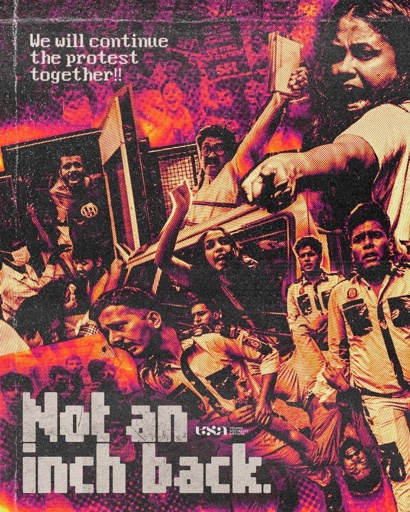
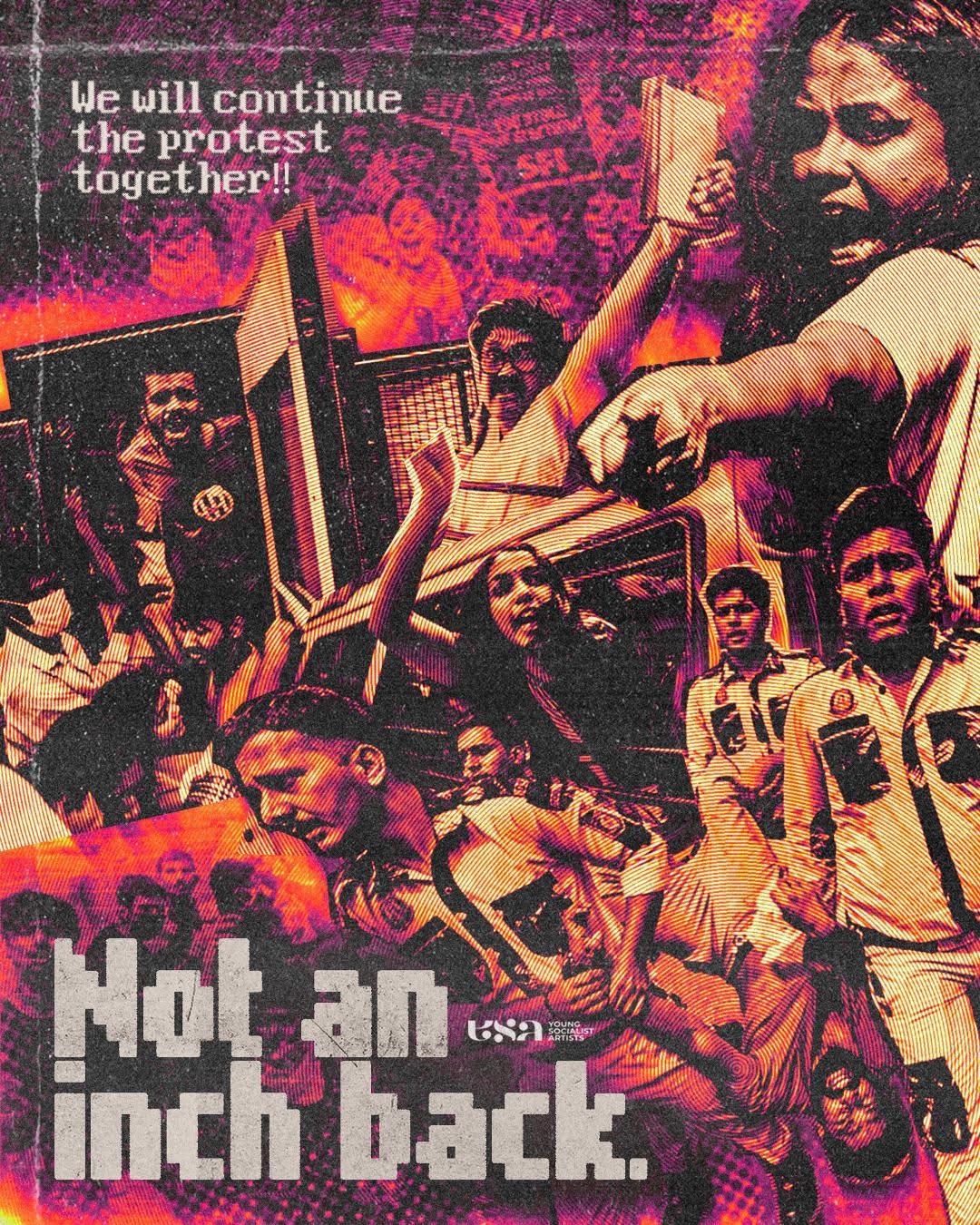
In 2026, there have been massive uprisings globally against war and declining economic conditions, and India is no exception. The current round of mass demonstrations has shaken the country and the ruling Bharatiya Janata Party (BJP), led by Narendra Modi, to their core.
Global shortages in oil and liquefied natural gas (LNG) have had a series of repercussions in India, heightening existing problems during this time. But, while the U.S. war on Iran has worsened conditions in India, the people in India are also struggling amid declining employment rates, austerity and political repression created directly by the BJP.
The effects in India of the U.S. war on Iran
During retaliatory strikes from Iran, Saudi Aramco was hit in Ras Tanura, and Qatar suspended LNG production. India imports around 60% of all its liquefied petroleum gas (LPG) from other countries, and a large proportion of these imports are from Qatar, the UAE, Saudi Arabia and Kuwait. As a result, India is now prioritizing domestic LPG usage, creating a shortage and skyrocketing prices for industries that need it.
88% of India’s oil is imported. Before the war, crude oil prices were $69 to $70 a barrel. After the closure of the Strait of Hormuz, world Brent Crude futures prices topped at over $120 a barrel. At the same time, the Indian Crude Oil Basket price hit an all-time high of $142.69 a barrel.
The rising price of crude oil has put tremendous pressure on India’s foreign reserves and balance of payments. It has also resulted in an increase in inflation and reduction in economic growth. The CAD (current account deficit) has increased tremendously, meaning India spends more on imports than it gains on exports. This has resulted in depreciation in value of the Indian rupee compared to the dollar; currently one U.S. dollar equals 97 rupees, an all-time high.
To counter the inflation, the Reserve Bank of India has increased interest rates on loans and reduced the supply of money, making it harder for ordinary citizens and businesses to acquire loans. This has reduced economic activity, such as industrial output and job creation, particularly in oil services, construction and retail businesses, leading to increased unemployment. Large sections of urban youth now face joblessness.
Internal policy failures, misleading data, corruption
India has nearly 400 million people aged 15–29, and millions graduate on a yearly basis with STEM degrees but are met with only tens of thousands of jobs. Despite being some of the most educated in the world, Indian youth face the crisis of unemployment.
Despite showing growth on paper, the Indian economy reveals conditions of stagflation caused by large-scale imports of fertilizer and energy import costs. Industrial growth has in fact stagnated, leading to reduced job creation. Wages have also not grown enough to counter inflation.
A large majority of India’s workforce remains trapped in low-wage work. Internal migration for jobs remains high. Indian government policy has moved the country away from the kinds of manufacturing that employ millions of workers. India is also still largely agrarian, and the population of youth graduating from colleges cannot find non-agrarian jobs to meet their needs.
According to the BJP government, the overall unemployment rate is between 4.6 and 5.5%. However, several independent economists assert that the unemployment rate is being inaccurately reported, pointing to outdated definitions of what is considered employment as a source of the distorted figures.
Recent events that have sparked protests
One example of extreme competition in jobs and college placements is the National Eligibility- Entrance Test (NEET). Over 2 million students sat for this exam to get enrollment at medical colleges, out of which only 6% had placement. The NEET exam also saw a major paper leak scandal, resulting in the cancellation of the exam. The cancellation resulted in mass demonstrations by student protesters citing systemic failures in exam conduction, corruption and favoritism. Hundreds of thousands of protesters marched to the parliament building demanding the resignation of the education minister, Dharmendra Pradhan. Pradhan was finally forced to resign amid massive pressure.
The BJP, however, has no desire to give up power, and has instead manipulated the Indian constitution and haphazardly introduced bills and enforced them through various arms of the state. From the farmers bill, which tried to smash the power of peasant farmers, to labor codes designed to weaken union power, the BJP in the last decade has brought the lives of working people to ruin. They have incited religious riots, heightened caste tensions, and pitted tribal communities against each other all throughout India.
In October 2025, the BJP regime introduced the SIR (Special Intensive Revision) of electoral rolls through the election commission in a bid to retain and gain power in states where they historically had shortcomings. The SIR, alongside the Citizenship Amendment Bill in the past, was introduced to particularly target religious and caste minorities across India. The SIR came into effect in May 2026, leading to 130 million Indian citizens losing their voting rights. 9 million voters were affected by the SIR in West Bengal – a state where left parties were in power for 34 years – leading to a major electoral victory in that state for the BJP.
Since October 10, the deletion of voter rolls has resulted in massive protests in New Delhi and across the country, demanding the resignation of Chief Election Commissioner Gyaneshwar Kumar, with the protests being led by unions such as the CITU (Center for Indian Trade Unions), communist parties, and youth and student organizations. Millions of people in New Delhi gathered to demand justice and the resignation of the election commissioner, with several thousand people from nearby areas and neighboring states traveling via train.
The repression against protesters has been remarkably high. 41,000 security personnel and police were deployed at the Jantar Mantar protest site. Between 2000 and 7000 protesters were either detained or jailed. People arriving via train or flight were detained before they even reached the Jantar Mantar.
Entire central leadership bodies of communist parties have been detained or jailed. Telephone communications and the internet were jammed throughout the city of New Delhi. The Delhi police even removed Jantar Mantar’s status as an official protest site.
The repression, however, has not caused a reduction in the number of protest attendees, but instead resulted in an overwhelming upsurge.
The conditions in India are rapidly declining due to internal policy failure and external imperialist pressure from the U.S. and Europe. The worsening of conditions is resulting in a cascade of never-before-seen mass demonstrations. The BJP are clearly shaken and are clutching at straws, increasing repression to retain their power. The people, however, understand that the BJP will use every avenue to trample democratic rights, and that the only way things will change is action in the streets.
#International #India #Opinion #Commentary
From Fight Back! News via This RSS Feed.