

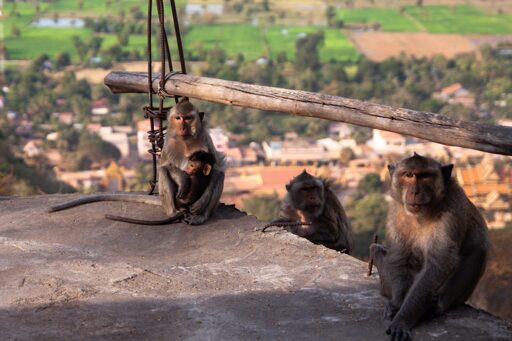
CHIANG MAI, Thailand — Global wildlife trade authorities say Cambodia has made little progress in cleaning up its monkey export industry, a year after the country was flagged as needing major reforms in how it manages the capture, breeding, and export of monkeys used in biomedical research. In November 2025, following years of controversies, the secretariat of CITES, the global wildlife trade convention, issued a series of recommendations to Cambodia. In a document released Oct. 5, CITES stated that limited improvements to Cambodia’s monkey farm governance mean it “cannot confirm or rule out the occurrence of fraud or corruption” in the country’s trade of long-tailed macaques, a species listed as endangered. The statement comes ahead of the Nov. 2-6 CITES Standing Committee meeting in Geneva, where parties to the convention will assess progress made by countries placed under review. Countries unable to meet CITES standards can face trade bans. Monkey poaching has reportedly declined in Cambodia as the populations and habitats of long-tailed macaques are believed to have declined in recent years. Images supplied by source. Cambodia has faced widespread condemnation since a five-year United States Fish and Wildlife Services (USFWS) investigation found substantial evidence of Cambodian monkey farms laundering wild-caught monkeys as captive-bred. This, experts have warned, heightens the risk of zoonotic disease spillover — the transmission of pathogens from wildlife to humans — while also posing a threat to Cambodia’s wild population of long-tailed macaques (Macaca fascicularis), which dropped between 50% and 70% in the last three decades.…This article was originally published on Mongabay
From Conservation news via This RSS Feed.