

This article by Aníbal García Fernández originally appeared in the October 13, 2026 edition of Contralínea, Mexico’s leading investigative journalism magazine.
The Second Government Report highlights coordinated government actions to combat drug trafficking, such as the seizure of hundreds of kilograms of drugs and cash, the increase in tax collection at Customs of 526,033.69 million pesos, and blows to criminal structures worth close to 340 million pesos. These efforts contrast with the view of the United States government that Mexico must do more
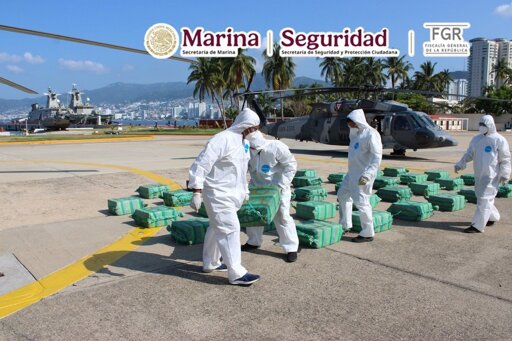
On October 12, members of the Secretariat of the Navy seized a vessel with 46 bundles containing approximately 1.2 tons of presumed cocaine and arrested six people, approximately 366 nautical miles south of Huatulco, Oaxaca. The operation had the collaboration of the United States Coast Guard, which provided the information.
Despite the narrative of the opposition and of the conservative government of Donald Trump that drug trafficking prevails in Mexico and that more actions are lacking on the part of the government of President Claudia Sheinbaum to combat organized crime, the Second Government Report allows a closer look at the various efforts to address the different causes of violence.
For example, blows to drug trafficking equivalent to close to 340 million pesos stand out. This amount is for the seizure of five aircraft, three vehicles, and 1,224 kilograms of cocaine, to which the most recent seizure is added.
In addition to the above, the Security Cabinet reported that from October 2024 to September 30, 2026, more than 70,500 people were arrested for high-impact crimes; 36,300 firearms and 569 tons of drugs have been seized, and 2,792 clandestine laboratories for the production of synthetic drugs were dismantled.
At the presidential press conference on October 13, it was detailed that 2,170 people related to this crime have also been arrested in 24 states of the country since the implementation of the National Strategy against Extortion.
The Secretary of Security and Citizen Protection, Omar García Harfuch, highlighted that the national daily average of intentional homicides decreased by 52 percent, which means 45 fewer homicides each day.
Strengthening of Customs and Benito Juárez Airport
Part of President Sheinbaum’s strategy is to strengthen surveillance and security at customs through a comprehensive strategy. The Secretariat of Defense (Sedena) assigned 2,663 military personnel to provide permanent support to the National Customs Agency of Mexico (ANAM) at the 32 customs offices it coordinates. The presence of Sedena personnel resulted in the arrest of 369 people, 141 weapons seized, 141,841 cartridges, 899 magazines, 419 vehicles, 839,540 Mexican pesos, and 3,050,491 dollars. Also the seizure of 36.2 kilograms of marijuana, 133.8 kilograms of cocaine, 109.6 kilograms of methamphetamine, and 737,300 liters of hydrocarbons as well as 6.7 liters of chemical precursors.
The Second Report also mentions the collection of 526,033.69 million pesos raised through the efforts of Defense personnel in support of ANAM.
The Secretariat of the Navy (Semar) also participates in strengthening customs with the installation of non-intrusive inspection equipment. In maritime customs, 80 percent of this equipment has been installed. In ports, 37,317 dollars, six firearm magazines, 513 live cartridges, 184.8 kilograms of methamphetamine, 17.9 kilograms of marijuana, and 34.9 kilograms of cocaine have been seized. Due to the collaboration between ANAM and Semar, customs revenue of 35,657.9 million pesos was produced from September 1, 2025 to June 30, 2026.
For its part, at Benito Juárez Airport in Mexico City, 335,885 kilograms of illicit substances were seized (it is not indicated whether they are drugs), 1,233 rounds of ammunition and six firearms, 543,422 kilograms of sea cucumber, and 264 specimens of exotic animals. In addition, 22 Mexican and seven foreign people were arrested and placed at the disposal of the Attorney General’s Office (FGR).
Comprehensive North American Maritime Shield and Regional Cooperation
An area little explored by certain security experts, and by the concepts of militarism-militarization in Mexico, is that of the training courses received by the Mexican armed forces. The training courses are part of the bilateral relationship between the United States and Mexico, and most of the armed forces are trained at military centers in that country.
The training courses are part of a transfer of technology, knowledge, interests, ways of thinking, and military practices on civilian problems. It implies a set of geopolitical interests transferred to other military institutions.[1]
According to the Second Government Report, 518 members of the Mexican army participated in the 2026 Rotational Exercise together with Northern Command. Between September and October 2025, the armed forces participated in the Multinational Exercise “UNITAS” at the Naval Bases of Mayport, Florida, and Norfolk, Virginia, USA. The purpose of the exercise was “to strengthen interoperability and cooperation with the participating armed forces of South America, through combined training in naval, amphibious, and security operations.”
Already in 2026, Sedena reports the first exercise in San Diego, California, within the framework of the North American Maritime Security Initiative (NAMSI). This initiative was made public on June 6, although it dates back to 2008, in the time of Felipe Calderón, who accepted foreign interference in the country. Mexico, within the framework of respect for sovereignty, tested the effectiveness of the naval trinomial model, made up of a ship, helicopter, and interceptor patrol boat, as well as the incorporation of “unmanned systems that have significantly expanded surveillance capabilities.”
What the report does not mention is that with NAMSI the binational SAREX exercises were reactivated to “increase the specialized training of naval personnel and expand [the] interoperability mechanism.” Also the implementation of the SAROPS 4.5 technological system in coordination with the United States Coast Guard to optimize search and location times for people, vessels, and aircraft.
In March 2026, a second military exercise was held in Veracruz with the United States and Canada. In that same month, the “Cyber Libertad” exercise was held, with 12 Mexican naval personnel. And existing cooperation was strengthened in port infrastructure protection, academic cooperation, cybersecurity, specialized training, interoperability, and joint exercises.
It is important to mention that NAMSI also includes Canada. According to Northern Command, “the meeting culminated with the formal signing of the revised NAMSI Manual by the Heads of Delegation, which establishes updated standard operating procedures that allow the effective application of international provisions, in order to strengthen the exchange of information to combat unlawful acts against the safety of maritime navigation.”
Relations with Central America were also strengthened. For the first time, the military exercise “LAMANAI 2025” was held from September 1 to 5, 2025, in Ladyville, Belize. The National Center for Surveillance and Protection of Airspace of the Joint Staff of National Defense and the Joint Intelligence and Operations Center of Belize participated in this exercise.
Finally, Semar participated in the Inter-American Drug Abuse Control Commission, a body that is part of the Organization of American States (OAS), with which work is being done on the document “Hemispheric Plan of Action on Drugs 2026-2030,” in which it participated in three consultation events on the plan. Mexico proposed that the Plan consider a public health approach, with social prevention policies over coercion mechanisms. Since November 2025, Semar has sent comments and opinions on said Plan to the Secretariat of Foreign Affairs (SRE).
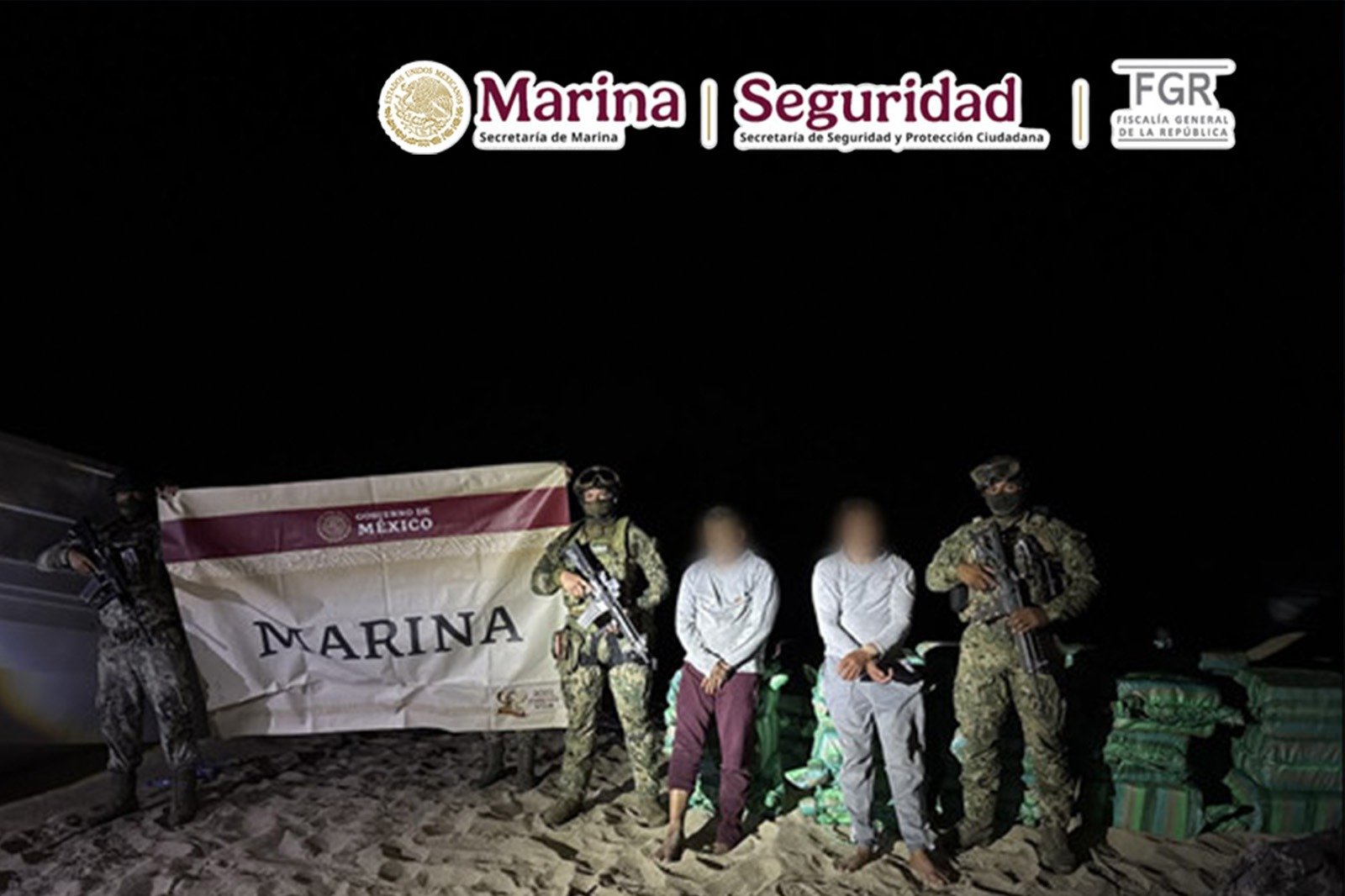
Photo: Semar / SSPC / FGR
Professionalization of the National Guard
One of the relevant points that the Second Report highlights is the continuity and professionalization of the National Guard. In other administrations, it was customary for federal police forces to be modified almost every six-year term: so it was with Ernesto Zedillo and the Federal Preventive Police, and the creation of the Federal Police under Felipe Calderón, and later under Enrique Peña the Secretariat of Public Security was eliminated, the Federal Police passed to the Secretariat of Governance, and the Gendarmerie was formed.
With the two Morena governments, continuity is given to the National Guard, now made up of 115,979 members, of whom 109,110 belong to the Public Security Force and 3,829 to the Secretariat of Security and Citizen Protection.
To address public security, the GN has a permanent deployment of 100,848 personnel throughout the country, that is, 92 percent of the total public security force. The firepower of the GN is made up of 254,823 weapons, of which 107,092 are handguns, 111,348 long guns, and 36,383 of other types, as well as 33 aircraft and 21,909 vehicles of different characteristics.
Regarding its professionalization, from September 1, 2025 to June 30, 2026, 523 members graduated with a Bachelor’s Degree in Public Security from the Heroic Military College and the Air College, and 1,176 personnel as sergeants specializing in public security from the Military School of Classes of the Arms of the Military Police Service and the National Guard. In addition, 43,117 personnel were trained in 1,438 academic activities in basic and specialized skills.
The results of the GN are 1,763 people linked to criminal acts, seizures in 102 events, 78 percent of which were concentrated in six states: Sinaloa (19 percent), Mexico City (18 percent), Morelos (12 percent), the State of Mexico and Puebla (11 percent each), and Michoacán (7 percent).
[1] https://rpi.isri.cu/index.php/rpi/article/view/538/1634
-
Mexico Increases Seizures of Drugs and Money
October 14, 2026
The government’s second report lists 70,500 arrests, 569 tons of drugs seized and higher customs revenue, countering Washington’s claim that Mexico must do more.
-
New State Prisons “Will Not Be Operated by Private Companies,” Sheinbaum Says
October 14, 2026
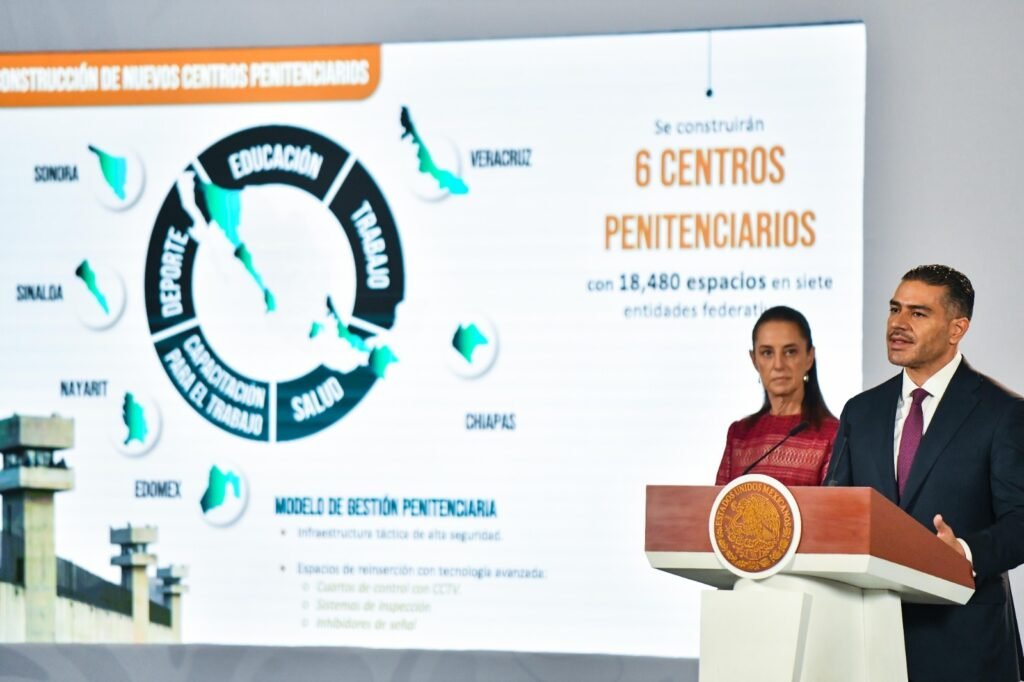
The federal government will fund a prison in each of six states to ease overcrowding, with priority for Sinaloa after recent events at the Mazatlán prison.
-

People’s Mañanera October 14
October 14, 2026
President Sheinbaum’s daily press conference, with comments on child online safety, Sembrando Vida, housing, IMSS workers, Jalisco, and misinformation.
The post Mexico Increases Seizures of Drugs and Money appeared first on Mexico Solidarity Media.
From Mexico Solidarity Media via This RSS Feed.