

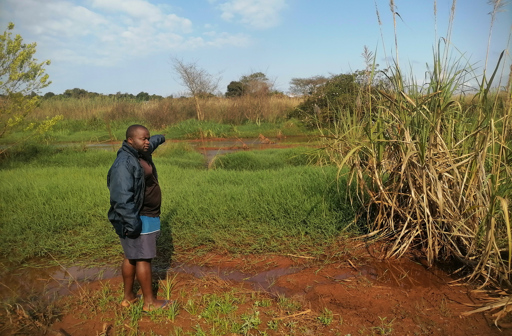
TSHAKHUMA, South Africa — Divhani Rashaka moved up and down the yard of the homestead he has looked after for 26 years, looking toward the Tshamugwana River. He recounted experiencing several floods in the time he has lived here. The riverbed, a few meters from his house in the Tshakhuma area of Limpopo province in the north of South Africa, is now covered with tall grass and bushes. Channels carved into the ground during the January floods show where water found its way toward the house. Rashaka, who is a resident of Tshiswiswini village, has placed stones along some of the channels in an effort to slow or redirect the water if heavy rains return. Farther up the yard, between his house and his neighbor’s, the grass had also grown thick, but Rashaka and his neighbor cleared the area to allow water to pass through more easily. Beyond these small measures, Rashaka has no formal plan for protecting his homestead, should it flood again. In January, floods affected communities across Limpopo, killing people, damaging homes and infrastructure, washing away food and disrupting schooling and access to some areas. Tshakhuma was among the communities badly affected. During these floods, 21 families whose homes were badly damaged were relocated to temporary accommodation at a lodge in Nkuna village, about 20 kilometers (12 miles) away, while temporary residential units were being prepared. If another flood comes, Rashaka said, he will have to rely on those around him. “I can seek shelter from my…This article was originally published on Mongabay
From Conservation news via This RSS Feed.