

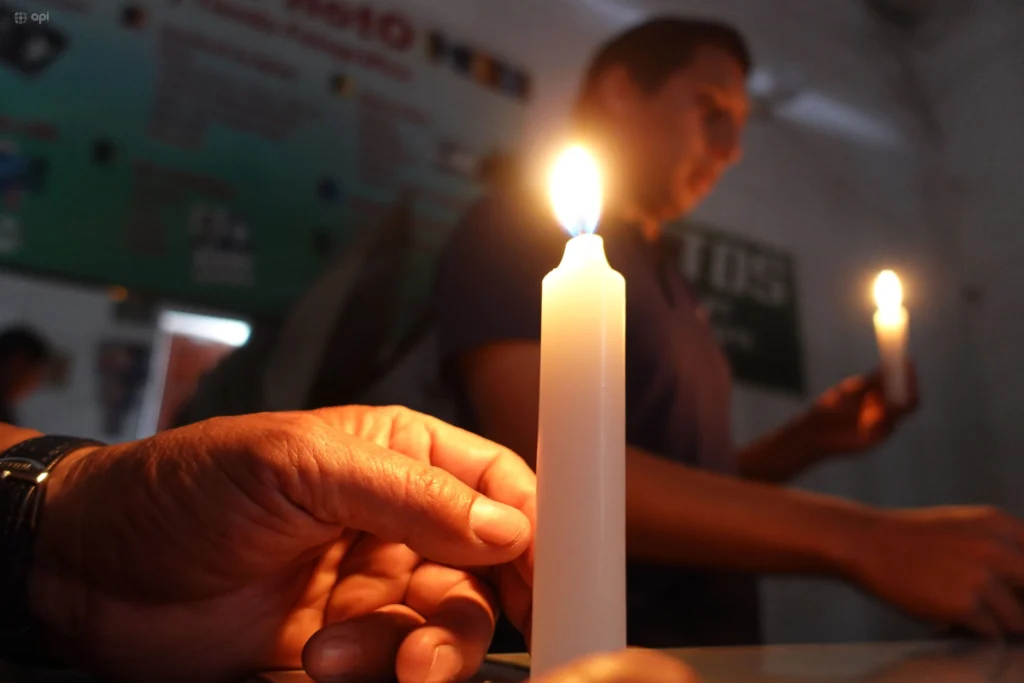
Quito, Guayaquil, and other Ecuadorian provinces experienced unscheduled blackouts during the night of Tuesday, October 13, and the early hours of Wednesday, October 14, with no official statements explaining the causes or scope of the outages.
RELATED:
Ecuadorian Youth Call Protest Over Healthcare and Insecurity
In Quito, the interruptions began around 11:00 PM on Tuesday in neighborhoods such as Ponceano Bajo, La Concepción, La Magdalena, Guamaní, Guajaló, Sangolquí (El Carmen), and the Atahualpa roundabout. According to reports shared on social media, the outages lasted more than six consecutive hours in several zones.
Meanwhile, in Guayaquil, users reported power cuts in the north and south of the city, including Sauces 4, areas near the main bus terminal (Terminal Terrestre), Durán, and Playas Villamil. Citizen reports indicated outages that, in some locations, lasted for several hours.
The impact was not limited to the two major cities. Users in the Sierra region reported cuts in Ambato and Riobamba; on the Coast, outages were recorded in cantons within Manabí, Esmeraldas, and Santo Domingo de los Tsáchilas; while in the Amazon region, failures were reported in Zamora Chinchipe.
“There is no warning, no schedule, and we are left in the dark across the country. We demand that the electric utility companies explain what is happening,” citizens stated, addressing Empresa Eléctrica Quito, CNEL EP, and CELEC.
As of the early hours of Wednesday, neither the Ministry of Energy nor the regional distribution companies had issued an official report regarding the causes of the outages or potential measures to restore service.
📈#Economía | Los cortes de energía de hasta 72 horas semanales y los costos de autogeneración preocupan a los sectores camaronero y bananero por las posibles repercusiones en sus operaciones.#LaRadioDeLasNoticias
Los detalles⤵️https://t.co/f9jHO4mMzW pic.twitter.com/D5UyeQosEt— Radio Pichincha (@radio_pichincha) October 14, 2026
The text reads, “Power outages lasting up to 72 hours a week and the costs of self-generation are causing concern within the shrimp and banana sectors due to the potential impact on their operations.”
The blackouts come just days after President Daniel Noboa had assured the public that “no Ecuadorian family will experience power cuts.” The leader maintained that power plants such as Toachi Pilatón and the leasing of power barges would help avert rationing.
Industry specialists warn that Ecuador is grappling with a deficit of between 1,300 and 1,800 megawatts (MW).
Electricity situation
Ecuador is facing renewed strain on its electrical system during the dry season, characterized by a marked drop in water levels at strategic reservoirs and an increased reliance on thermal power generation. This situation particularly affects the Paute hydroelectric complex, which is vital for the national power supply.
The Mazar reservoir, located in the Paute River basin across the provinces of Azuay, Cañar, and Morona Santiago, is one of the most critical pieces of infrastructure in Ecuador’s electrical system. Its storage capacity sustains the operation of the Paute complex—comprising the Mazar, Paute-Molino, and Sopladora plants—which has a combined installed capacity of 1,756 megawatts (MW).
Reduced water availability in this basin can directly impact hydroelectric generation and, by extension, the country’s electricity supply.
On Tuesday, the Mazar hydroelectric plant remained offline for a 24-hour period spanning Monday and Tuesday, during which time its reservoir level recovered by at least one meter.
Reported data shows that the Mazar water level rose from 2,124 to 2,125 meters above sea level (masl) on October 14. Despite this recovery, the reservoir remained just 10 meters above its minimum operating level, reflecting the extreme pressure on the hydroelectric system.
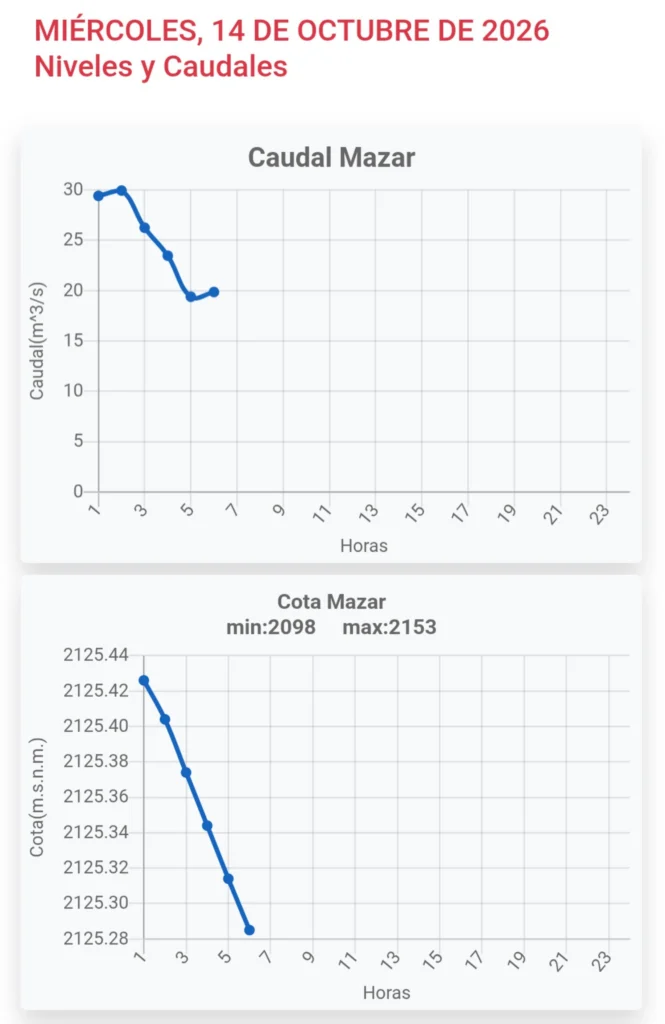
Values of the Marzar reservoir, flow rate and elevation
Due to the drop in hydroelectric generation, thermal power plants met 27% of the national electricity demand. The increased use of thermal power plants aims to partially offset the deficit resulting from falling reservoir levels and reduced generation capacity at the Paute complex.
Energy expert Alejandro Jaya noted that the Amaluza reservoir recorded a drop of 7.61 meters—an unprecedented figure in available historical records.
Although the Molino power plant kept nine turbines running near their rated capacity for nearly eight hours, the loss of hydraulic head ultimately reduced its generation capacity. Against this backdrop, the Mazar plant took on the critical load and began releasing water through its turbines to feed the Amaluza reservoir and sustain production at the Paute complex.
The combination of the dry season, falling reservoir levels, and a generation deficit continues to place the Ecuadorian electrical system under strain. The situation at Mazar and Amaluza highlights the country’s reliance on hydroelectric power and the energy matrix’s vulnerability to hydrological fluctuations.
Petroecuador reported an oil spill in the Cupa River in Quinindé canton, Esmeraldas province, Ecuador, on Monday, October 12, after a crude leak in the SOTE pipeline.
Army troops contained the leak after detecting it. As a preventive measure, the water company ordered the… pic.twitter.com/5tXzfCry8p
— teleSUR English (@telesurenglish) October 13, 2026
From teleSUR English via This RSS Feed.