

Bullets:
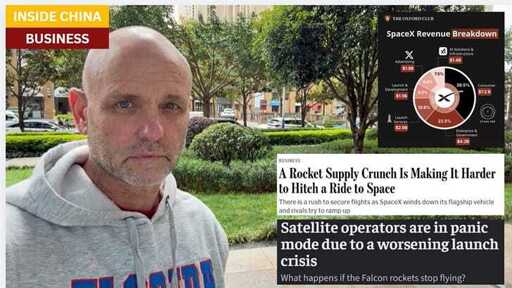
Over the next decade, over a hundred thousand satellites will be launched into orbit.
But industry insiders are panicking, because of a worldwide shortage of rockets and companies who can launch them.
A closer look at the financials of SpaceX points to a key reason why: rocket launches are expensive and require massive commitments in capital and staff, while satellite operators make most of the money in the industry.
China is ramping up its launch capability, with several companies building reusable rockets that can compete with SpaceX.
But strong legal restrictions are in place against Western companies partnering with Chinese firms.
Inside China / Business is a reader-supported publication. To receive new posts and support my work, consider becoming a free or paid subscriber.
Report:
Good morning.
Fifteen years ago the US Congress passed the Wolf Amendment, which effectively banned any cooperation between NASA and China, or any Chinese-owned company. This report is from 2019, and so within a few years it was obvious to analysts that the Amendment did a lot more harm to US interests than good. The law ended bilateral space projects, and pushed the Chinese to build its own space program.
The United States also blocked China’s participation in the International Space Station program, and so the Chinese just built their own. Today, countries are partnering up with China on civil space missions, and just as we’ve seen in countless other industries, the restrictions that were intended to deny China the advanced technology and the expertise just compelled them to figure it out for themselves.
The Chinese have caught up in space, with breakthroughs in satellite navigation, which have already proven decisive in the Persian Gulf War. China is clearly dominant in remote sensing. And Chinese companies are rapidly building out reusable rocket technologies that will push down the cost of their launches even further.
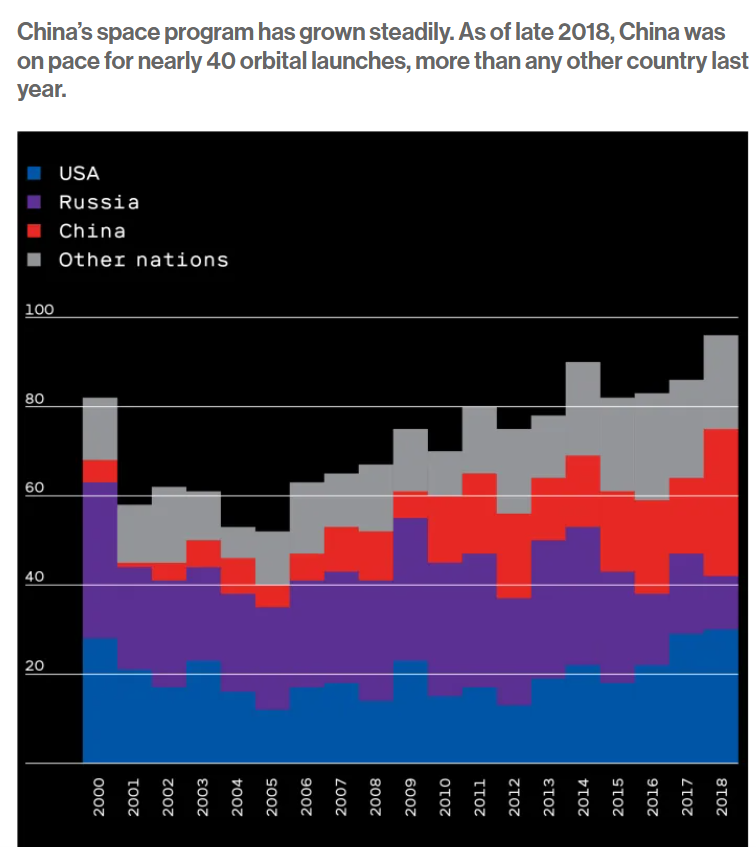
In 2018, the Chinese were leading the world in rocket launches. Four years prior, China allowed private companies to build and launch rockets, and in October of 2018. Today there are several Chinese companies developing reusable rockets.

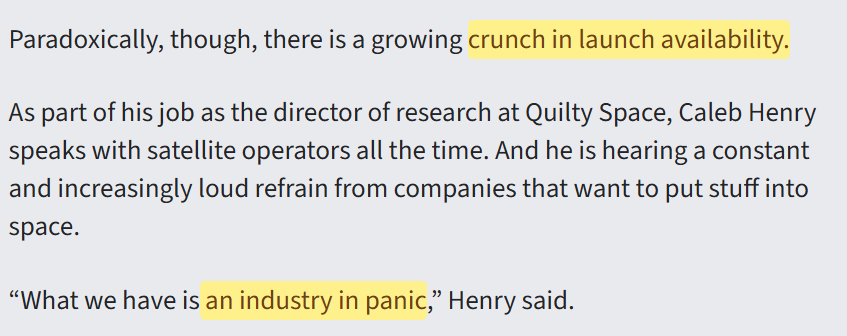
At first glance it seems that the industry is in a golden age. SpaceX just went public and Elon Musk is the world’s first trillionaire. Space launches are affordable, prices aren’t crazy yet, and scores of companies have big plans to get satellites into space. And that’s the problem: there just aren’t enough companies or rockets available, and the industry in panicking. Telesat is a Canadian company that has booked eleven Falcon 9 launches through SpaceX, and Telesat is turning away offers to sublet their space. Jeff Bezos is almost as rich as Elon Musk, but Amazon isn’t able to get their satellites off the ground.
The Commercial Space Federation forecasts that 7,000 satellites per year will be launched a decade from now, which would imply a massive increase in launches compared to today.
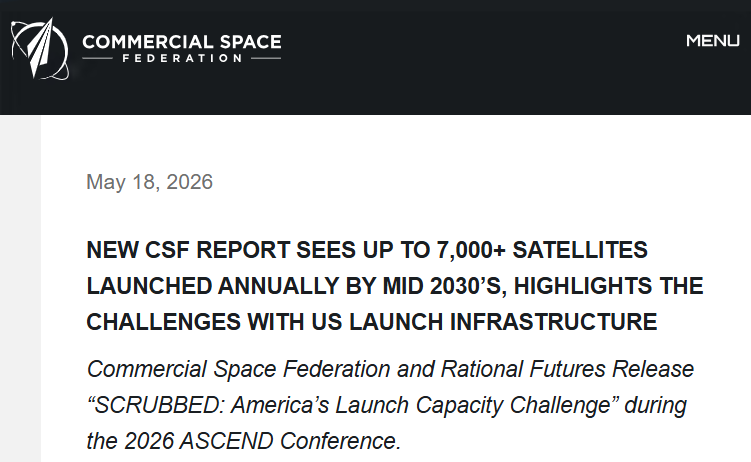
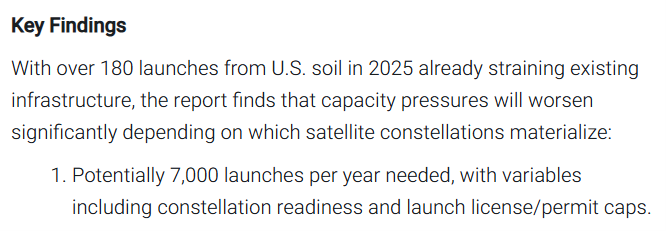
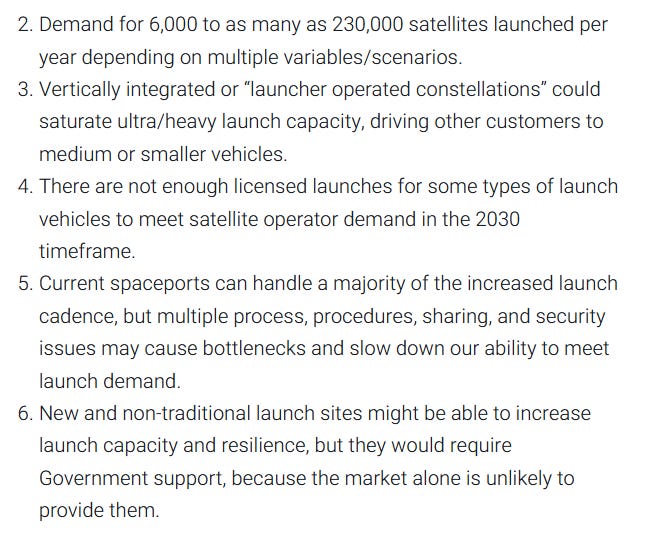
Each and every one of those bullet points represents a serious supply problem for the industry. Number two, the demand is somewhere between 6,000 to 230,000 satellites per year, depending on the year and the constellation types. There aren’t enough companies with the right licenses, aren’t enough spaceports, isn’t enough money to build more without a lot of government support.
That all begs the question, that if the demand is so high for space launches, why isn’t there enough money in the industry to lay some concrete and build launching pads? And that’s a weird function of where the money is, in the industry. The satellite constellations are far more profitable than the industry for the rockets that get them up there. Even with the booming demand for more launches, the revenues aren’t going to move much higher from now. These are revenues—top line numbers—not profits:
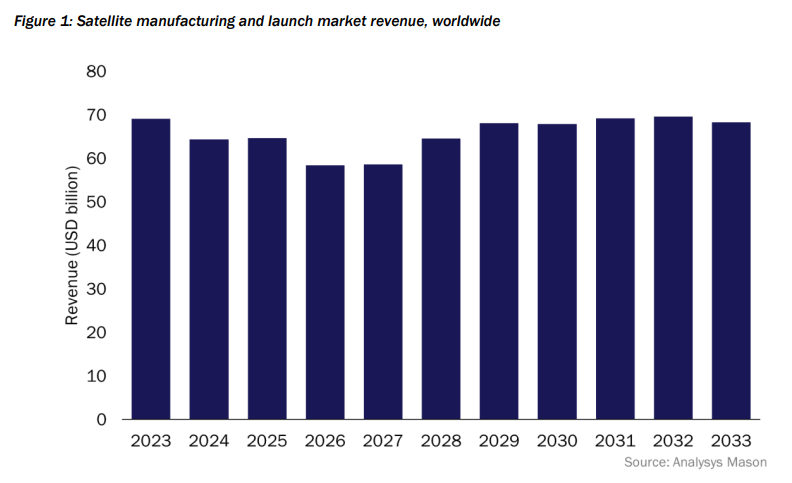
So it’s true that it’s a bonanza for the satellite operators who can get their birds up and turned on. But when we look at the actual numbers for SpaceX and Starlink—which are two divisions of the same company—we see the trouble for everyone else. The workhorse rocket for SpaceX is their Falcon 9. But the Falcon is being discontinued “as quickly as possible”, so SpaceX can devote more capital and engineers to the Starship program. Starships are bigger than Falcons, and can carry far larger payloads, so that should be good news.

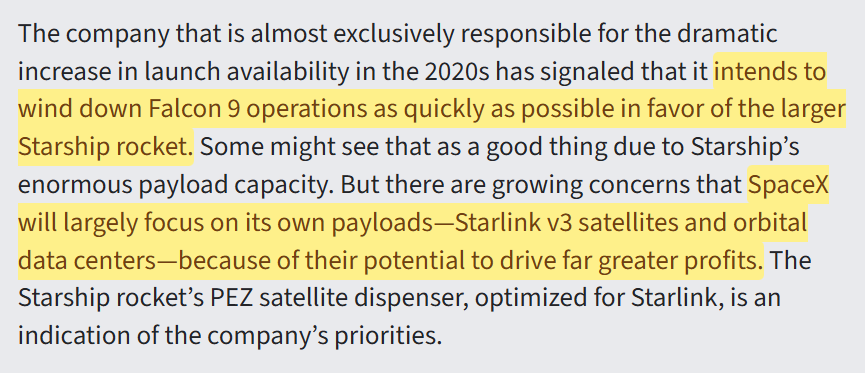
The problem is that SpaceX want the Starships for itself, to get their own Starlink satellites up. Starlink satellites are more profitable than SpaceX launches—that’s to say that SpaceX makes more money launching its own satellites—on a transfer pricing basis—than it would earn by running launches for Amazon, or even for the Pentagon.
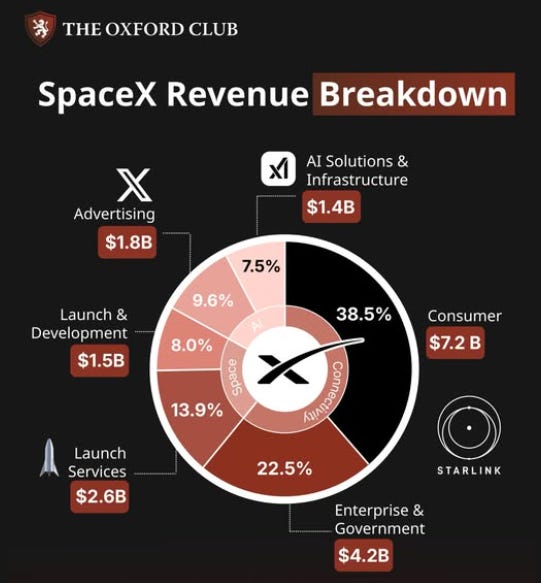
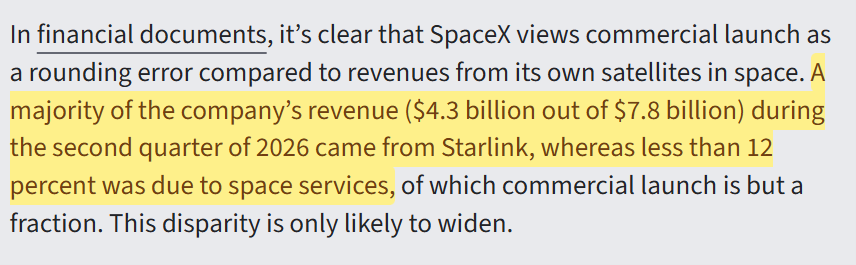
In the last financial quarter preceding the IPO, most of SpaceX’s revenue came from Starlink: $4.3 billion in Q2. Less than $750 million came from their contracts with other companies, or governments, to launch rockets. So satellite companies are watching as SpaceX shuts down the Falcon-9’s, while realizing that Starlink will have the right of first refusal for any of the Starship rockets.
Now the Chinese are building reusable rockets, but the Wolf Amendment from over a decade back means that an entire supply chain is unavailable to most Western operators. Remember, China was specifically named in that law. But then came the sanctions on Russia, which took place at the same time as European rocket companies were trying to upgrade their capabilities, but need Russian components that now they cannot get. That opens the door to companies from Japan and India, but they aren’t getting very far either.
SpaceX was the only Western company who could supply the market, with China closed, Russia under sanction, and with the Japanese and Indians able to get only two rockets up, in a year, combined. Other companies are racing to meet demand, but little real progress is being made.
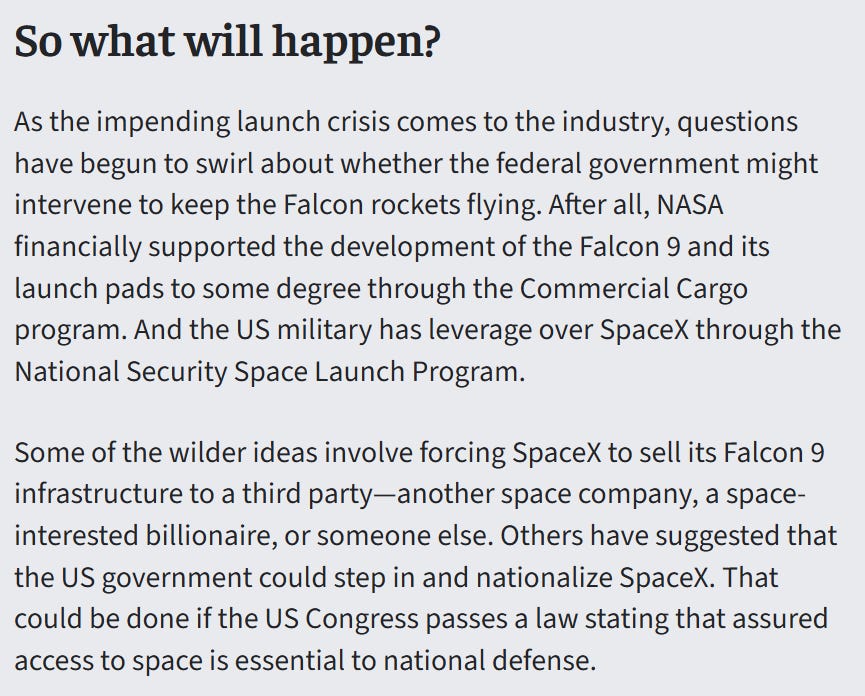
So that conclusion suddenly makes more sense: the notion that the American government may just force SpaceX to continue the Falcon program. Others have suggested that the government could simply nationalize SpaceX, if Congress declares that doing so is “essential to the national defense”.
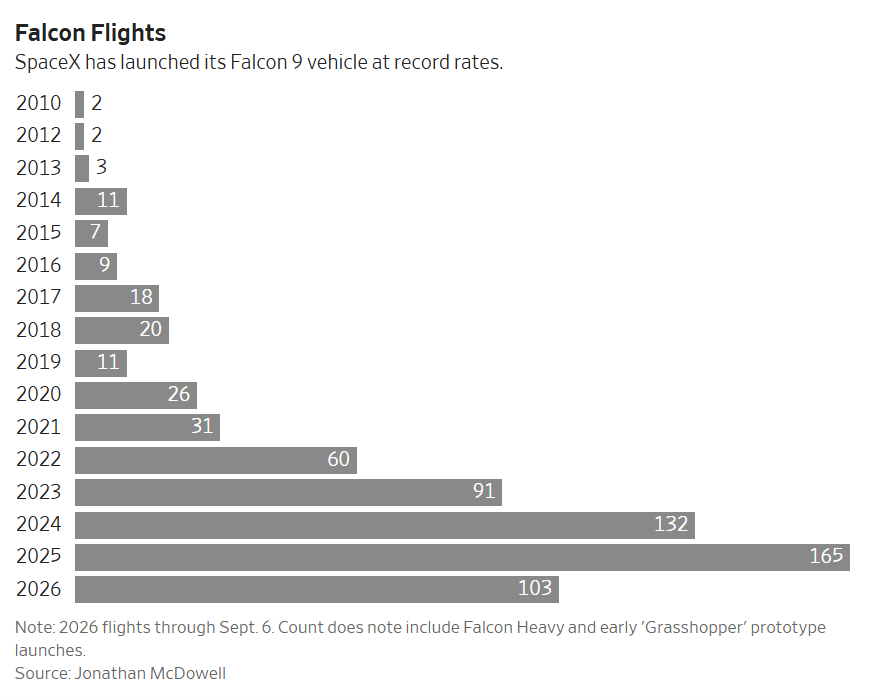
That is prompted by SpaceX’s announcement that after 2028, the company will no longer accept Falcon launch reservations. Last year, the volume was 165 launches of Falcons, with a perfect payload delivery record, and with a 99% recovery rate on the boosters. The Falcon launches were almost as much as the rest of the world, combined:
But here’s another problem with the Starship conversion: the Starships are too big to work with the International Space Station. The ISS is scheduled to shut down. But if some members of Congress gets their way, and the program is renewed, that means that NASA would rely on Russian rockets, which may be a nonstarter because of the sanctions. Again, another reason for hawks in Congress to just take over the company, if the ISS stays up and there’s no way to move crews and cargo.
So at the same time demand is soaring from tech companies and governments, there aren’t nearly enough rockets for them. And SpaceX is pivoting its business, away from the systems that satellite companies were relying on to get theirs up. Retail and passive investors in SpaceX may have thought they are investing in a space launch company; in reality SpaceX’s rockets division is just a way to get more Starlinks into orbit:
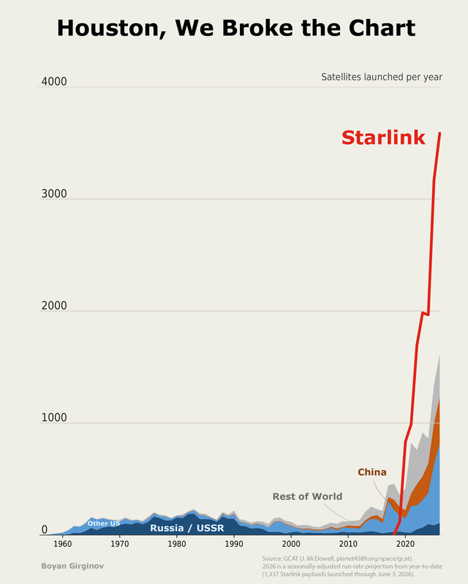
Governments and telecom companies assumed that SpaceX would continue to supply Falcon flights, and made big plans accordingly.
But from now on, those customers customers are competing against SpaceX itself, who wants the rockets for themselves. Other companies are investing heavily into new rockets, but they’re literally not yet off the ground. United Launch Alliance is a joint venture with Boeing and Lockheed Martin. ULA used to be the primary contractor for the Department of Defense, before SpaceX took over the industry.
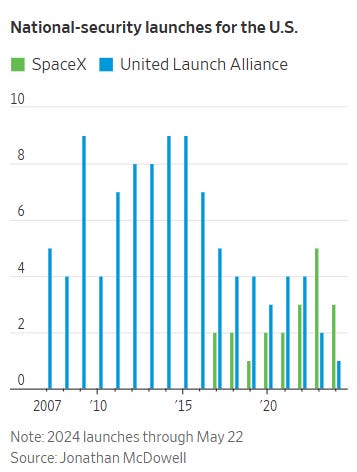
Now the company is struggling to manage the business they have left, they’re far behind schedule, and the Pentagon is getting frustrated. Blue Origin is Jeff Bezos’ space company, and Bezos offered to buy them out.
Stephen Feinberg is somehow both the majority stakeholder of a giant private equity company and also the Deputy Secretary of Defense, or of War or whatever we’re calling it this week. Cerberus wants to buy the company too. Jeff Bezos likely thinks that buying ULA outright is the only chance Amazon’s got to get their satellites up, and Cerberus probably likes the idea of having their founder at the Department of War rubber-stamping contracts for many years’ worth of military launches. ULA has an order backlog of billions of dollars if they can get their rockets into the air.
And that’s the thinking of Wall Street in general, who is pouring capital into the theme. If they can get the technology right, the customers have the deepest pockets in the world: billionaire owners of trillion-dollar companies, telecoms, governments, and militaries.
Now we see the significance of China’s development of reusable rockets, and how that might scramble the industry landscape across the world.
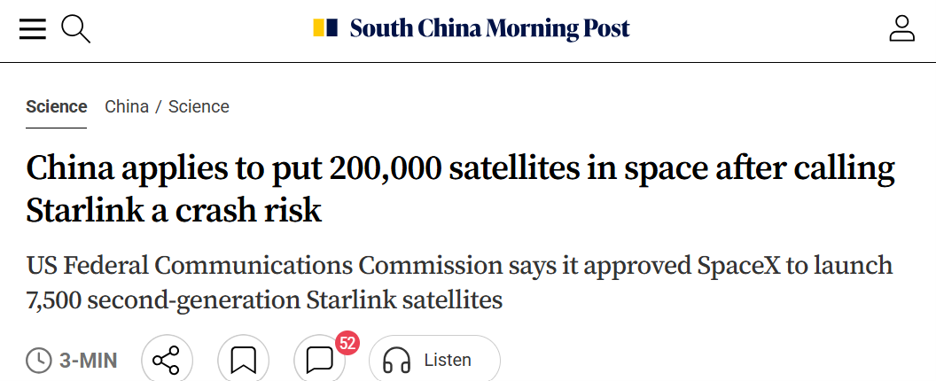
The Chinese, for now, are far behind SpaceX in launches, and in satellites. But their growth plans are aggressive, to say the least. In January they applied for permits for 200,000 satellites for a group of new constellations, which when completed will be four times bigger than Starlink, and over 10 times the hardware floating above us right now.
And just like we already understand that the priority for SpaceX is to build rockets for their own company, we should assume that Chinese firs will have first call on their own rockets.
But China has a habit of building out far more capacity than is needed by their own domestic industries, and they export the difference. But an unintended consequences of those ITAR rules is that at exactly the same time that global demand for more launchers is soaring, China’s surplus capacity will be wide open only to companies and governments who are outside US regulation.
Be Good.
Resources and links:
CONSOLIDATED AND FURTHER CONTINUING APPROPRIATIONS ACT, 2012
https://www.govinfo.gov/content/pkg/PLAW-112publ55/html/PLAW-112publ55.htm
Bad Idea: The Wolf Amendment (Limiting Collaboration with China in Space)
https://defense360.csis.org/bad-idea-the-wolf-amendment-limiting-collaboration-with-china-in-space/
Satellite operators are in panic mode due to a worsening launch crisis
https://arstechnica.com/space/2026/08/theres-a-huge-launch-crunch-right-now-and-it-will-probably-get-worse/
A Rocket Supply Crunch Is Making It Harder to Hitch a Ride to Space
https://www.wsj.com/business/a-rocket-supply-crunch-is-making-it-harder-to-hitch-a-ride-to-space-883f5e53
SpaceX has stopped taking Falcon 9 bookings past 2028, betting everything on Starship
https://www.techspot.com/news/113977-spacex-may-stop-flying-falcon-9-after-2028.html
Pentagon’s Longtime Rocket Launcher Races to Catch SpaceX
https://www.wsj.com/business/the-once-dominant-rocket-maker-trying-to-catch-up-to-musks-spacex-11ac3535
Emboldened by SpaceX, Investors Are Piling Into All Things Space
https://www.wsj.com/finance/investing/spacex-ipo-space-companies-investments-3b71287f
NEW CSF REPORT SEES UP TO 7,000+ SATELLITES LAUNCHED ANNUALLY BY MID 2030’S, HIGHLIGHTS THE CHALLENGES WITH US LAUNCH INFRASTRUCTURE
https://commercialspace.org/news/_events/scrubbed-media-advisory/
Satellite manufacturing and launch market revenue, worldwide
https://www.analysysmason.com/contentassets/8030c4bd62f54085b60ea78156419d2a/analysys/_mason/_satellite/_provider/_strategy/_aug2024/_nsi041.pdf
Governments’ New Must-Have: Their Own Satellites
https://www.wsj.com/business/telecom/governments-new-must-have-their-own-satellites-e7e801a3
Jeff Bezos’ Rocket Startup and Cerberus Compete to Buy SpaceX Rival
https://www.wsj.com/business/billionaires-compete-to-own-spacexs-rocket-rival-d5ab16d4
China’s Commercial Space Boom Poses Strategic Challenge For The US
https://www.edwardconard.com/macro-roundup/chinas-commercial-space-boom-poses-strategic-challenge-for/
China applies to put 200,000 satellites in space after calling Starlink a crash risk
https://www.scmp.com/news/china/science/article/3339493/china-applies-put-200000-satellites-space-after-calling-starlink-crash-risk
China’s space station, Tiangong: A complete guide
https://www.space.com/tiangong-space-station
China’s “eyes” and Iran’s “fist”: Iran dumped GPS, switched to Beidou, and won the war
China quietly takes over another trillion dollar industry
China has caught up in space. That changes everything, everywhere.
Congress wants the International Space Station to keep flying until 2032. Here’s why
https://www.space.com/space-exploration/human-spaceflight/congress-wants-the-international-space-station-to-keep-flying-until-2032-heres-why
Steve Feinberg, Deputy Secretary of War
https://www.war.gov/About/Biographies/Biography/Article/4122887/steve-feinberg/
The First Barrier: The Impact of Export Controls on Space Commerce
https://www.amacad.org/publication/united-states-space-policy-challenges-and-opportunities-gone-astray/section/5
Inside China / Business is a reader-supported publication. To receive new posts and support my work, consider becoming a free or paid subscriber.
From Inside China / Business via This RSS Feed.