

By Kit Klarenberg – Oct 10, 2026
Leaked British files show how a youth media platform became a vehicle for covert influence in Iraq, raising questions that outlast the coalition withdrawal.
The withdrawal of US-led coalition forces from Iraq closes another chapter of the military presence that followed the 2003 Anglo-American invasion. Britain’s influence operations, however, leave a less visible record.
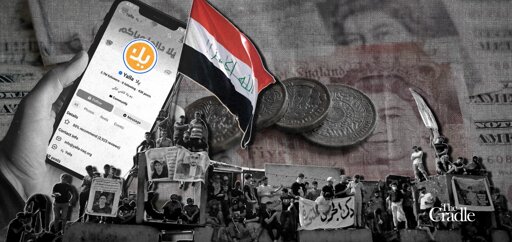
Leaked documents describe an elaborate campaign built during the war against ISIS, with Baghdad’s youth-oriented news and social media platform Yalla at its center. They detail how a British government contractor planned to use its considerable reach to shape attitudes among Iraqis while keeping London’s role out of sight.
The files raise questions about who directed the messaging, who paid for it, and what Yalla’s audience was told about its supposed independence.
Founded by young Iraqi journalists in 2015, according to its public profile, Yalla grew into one of Iraq’s largest news and social media platforms, with millions of followers in the country and the wider region.
The representative profile calls it young Iraqis’ “most trusted and reliable source of information.” It also says Yalla “differs from other Iraqi media platforms” because it is editorially and financially independent, while acknowledging the difficulty of sustaining that independence. The leaked British submissions describe a large, undisclosed stream of funding and substantial control over the platform’s content:
“Yalla now has over 5 million followers. 92 percent of its followers are inside Iraq and 35 percent of the followers are women. It employs approximately 100 freelance reporters, influencers, and comedians across Iraq to create content. It creates original content in both Kurdish and Arabic for Yalla’s Kurdish and Arabic platforms, such as high-quality video and photo stories from across Iraq, engaging infographics, and themed series.”
The leaked files put British spending on Yalla at £4.3 million in 2019/20, with another £4 million budgeted for the following year. Those sums covered its website, Instagram and YouTube accounts, and Facebook pages in Arabic, Kurdish and English.
Far from the financial independence Yalla claims, the leaked files describe millions of pounds in British funding and detailed oversight of its output and operations. Advertising giant M&C Saatchi sits at the center of the arrangement.
In submissions to the British Foreign Office, M&C Saatchi cited its “significant experience…implementing sensitive unattributable programming for government clients.” Its proposed methods included creating “a separate business entity” as a public-facing company and using “reliable” contacts to “build in-country networks” of influencers, journalists and other creators.
It also called for “production staff who speak local dialects to enhance credibility and authenticity as well as down-range cultural advisors.” In Iraq, the firm proposed another means of obscuring the chain of command:
“The use of VPNs associated with Iraqi/Kurdish diaspora will add another layer of unattributability. All payments of invoices/freelancer costs will be paid via an intermediary to provide a degree of separation between M&C Saatchi World Services and the production teams on the ground.”
By 2019, four years after Yalla’s launch, the platform had “accrued significant reach and brand recognition” in Iraq and beyond, according to the contractor. M&C Saatchi proposed turning that reach into a “far-ranging influence campaign” to “promote a sense of personal agency and increase community cohesion” in areas formerly held by ISIS.
The intended audience extended beyond those areas, taking in Iraqis across the country and West Asia. The pitch presented ordinary stories of work, travel and communal life as vehicles for a sustained attempt to influence how audiences saw themselves and the state.
**A platform for ‘behavior change’**M&C Saatchi proposed multimedia campaigns to encourage “personal agency, community cohesion and national unity” among Iraqi audiences. Yalla’s online accounts would serve as the “primary means of influencing the audience’s attitudes and behaviors, by exposing them to positive content in partnership with a network of trusted influencers.”
The objective was to “create a user experience which is similar to mentoring or life-coaching programs.” Its proposal did not ask creators to deny Iraqis’ hardships. It argued that acknowledging them would make the message more persuasive:
“Rather than seeking to mask or hide the difficulties faced by much of the target audience, messaging and narratives that embrace the reality of the situation will automatically possess authenticity and credibility. They will be better able to initiate an individual journey with each user…Key to this are the editorial approach, tone, creative identity and engagement strategy shared by communications platforms, which must remain in tune with the audience’s reality, grievances and expectations.”
M&C Saatchi added that “a sense of personal agency and resilience can be fostered by developing content in direct collaboration with members of the audience, local media outlets and micro-influencers, whose credibility and reach have been tested and proven.”
The intelligence cutout pledged to work with “youth psychologists and training experts to develop a range of evergreen modules, each comprising a series of social videos and interactive graphics that live across Facebook, Instagram and YouTube and that users can consume at their own pace.”
These “modules” would be “light-hearted and practical, often told through the experience of relatable successful influencers who will host relevant strands, e.g., ‘10 things I did to become a…’,”
For example, “in order to frame the multiethnic history and heritage of Iraq as a potential source of political and economic strength, the creative team will develop a travel series with three comedians from the South, the North and from Baghdad.”
“Each of these influencers will be responsible for designing a travel itinerary for one of the others to explore the region they come from, giving the audience an insight into the lived experience of people in that region as well as its diverse historical and cultural heritage. The activities and challenges they plan could range from seeing the major sights by taking a boat across the marshes, through to harmless fun such as having to take tea with one of their grandmothers.”
Though the programs would be “hosted natively” on Yalla platforms, participating influencers would cross-promote them through their own channels and contacts. M&C Saatchi also planned to “work with national and local TV and radio to repackage the content into broadcast material in order to maximize its reach.”
It said it had cultivated “relationships with a wide range of media outlets across the country” and expected to use them “to good effect.” That would allow material commissioned under the British program to travel well beyond Yalla’s own accounts, often without audiences knowing its origin:
“The influence campaign will be disseminated across a range of key media touchpoints for the target audience. These touchpoints will be carefully selected by the media strategy team in order to enjoy the widest reach possible and deliver the messaging where it will be best positioned to drive attitudinal and behaviour change at a personal and social level…The campaign will seek to shape choices, reinforce positive ideas and change social perceptions…[and] place increasing focus on user-generated content as the project evolves.”
A campaign promising “personal agency, community cohesion and national unity” might seem harmless in communities scarred by ISIS rule. But Yalla’s audience was not told that British contractors were shaping the content it consumed.
London’s role in the invasion of Iraq, and its record in the war against ISIS, make that concealment all the more significant. The same platform presented to young Iraqis as independent was being used to pursue a foreign government’s influence campaign.
Resistance Factions Necessary to Ensure Permanent US Iraq Withdrawal
**‘Sustained messaging’**M&C Saatchi’s project was intended to be deeply personally invasive for all concerned. The firm boasted that its “communications campaigns…will operate in the space where emotional, intellectual and social responses can be triggered.”
This amounts to extraordinary potential influence over the perceptions and behavior of millions of unconsenting, vulnerable people throughout West Asia. Moreover, M&C Saatchi’s “targeting strategies” were so reportedly granular that dedicated “audience segments and even specific individuals” could be identified, then blitzed by British intelligence-approved psyops via Yalla.
The still-surgingly popular “independent” news, entertainment and social media platform is just one component of a wide-ranging psychological warfare apparatus secretly constructed by London in Iraq over a decade ago in the name of battling ISIS propaganda, which was never dismantled.
Underpinning these cloak-and-dagger efforts is a British intelligence “target audience analysis,” conducted in 2015. It advocated disseminating “sustained messaging” to Iraq’s population via different “local channels,” while offering extensive insight into how citizens of different faiths and ethnicities in separate regions could be manipulated.
As The Cradle has previously exposed, this extended to exploiting “tribal leaders and religious clerics” as propaganda megaphones, specifically to promote “Sunni Arab self-governance in a positive manner” locally.
Strikingly, M&C Saatchi also managed that operation. In leaked submissions to the Foreign Office, the firm outlined its experiences “working with particular [Islamic] leaders to support them in articulating their ideas and vision through well-written articles, training them in how to deliver speeches and support on the organization of events.”
M&C Saatchi’s work also extended to Imams Online, a website addressed to Sunni clerics. Previous reporting by The Cradle has examined its efforts to influence sermon material, including content on Palestine that favored pacifist forms of solidarity. Sunni Arab and Kurdish audiences figured prominently in British planning in Iraq.
The broader files also document efforts to shape perceptions of Iran, but Yalla’s specific output would need to be examined before assigning every part of that wider agenda to the platform. The connection is the contractor’s use of apparently local media and trusted intermediaries to carry messages whose sponsor remained hidden.
The Iran angleFor example, The Cradle has previously revealed how “within hours” of Iranian Quds Force General Qassem Soleimani’s January 2020 assassination, MI6 cutout Global Strategy Network activated its Aleppo-based network of citizen journalists and media production facilities to produce a video depicting residents of Atarib “handing out sweets in celebration.”
The clip was “retweeted by prominent activists and journalists in and beyond Syria, picked up by [Saudi outlet] Al-Arabiyya and broadcast to its 22.5 million followers, and retweeted by US Secretary of State Mike Pompeo.”
This stunt was part of a wider psyops effort, whereby Global Strategy “significantly shifted the ongoing conversation around Syria and Iran,” in a manner disfavourable to the Islamic Republic. Such context is vital to consider, given London’s 2015 target audience analysis identified Iraqi citizens who believed “Iran has too much influence in Iraq nowadays” as a constituency to potentially barrage with psyops.
Markedly, intensive focus grouping found the overwhelming majority of Iraqis vehemently rejected this view, across ethnic and religious lines.
In all, 54 percent of respondents said the claim that Iran had too much influence in Iraq “made no sense at all”; just 18 percent agreed. Among Sunnis surveyed, however, 68 percent agreed. British planners saw an opening in that divide.
Years later, as the US–Israeli war on Iran began, Iranian Kurdish armed groups based across the Iraqi border prepared for a possible offensive. A Kurdish ground assault reportedly figured in Israel’s war plans, but the groups denied reports that they had crossed into Iran. No such offensive materialized.
It was possible to mobilize them because, as Britain’s 2015 target audience analysis found, certain Iraqi Kurds believe their country’s borders “should be changed,” and support seizure of Iranian territory by force.
As US troops leave Iraq, the country’s resistance factions are already at odds with Baghdad over the future of their arms. The leaked files expose the machinery London built to “drive attitudinal and behavior change” among Iraqis. Whether it still operates, and to whose ends, demands scrutiny.
From Orinoco Tribune via This RSS Feed.