

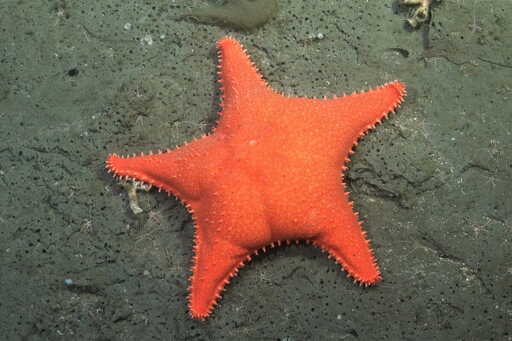
A sea cucumber with two horn-like appendages sits on the mud in the deep South Atlantic Ocean. Scientists named it Loki, after the horned Norse trickster god. Loki lives 2,577 meters (8,455 feet) below the surface, nearly eight Eiffel Towers deep. Loki (Peniagone sp.) is one of 57 species new to science that researchers identified from Argentina’s Mar del Plata Canyon, according to the Nippon Foundation-Nekton Ocean Census. The team also found five new genera. It took them two weeks. “The deep sea holds some of the least understood ecosystems on Earth,” Michelle Taylor, head of science at Ocean Census, said in a press release. A standout discovery of the workshop, this striking deep-sea holothurian (sea cucumber) was named “Loki” for its prominent horned appendages, reminiscent of the god in Norse mythology. Captured in high-definition in-situ video and images on the seafloor of the Mar del Plata Submarine Canyon, it represents one of up to 10 new holothurian species uncovered during the Argentina workshop. Image courtesy of ROV SuBastian / Schmidt Ocean Institute. Most of the specimens came from a 2025 expedition that turned the deep sea into must-watch TV. That July and August, the research vessel Falkor (too) sent a remotely operated vehicle named SuBastian into the canyon and livestreamed the dives. More than 4 million people tuned in live, according to Ocean Census. Many came for a plump orange sea star that looked like Patrick Star from the cartoon SpongeBob SquarePants. Patrick, it turns out, is not a…This article was originally published on Mongabay
From Conservation news via This RSS Feed.