

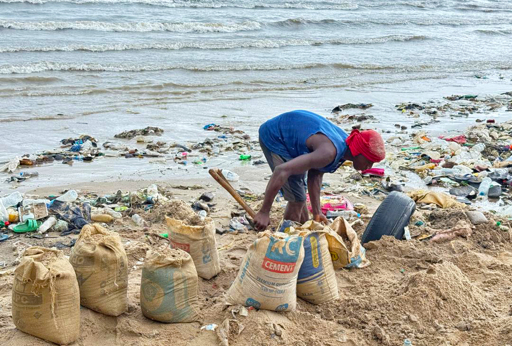
PORT LOKO, Sierra Leone — When the tide pulls away from the beach in the agricultural regions in Mahera in Lungi, about 27 kilometers (17 miles) across the sea from the country’s capital, Freetown, the digging commences. Young men shovel sand into cement bags and carry them to a flat open area to pile sand into heaps to be sold by local women to truck drivers. These women are dedicated sand sellers. They negotiate prices, buy sand from the shovelers and sell to heavy-duty truck drivers to be transported to Lungi, Port Loko and other areas. The income helps pay for food, school fees and other basic needs of their families. However, their work relies heavily on the seasonal tide: The sellers can buy sand during low tide but are banned from doing so during high tide. In Mahera, the sand trade began as a survival strategy for 14 women who became family breadwinners, mostly due to absent partners. Aminata Kargbo is the chairperson of the sand sellers in the locality in Mahera, and entered the business to support her seven children after her husband’s death. “Most of these women have lost their husbands, and the money we make goes to support our children,” she said. She oversees about 19 sand sellers, the majority of them women. Many of these women have become widows after losing their husbands to Sierra Leone’s civil war (1991-2002) and various illnesses. Aminata Kargbo, chairperson of the sand sellers in Mahera, stands in front of…This article was originally published on Mongabay
From Conservation news via This RSS Feed.