

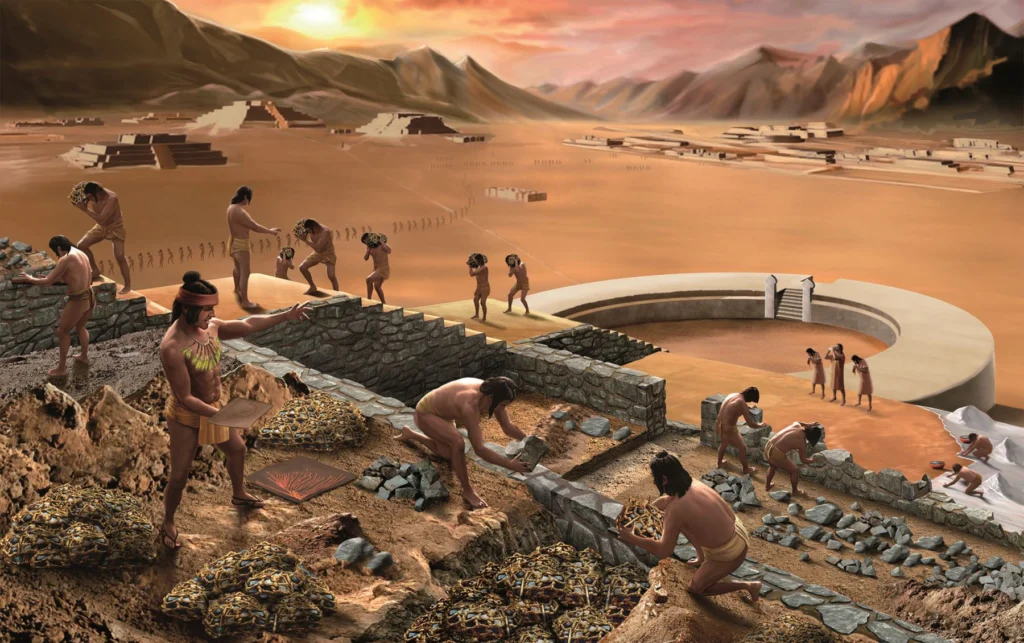
On Monday, Peru’s Ministry of Culture reported the Caral civilization—considered the oldest culture in the Americas—developed technologies, knowledge, and organizational methods to adapt to a diverse landscape and maintain trade with distant peoples 5,000 years ago.
RELATED:
Peru Recovers 342 Pieces of Cultural Heritage From Abroad
Archaeologist Ruth Shady, the Caral Archaeological Zone director, presented these findings during a press conference marking 32 years of archaeological work on the civilization. According to the specialist, research conducted at the site’s 12 urban centers offers insight into how the inhabitants lived in harmony with one another and with nature.
Caral is located along the Peruvian coast, 185 kilometers north of Lima. Archaeological evidence shows that its inhabitants managed resources, utilized various ecosystems, and established relationships with communities in distant regions.
The society integrated agricultural resources from the valleys with marine resources from the coast, complemented productive activities, and developed knowledge to manage water in alignment with natural cycles. These strategies reflect planning aimed at adapting to an environment subject to climatic variations.
Notable among their technological contributions are shicras—bags made of plant fibers and filled with stones—which were used as fill material for platforms and other architectural structures.
“Experimental studies indicate this system helps reduce the impact of seismic activity on the structures, demonstrating solutions adapted to the characteristics of the terrain,” Shady noted during the press conference.
🔴 La Ciudad Sagrada de Caral conmemora 32 años de investigaciones arqueológicas.
En esta fecha, la arqueóloga Ruth Shady destacó los conocimientos de esta antigua civilización y su respeto por la naturaleza.
Para celebrar este aniversario, el 23 y 24 de octubre se realizará el… pic.twitter.com/cM5XdWbu3z
— TVPerú Noticias (@noticias_tvperu) October 12, 2026
The text reads, “The Sacred City of Caral commemorates 32 years of archaeological research. On this date, archaeologist Ruth Shady highlighted the knowledge of this ancient civilization and its respect for nature. To celebrate this anniversary, the Caral Raymi will take place on October 23 and 24, with cultural activities and tours of the archaeological site.”
The construction of large public buildings, circular plazas, and residential complexes also demonstrates the society’s capacity for planning and collective labor. Furthermore, the orientation of certain buildings provides information regarding the observation of celestial cycles and the understanding of time—knowledge linked to agricultural and ceremonial activities.
Research indicates that Caral populations maintained ties with communities along the coast, in the Andes, and in the Amazon, as well as with regions in present-day Ecuador. Findings include objects made from Spondylus shells—sourced from the Ecuadorian coast—as well as macaw feathers and Amazonian snail shells.
“These findings reveal interaction networks that facilitated the exchange of goods, knowledge, technologies, and cultural practices via land, sea, and river routes,” the archaeologist stated.
Minister of Culture Alberto Beingolea highlighted the need to continue researching the legacy of Caral and to recognize the insights it can offer contemporary Peruvian society.
“Caral has left us with a wealth of examples that we must begin to heed today. That is why the events of over three decades ago—when its scientific recognition began—were so significant. Today, we must continue to find sources of knowledge and value in this civilization that can benefit all Peruvians,” the minister remarked.
#FromTheSouth News Bits | Peru held the 2026 regional and municipal elections. pic.twitter.com/u6b7N7YZ2x
— teleSUR English (@telesurenglish) October 7, 2026
From teleSUR English via This RSS Feed.