



About Studies on the DDR
The German Democratic Republic (Deutsche Demokratische Republik, DDR) was a socialist state founded in East Germany in 1949 as a democratic, anti-fascist reaction to the Second World War and the subsequent restoration of monopoly capitalism in West Germany. The DDR represented a new Germany – one in which the land was redistributed, the means of production socialised, agricultural production organised into cooperatives, and significant advances made in gender equality, education, healthcare, and other areas of society. The DDR also cultivated friendly and close-knit economic relationships with other socialist states and exercised political and material solidarity with countries and movements fighting for their independence in Latin America, Asia, and Africa. In this series, we use the German acronym DDR instead of the English acronym GDR specifically because it has become a positive point of reference in many parts of the world and especially for countries in the Global South.
After the reunification of Germany in 1990, the DDR’s economy was dismantled and treated as a prototype for the shock therapy austerity measures that were soon imposed on other countries – not just the former socialist states. At the same time, the DDR was politically, judicially, and morally delegitimised. The publications in this series are a rejection of the narrative propagated by enemies of socialism, both new and old, that the demise of the DDR – and other socialist projects – proves the inevitable failure of any socialist policy and economy.
Through the series Studies on the DDR, the Internationale Forschungsstelle DDR (International Research Centre DDR), and Tricontinental: Institute for Social Research seek to stimulate a renewed engagement with the history, achievements, and principles of the DDR. After all, millions of people around the world are still fighting for advancements that were once a given in the socialist system of the DDR but were lost with its downfall.
- Introduction
The state of contemporary global agriculture and food production urgently begs for alternatives. If the global food supply were distributed fairly and equally, everyone would have enough to eat. Yet, in 2025, 645 million people – roughly one out of thirteen – worldwide went hungry.1 Prices are further inflated through financial speculation on food, raw materials, and land, perversely ensuring that profits are reaped not only from basic goods needed for survival but also from growing rates of hunger as rising commodity prices themselves become targets of speculative trading.2
While just over one-third of the world’s food continues to be produced by small farmers,3 massive agricultural corporations such as the ABCD Group – Archer Daniels Midland, Bunge, Cargill, and Louis Dreyfus – dominate global food cultivation, processing, marketing, and distribution.4 The result is that companies like those in the ABCD Group have a near monopoly over advanced agricultural technology and increasing control over globally centralised production and processing chains. This concentration of land ownership and the means of food production reinforces patterns established during the colonial era, driving monocultures, one-sided trade relations, and land evictions. These dynamics, in turn, exacerbate small-scale subsistence farming, extreme exploitation of agricultural workers, poverty, hunger, environmental destruction, and rural maldevelopment. While the development of capitalist relations in agricultural technologies and science has unleashed significant potential for food production, this has clearly not been used to satisfy people’s most basic need for food.
Decades after the dissolution of the DDR, we look back at its achievements – and what is to be learned from its shortcomings – for answers. In the DDR’s mere forty-five years of existence, the conditions in rural areas changed fundamentally. This change took place in three stages:
- The first stage (1945–1948) was during the shift in the balance of power in East Germany after the Second World War, which marked the decisive starting point for the DDR’s agricultural transformation. During this period, land reform was implemented that broke up the centuries-old land ownership structures in the countryside. This process of democratisation created the first framework for new relations of production based on cooperation.
- The second stage (1952–1960) was characterised by the Genossenschaftsbewegung (cooperative movement), which was able to resolve the contradictions between modern technology and small-scale production in the interests of farmers and agricultural workers without ruining, displacing, or subordinating them to the interests of big business, as occurs under capitalism. By the same token, agricultural cooperatives also provided the rural population with previously unattained social and cultural rights and opportunities.
- The third and final stage (1970s–1980s), built on the foundation established during the previous periods, saw the development of large agricultural production networks and deepening cooperative relationships between the various stages of production, from primary production to processing and distribution.
The DDR’s agricultural reform was among the most successful and comprehensive programmes in the country’s short history, transforming the reality of the peasantry from feudal-like working and living conditions (including economic and political subordination and cultural deprivation) into one marked by confidence, democracy, cultural vibrance, and highly productive industrial agriculture.
Every country and region has its own history and conditions that must be carefully analysed and for which unique solutions must be found. Nevertheless, the decisions made in the DDR’s agricultural sector offer practical insights for an alternative to capitalist market competition and profit-seeking. This study aims to contribute to contemporary debates on the prospects of socialist agriculture by examining the historical process that fundamentally changed the social structures and ways of working and thinking in the East German countryside. It is not possible to cover all aspects of the DDR’s agriculture in this study; important questions around forestry, ecology, agriscience, internationalism, and the inner workings of the Democratic Farmers’ Party (Demokratische Bauernpartei Deutschlands, DBD) could only be touched upon in passing and certainly deserve to be explored further in the future.
This study is structured chronologically, following the concrete historical development of agriculture in Germany: first the centuries-old feudal yoke imposed on Germany’s peasantry, then the period of land reform and, finally, the transition to a cooperative organisation of agriculture and large-scale industrial agricultural production.
- The Prussian Path to Capitalist Agriculture and the Rise of Fascism
German agriculture transitioned from feudal to bourgeois-capitalist conditions during the nineteenth century, relatively late compared to other European countries like England and France.5 Even then, it only occurred very gradually and without a radical overthrow of the feudal aristocracy, who retained their hold over the land. The unification of Germany into a modern bourgeois nation-state was brought about by the political manoeuvring and warmongering of the Prussian ruling class, led by Otto von Bismarck and Kaiser Wilhelm I.
During this period – referred to in Marxist literature as the ‘Prussian path to capitalism’ – the emergence of the capitalist mode of production was tightly bound to relations of feudal subordination. The living and legal conditions of the various peasant working masses changed, but their economic and social dependency on the landed nobility remained. A class of ‘free’ small and medium peasants6 emerged, most of whom were heavily indebted to the landlords. Servants and sharecroppers who used to be landless farmhands for the lord of the manor now crystallised as a new class of agricultural workers. The feudal landlord himself became the owner of a sort of proto-agribusiness. Village life continued to be shaped by the large landowners, who maintained an economically and politically dominant role well into the twentieth century that was upheld by laws, customs, traditions, and new capitalist dependency relations. Backward, almost medieval-era conditions thus prevailed in the countryside.
Feudal laws, which had ostensibly been abolished in 1919 after the fall of the German monarchy, remained a de facto reality for agricultural workers and servants who were prohibited from organising politically or in trade unions such as in the German Agricultural Workers’ Association (Deutscher Landarbeiterverband, founded in 1909). Excerpts from the Prussian Servants’ Regulations, which was established in the early 1800s, reveal how labourers were still deprived of basic rights:
Paragraph 77: ‘If the servants provoke the lord’s anger through improper behaviour and are treated by him in return with insulting words or petty abuse, the servants may not seek legal redress’.
Paragraph 79: ‘Except in cases where the life and health of the servant is in present and unavoidable danger due to maltreatment by the lordship, he is not permitted to actively resist the lord’.
Paragraph 74: ‘Without prior knowledge and permission of the lordship, servants may not leave the house, even for their own affairs’.
Paragraph 76: ‘The servants are to accept the orders of the lordship and their reprimands with deference and modesty’.7
From the early nineteenth to the twentieth century, Germany’s economic base underwent a fundamental shift from an agro-industrial to an industrial economy. The population nearly tripled, from around 18 million in 1800 to over 52 million in 1900.8 While most Germans lived in the countryside in the early nineteenth century, from 1871 to 1910 – in the wake of the urban migration that accompanied capitalist development – the percentage of the population living in cities (defined at the time as having more than 2,000 residents) rose from 36% to 60%.9 Meanwhile, from 1882 to 1907, the share of workers engaged in agriculture and forestry dropped from 42.5% to 28.6%. A large class of landless agricultural workers soon outnumbered the owners and tenants of farms in rural areas. In 1907, large estates (greater than 100 hectares) employed an average of 51 labourers, and one-third of the 9.5 million people working in agriculture were wage labourers.10 Agricultural wage labourers were concentrated in the areas east of the Elbe River, where large agricultural enterprises were most widespread. Foreign seasonal workers, especially from the Polish regions, were particularly exploited. In the mid-nineteenth century, there was a significant concentration of land ownership: less than 1% of landowners held more than 40% of arable land, while around 80% of farmers owned less than 12%, consisting of individual plots under 7.5 hectares.11
Conditions in the German countryside developed unevenly throughout the nineteenth century because of the country’s territorial fragmentation into many small states. West of the Rhine River, serfdom and indentured servitude had been swept away with the French Revolution of 1789. In central and southern Germany, between the Rhine and the Elbe Rivers, small and medium-scale farmers worked parcels of land with leases to large landowners. But when serfdom was abolished by law in the areas east of the Elbe (which would later make up much of the DDR’s territory), peasants were forced to compensate their former masters. Ultimately, to be emancipated from feudal obligations and duties, peasants paid a total of 1.8 billion marks and had to give 425,169 hectares of land to the Junkers, Prussia’s landed nobility.12 This intensified the already greatly unequal distribution of arable land and gave rise to the large, landed estates that shaped the East German countryside prior to 1945.
Furthermore, the Junkers east of the Elbe were a central pillar of the reactionary, militaristic Prussian state and alongside influential industrial monopolists, would later become the facilitators of Hitler’s fascism. As historian Siegfried Kuntsche points out, the aristocratic Junker class used the key positions it retained in Germany’s military and state bureaucracy to openly support reactionary forces during the Weimar era (1919–1933), with ‘representatives of several long-established noble families join[ing] the Nazi movement’ as far back as the early 1920s.13 In the region of Mecklenburg, one of the heartlands of the Junkers, a quarter of all landowners became members of the Nazi party.14 Half of the generals in the high command of the fascist Wehrmacht (armed forces) came from nobility.15 During the Second World War, Junkers used their already dominant role in village social life to promote the theft of Eastern European land, pitting peasants against their counterparts in the East and diverting attention from the Junkers’ own history of appropriating peasant land.
Under Hitler (1933–1945), German fascism pursued a policy of the complete subjugation of peasants and the rural population to enable its imperialist war policy. Organisations and unions of agricultural labourers were banned. Everyone involved in the production, processing, and trade of agricultural produce was forced to become a member of the Nazi Reich Food Estate, or Reichsnährstand, under the command of large landowners. A total delivery obligation was enforced during the war, and peasants’ savings and credit balances were confiscated to pay for the cost of war. The fascist state compensated for the rapid decline in crop yields during the war years by imposing delivery quotas on produce from occupied countries in Eastern Europe and enforcing a merciless starvation policy against local populations. Only through the barbaric exploitation of millions of forced labourers were the fascists able to keep German agriculture afloat.
Nazi Germany’s wartime policies created a major setback for the country’s agricultural development. As early as the mid-1930s, the war economy was prioritised over agriculture. ‘If necessary, we will be able to cope without butter, but never without cannons’, as Nazi propaganda minister Joseph Goebbels put it in 1936.16 The damage incurred by the war left machinery and large tracts of land in ruin and livestock decimated. This was especially true in East Germany, where the fascists sought to ensure that nothing could be left behind for the Red Army and proceeded to systematically slaughter livestock and raze the soil – what Gerhard Grüneberg, the Socialist Unity Party of Germany (SED) agriculture secretary from 1960 to 1981, described as the continuation of the Nazis’ ‘criminal scorched-earth policy’.17
- Land Reform: Junkers’ Lands in Peasants’ Hands
Post-War Destruction and Hunger
East Germany was the main European front for the final battles of the Second World War, leaving large areas of agricultural land, facilities, and processing plants in ruin; means of transport practically non-existent; and production capacities set back by decades. As the Red Army advanced on German territory, many Junkers fled to West Germany, often taking their livestock, technical equipment, and other private possessions with them and thus further worsening the supply situation. Swine livestock was reduced to 20% of its pre-war levels, cattle to 66%, and poultry to 25%.18 As a result of all these factors, the domestic food industry collapsed completely in 1945.
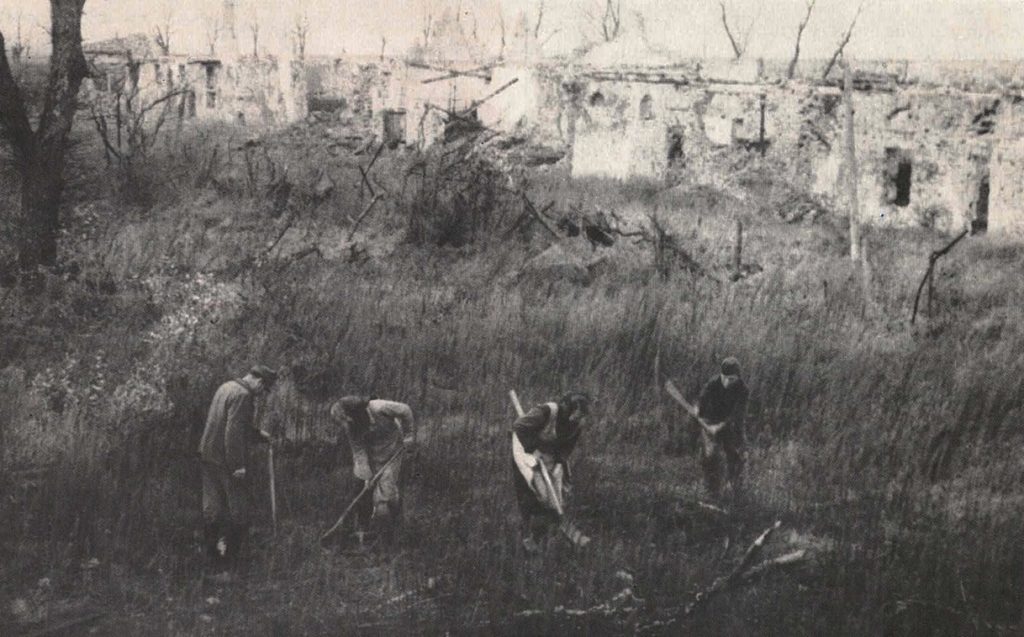
Image 1. Farmers remove debris and stones from a field in the East German village of Podelzig, which was almost destroyed in the final days of the Second World War, 1945.
After the war, Germany was divided into four military occupation zones. The Eastern Zone (known as the Soviet Occupation Zone, SOZ) was under the control of the Soviet Military Administration, and the Western Zones were controlled by the United States, the United Kingdom, and France. Berlin, which was located in the SOZ, was similarly divided among the four allied powers. In the SOZ, the German Administration for Agriculture and Forestry (Deutsche Verwaltung für Land- und Forstwirtschaft) was set up to deal with the urgent task of securing the first post-war harvest. On 18 June 1945, the Soviet Military Administration abolished the Nazis’ total delivery obligation by passing Order No. 40, which established delivery targets for grain, potatoes, vegetables, and oilseeds, followed shortly thereafter by Order No. 18, on 29 July 1945, which put an end to the compulsory delivery of livestock products. These were among the first measures implemented that promoted a democratic agricultural policy and helped spark the peasantry’s interest in increasing production.
Soon thereafter, a two-price system was established: farmers were paid a lower price for produce that they were required to sell to the state to ensure that there was sufficient food for the population and a higher price for surplus produce, which they could sell freely. Administrative bodies, trade unions, and newly permitted parties – which were united in the anti-fascist democratic bloc – called on the population to help with the harvest. Engineers and industrial workers formed crews to repair agricultural machinery as townspeople went into the fields to help with the harvest and peasant committees were formed in the villages to coordinate the work, combat hoarding, and ensure that the population received their food rations.
The Land Reform Programme
The Soviet Occupation Zone
During the war, German communists in exile in the Soviet Union developed a land reform programme for the post-war period. Edwin Hoernle was one of the main architects of this programme. Hoernle, an agricultural expert and communist parliamentarian during the Weimar era, returned from exile in May 1945 and took over as president of the Administration for Agriculture and Forestry (the main administrative position for agriculture and forestry in the newly created German Economic Commission). The meticulous planning and viability of this programme garnered support among the Communist Party of Germany (KPD) and its base, which in June 1945 issued a public appeal for democratic land reform under the slogan Junkerland in Bauernhand! (‘Junkers’ lands in peasants’ hands!’) and campaigned for a swift deliberation and implementation by the four-party bloc. On 22 August 1945, the KPD’s central committee adopted a concrete proposal to implement a land reform programme by the end of the year. Its central points were:
- To expropriate, without compensation, large private estates (over 100 hectares in size).
- To expropriate, without compensation, all property belonging to Nazi functionaries and war criminals, regardless of size.
- To create a state land fund consisting of the expropriated property as well as state-owned assets.
- To allocate the largest part of the land fund as private property in small, individually owned plots (five hectares in the case of high- and medium-quality soil and eight to ten hectares in the case of poor- and very poor-quality soil).
- To distribute livestock and basic production equipment to ‘new farmers’, i.e. former agricultural workers, landless peasants, or refugees.
- To transfer tractors and large agricultural machinery as well as workshops and agricultural processing plants to peasants’ mutual aid committees for collective use.19
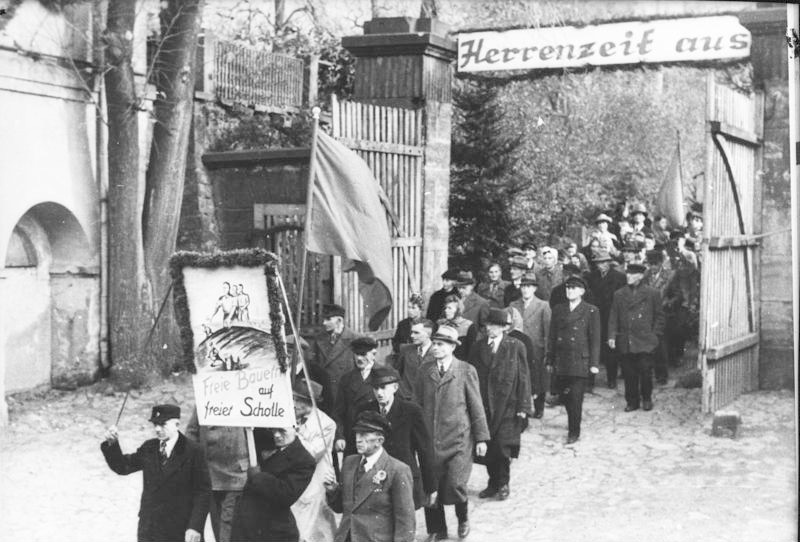
Image 2. On 11 September 1945, three municipalities near Dresden, East Germany, expropriated and divided up the former Royal Manor. The sign (front left) reads ‘Free farmer on free soil’, and the banner (upper right) reads ‘The master’s time is up’.
The land reform initiative was promoted in a variety of settings, from the press to churches and party committees, and found increasing support among the population.
Hoernle and the KPD argued that compensating the large estate owners for their expropriated land would be irresponsible given the supply shortages and general economic destitution. As they pointed out, by no means would large estate owners be reduced to beggars if their estates were expropriated without compensation, as they still retained their private belongings and accumulated wealth. Furthermore, this was considered an appropriate punishment for war crimes and an act of historical justice.20
Since the Christian Democratic Union of Germany and Liberal Democratic Party of Germany – both members of the anti-fascist democratic bloc alongside the Social Democratic Party of Germany and the Communist Party of Germany – opposed the proposal for expropriation without compensation, there was a series of lengthy negotiations before the legal ordinances calling for expropriation without compensation were ultimately passed by the five state governments within the Soviet Occupation Zone in early September 1945.
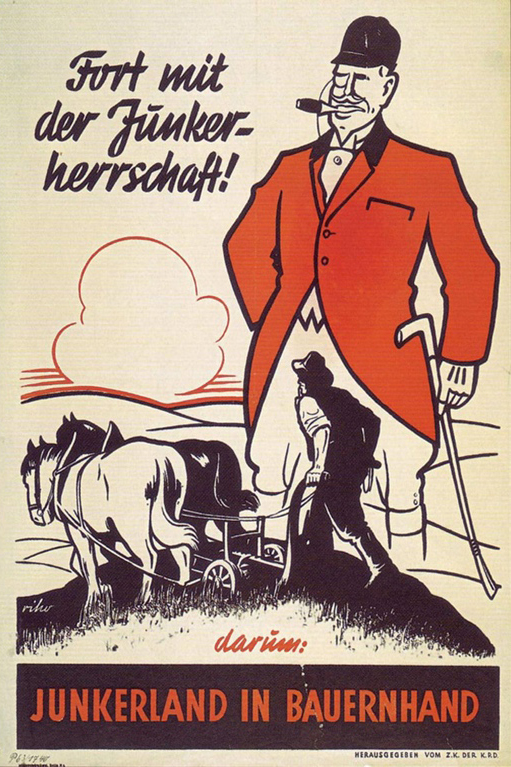
Image 3. A 1945 poster from the KPD’s central committee which reads: ‘Away with Junker rule: Junkers’ lands in peasants’ hands’.
The Western Zone
Popular pressure and the approval of land reform in East Germany in early September 1945 prompted the US and British military administrations in the West to draw up legal proposals for land reform in their zones. Yet the legal provisions they drafted offered politicians and large landowners enough leeway to ultimately prevent redistribution measures or to delay them until the balance of political power had shifted in their favour. The bourgeois parties forming in West Germany at this time sought to ensure that the old private capitalist ownership relations were preserved, despite popular referenda demanding the democratisation of the economy through the nationalisation of industry and other measures.
The West German region of Hessen is an example of this desire for change. Here, the social democrats and communists held a majority in the state government and drafted a state constitution that, in Article 41, outlined plans to socialise key industries and place the banking sector under public administration. Though a public referendum in December 1946 showed that 72% of voters were in favour of Article 41, the US military administration nevertheless opposed it, and US General Lucius Clay prohibited its implementation.
The land reform laws being drafted in West Germany were indicative of the rural population’s desire for change. Ultimately, however, the rural population was left disappointed, as the few measures enacted in the West applied to only 5% of the total arable land. In the DDR, meanwhile, 3.2 million hectares were expropriated and redistributed – fourteen times more than in West Germany. 21
The Political and Economic Background of Land Reform
Neither the Soviet Military Administration nor the German communists pursued the goal of socialist construction in East Germany in the immediate aftermath of the war. Rather, from 1945 to 1952, their main objective was to foster an anti-fascist, democratic transformation of a united Germany; eliminate German imperialism and militarism; and ensure that post-war Germany would become a neutral demilitarised zone in the international rivalry between the capitalist and socialist states.22 As such, land reform – i.e., the parcellation of land as private property – cannot be seen as a policy of the DDR’s socialist construction, which was first initiated in 1952, seven years after the war but as an effort to address pressing practical issues in the post-war era. Among them was the need to rebuild the collapsed food supply in East Germany by promoting small-scale agriculture, which motivated farmers to produce more and offered them the opportunity for self-sufficiency. Edwin Hoernle summarised the main reasons for land reform under these specific conditions:
The great agrarian reform is above all a decisive means for the complete eradication of Prussian militarism, whose main supporter was the Junker caste. Economically, the handing over of the land to the self-employed peasant is also urgently needed. In light of the current ruin of agriculture and the enormous lack of technical equipment, only proverbial peasant diligence, the fanaticism with which the smallholder farmer clings to his land, can bring about a rapid increase in agricultural production.23
Nonetheless, land reform was a decisive step that later enabled the eventual transition to socialism. The democratisation of the countryside and the encouragement of cooperation among the peasantry laid the socioeconomic foundations for the eventual creation of socialist relations in agriculture. This policy was first and foremost the fulfilment of the peasants’ demand for the redistribution of land and an end to feudal oppression. Walter Ulbricht, the leader of the Socialist Unity Party of Germany (SED), which emerged from a merger between the Communist Party of Germany (KPD) and Social Democratic Party of Germany (SPD) in April 1946, summed up this connection at a party conference in 1947:
To be frank, some people asked us at the beginning of the land reform: What kind of socialists are you? You’re not even in favour of the ‘collectivisation of farmland’. We responded to them: That might suit you, gentlemen, keeping the large estates together so that they could later be easily returned to their former owners! No, our course is different: we are acting to ensure that the large estates are completely divided up, so that the large landowners in Germany can never again reclaim this land.24
In the short term, the structures created by land reform were able to significantly improve the food supply, both for the individual farmers and the whole country. However, it was clear from the outset that the small-scale farming facilitated by land reform would not be able to meet the increasing demands of food production in the long term, as it faced challenges resulting from the size of the allotted agricultural land, the limited availability of equipment, and other factors.
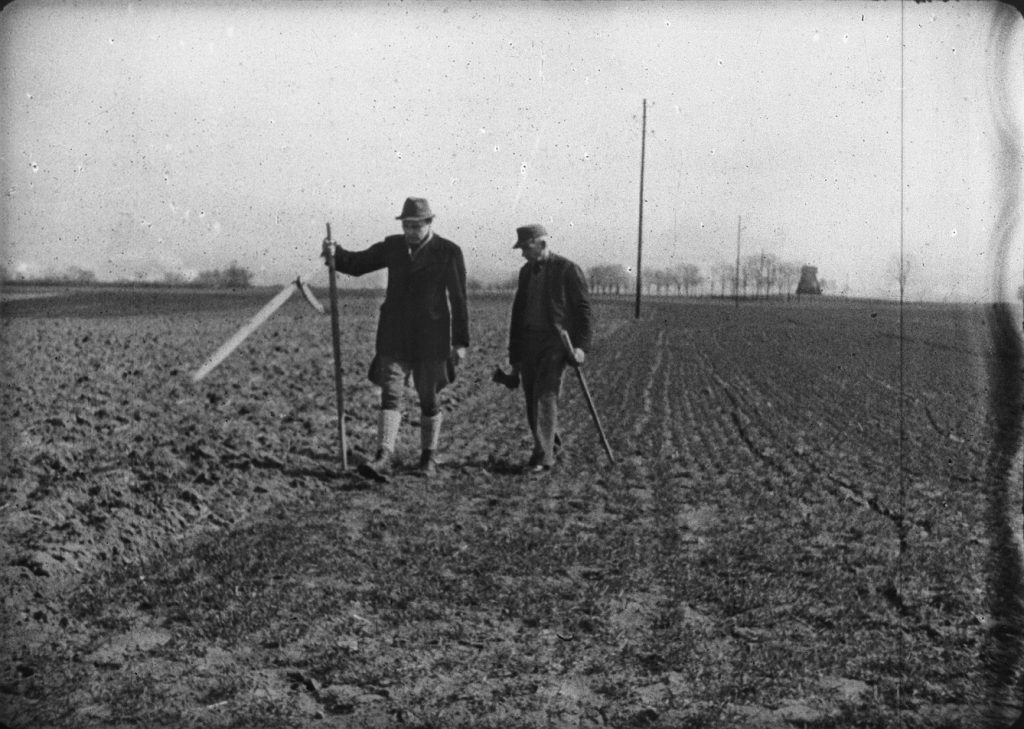
Image 4. Members of a land reform commission in the DDR measure a parcel of land in September 1945.
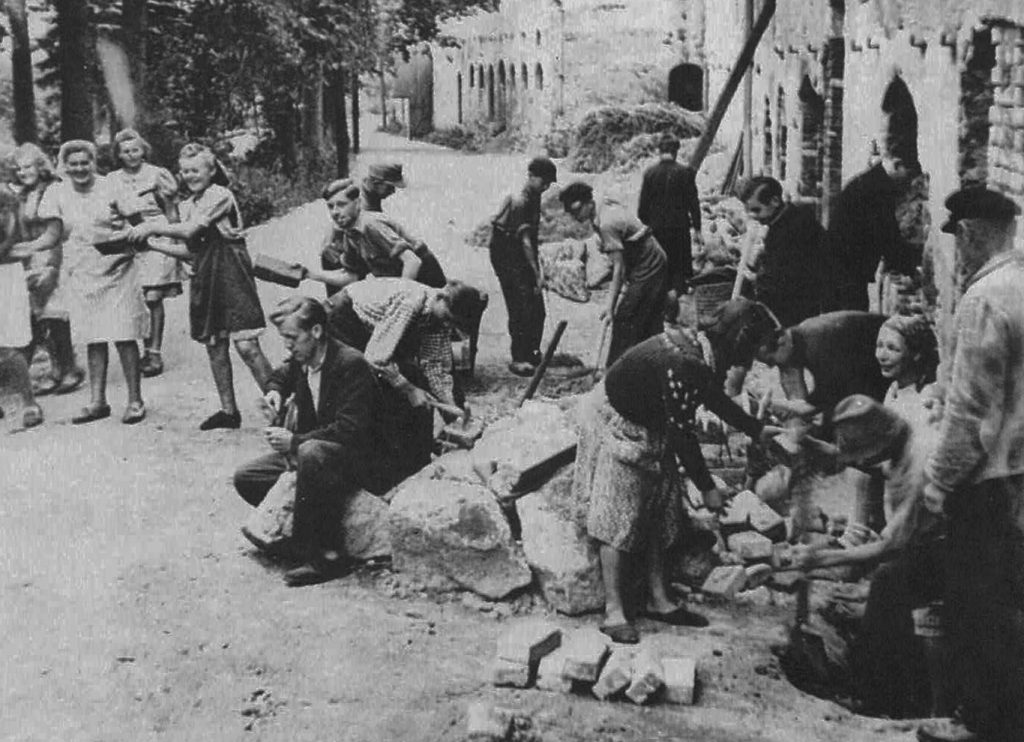
Image 5. Young people help dismantle an old estate house to obtain building materials for new farmhouses.
The Implementation and Impact of Land Reform
In East German public village assemblies in September 1945, agricultural workers, landless and smallholder peasants, and refugees25 elected members from their ranks to land reform commissions that were tasked with coordinating the implementation of the reform. The commissions determined which land was to be expropriated; documented and secured an inventory of associated buildings and stocks; drew up lists of smallholder and landless peasants, agricultural workers, and refugees; and assessed land allocation applications submitted by individual peasants. Redistribution plans were discussed and ratified in public meetings in which all applicants for land allocation participated. In order to avoid favouritism, decisions regarding the allocation of plots, stock, and inventory were made by drawing lots. The land reform commissions were also responsible for creating the first peasants’ mutual aid committees, established in the third quarter of 1945. These committees ensured that agricultural machinery was used efficiently and that mutual aid was organised among new farmers, from providing each other with advice on managing pests to lending helping hands during the harvest. Solidarity was to replace competition or obedience in the countryside.
More than 52,000 people26 participated in the 9,500 land reform commissions, 38% of whom were agricultural workers, 35% of whom were smallholder and tenant farmers, and 12% of whom were resettled refugees. The remaining 15% were industrial workers and village craftsmen. The responsibility for implementing land reform was thus placed in the hands of the social forces that had the most vested interest in the reorganisation of land ownership. The executive boards of the commissions, consisting of five to seven members, were usually chaired by the district’s mayor. By the end of 1945, most of the land marked for individual reallocation had been redistributed, and the landed nobility was generally expelled from the estates and villages over which they had reigned.
Since the implementation of the land reform was overseen by the local population, the commissions came to act as schools of democracy. For instance, the handover of the title deeds for allocated land became a day of celebration in the villages. Local party member Hermann Wesemann’s account of a public meeting in Torisdorf, Schönberg county, paints a vivid picture of how land reform was implemented at the village level:
Torisdorf was an estate of around 400 hectares. It belonged to Junker Axel Bunger, a staunch militarist who let ‘his people’ address him as ‘Lord Captain’. There were some class-conscious workers in the village who helped us prepare a [monthly] village meeting. … Everyone was there, including the resettled refugees. Some agricultural workers nervously tried to give the impression that they had just come across the meeting by chance. They held buckets of water or milk cans in their hands and stood at the back. This was no doubt because of [their fear of] ‘Lord Captain’, who kept tabs on everything in the village. …Opinions went back and forth for a while until, finally, everyone agreed to divide up the estate. A land commission was formed and was to be headed by an agricultural worker. But now the landowner had to be officially informed of the meeting’s decision. When we went to see him, he was already shouting and swearing at us. I told him briefly about the decision and asked him to hand over the keys and all estate documents to the land commission immediately, to stay in his room until further notice and to refrain from any interference. He initially tried to intimidate us, declaring that the meeting did not have the authority and that he would not recognise oral decrees at all. In response to the question of authority, I asked him whether he thought this was a question of political power. For in this regard, he was too late: it had already been decided in favour of the working people. He and his peers had been outplayed. We kept him under constant watch until the estate was divided up, which happened soon afterwards, and prevented him from sending communications.27
Torisdorf was among the 3.3 million hectares of land – around one-third of the agricultural and forestry land – and 14,000 buildings that were expropriated without compensation in the Soviet Occupation Zone as part of the land reform. Of the 3.3 million hectares of expropriated land, 76% consisted of 7,160 private estates (farms with more than 100 hectares of arable land); 4% of 4,537 farms owned by active Nazis and war criminals with less than 100 hectares of land; and the remaining 20% of state property and Nazi party property.28
Two-thirds of this land (2.2 million hectares) was transferred to a central land fund, which was then distributed to individual applicants as identified and listed by the land reform commissions. The expropriated land was distributed to small farmers, agricultural workers, peasants, and refugees as privately owned plots and could be passed down within a family on the condition that the recipient family members use the land. It could not be sold, leased, or mortgaged. Forty-three percent of the expropriated land was distributed to agricultural workers and landless peasants, while 35% went to refugees.29 As a result of the land reform, the share of agricultural land cultivated by smallholder farmers doubled.
Various measures were implemented to improve the quality of life of the new farmers and support nascent businesses. These measures included flexible delivery quotas, loans, and the provision of seed and livestock. Efforts were made to promote mutual cooperation and assistance during harvest times, as well as a special construction programme initiated by the SMA which led to the building of approximately 95,000 houses, 104,300 stables, and 38,470 barns by 1953.30 Due to the shortage of labour, agricultural machinery, and draft animals, it was important and necessary to ensure cooperation between the peasants and the local authorities, organisations, and businesses. For example, the urban population was mobilised to help new farmers harvest their yields.
The remaining expropriated land (1.1 million hectares) became state property, resulting in the creation of 500 state-owned estates.31 Initially, these estates served as supply farms for the Red Army as part of the post-war reparations to the Soviet Union. Later, they were converted into Publicly Owned Estates (Volkseigene Güter, VEG), which became important mechanisms to support other agricultural enterprises, both publicly and privately owned, such as farms for seed and animal breeding, training and education, and experimental and research purposes. They also supported economically struggling farmers in an advisory capacity and played a pioneering role in the introduction of new farming methods.
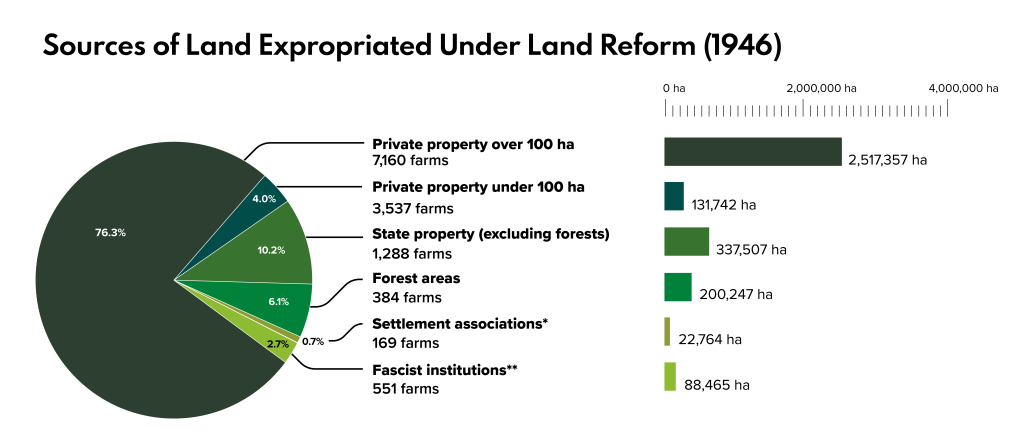
Data from Klaus Schmidt, Landwirtschaft in der DDR [Agriculture in the DDR] (Clenze: AgriMedia, 2009), 16.
* Beginning in the early twentieth century, non-profit companies bought large estates and divided them into plots for lease to sharecroppers.
** Individuals and organisations associated with the Nazi party.
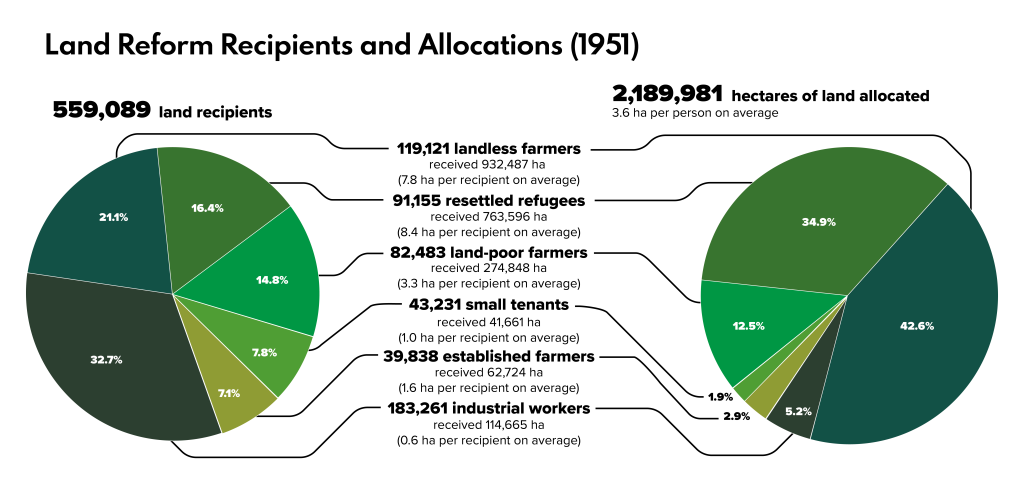
Data from Klaus Schmidt, Landwirtschaft in der DDR [Agriculture in the DDR] (Clenze: AgriMedia, 2009), 16.
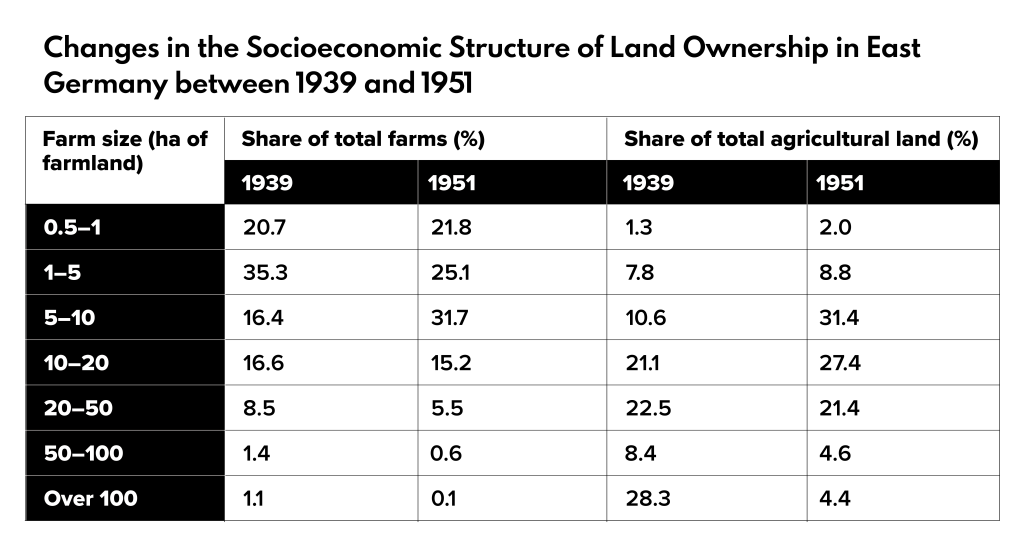
This means, for example, that in 1939 only 1.1% of all farms had more than 100 hectares of land. However, these few farms accounted for 28.3% of the total agricultural land. Land reform not only greatly increased the number of small and medium-sized farmers but also enormously increased their share of the total utilised agricultural land.
Data from a Collective of authors, Früchte des Bündnisses – Werden und Wachsen der sozialistischen Landwirtschaft der DDR [Fruits of the Alliance – The Development and Growth of Socialist Agriculture in the DDR] (Berlin: Dietz Verlag, 1985), 33.
In early 1946, East Germans went to the polls to elect local commissions for the Peasants’ Mutual Aid Association (Vereinigung der gegenseitigen Bauernhilfe, VdgB), thereby turning the organically grown peasant mutual aid committees into official administrative bodies. The Peasants’ Mutual Aid Association was tasked with establishing machine-lending stations (Maschinen-Ausleih-Stationen, MASs), where peasants could rent agricultural machinery and equipment, and with setting up businesses that processed agricultural products and built repair workshops and cattle rearing centres.
By 1950, there were 32,621 state-owned and 617,886 privately owned agricultural farms of at least one hectare, the latter of which cultivated around 88% of all agricultural land in the DDR (5.7 million hectares).32 In 1948, 40,000 farms were run independently by women farmers, a result both of land reform and of the significant number of soldiers who died during the war.33 With an average size of 9.3 hectares, privately owned farms were divided as follows:
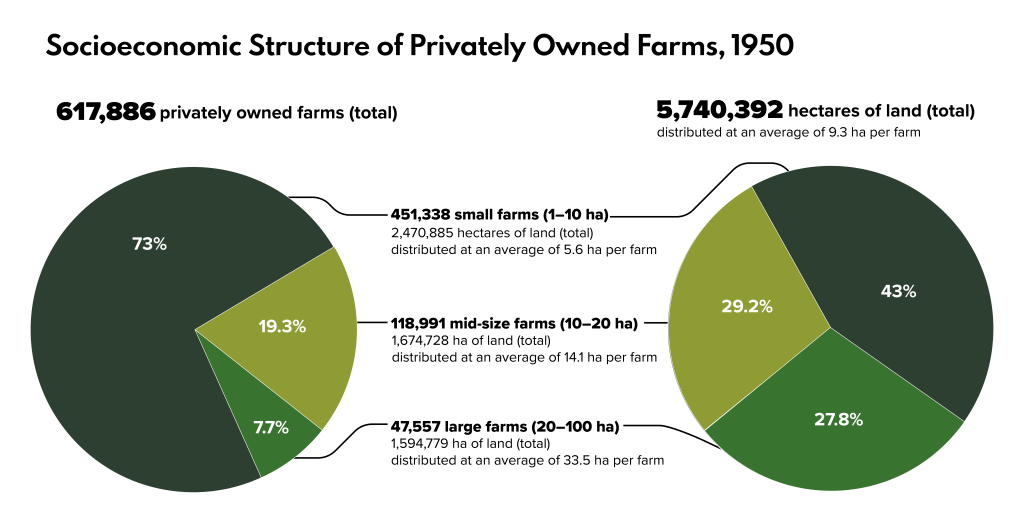
Data from Klaus Schmidt, Landwirtschaft in der DDR [Agriculture in the DDR] (Clenze: AgriMedia, 2009), 131.
At the time, roughly two of the eight million people employed in the DDR worked in agriculture. A quarter were agricultural workers (workers with contracts); another quarter were farmers (self-employed owner or tenant of a farm), and half consisted virtually entirely of family workers (the family of the owner or tenant working without contract, social security, or income tax), which were almost exclusively women.34 Of the approximately 500,000 farmers, 210,000 were new farmers.35
In sum, the implementation of land reform in East Germany marked a historic turning point in the democratisation of agrarian relations and radically improved the living conditions of the rural population. With the economic and political power of the landed nobility finally broken, peasants and agricultural workers increasingly developed into self-confident and socially influential classes. They began to actively shape society through new democratic structures such as the Land Reform Commission, the Peasants’ Mutual Aid Association, and the Democratic Farmers’ Party of Germany36 Cooperation and participation in decision-making processes became central features of peasants’ lives, bringing the question of power to the fore in the countryside. This was a new beginning, uncharted territory for a peasantry that had known only centuries of feudal oppression and then twelve years of fascist warmongering.
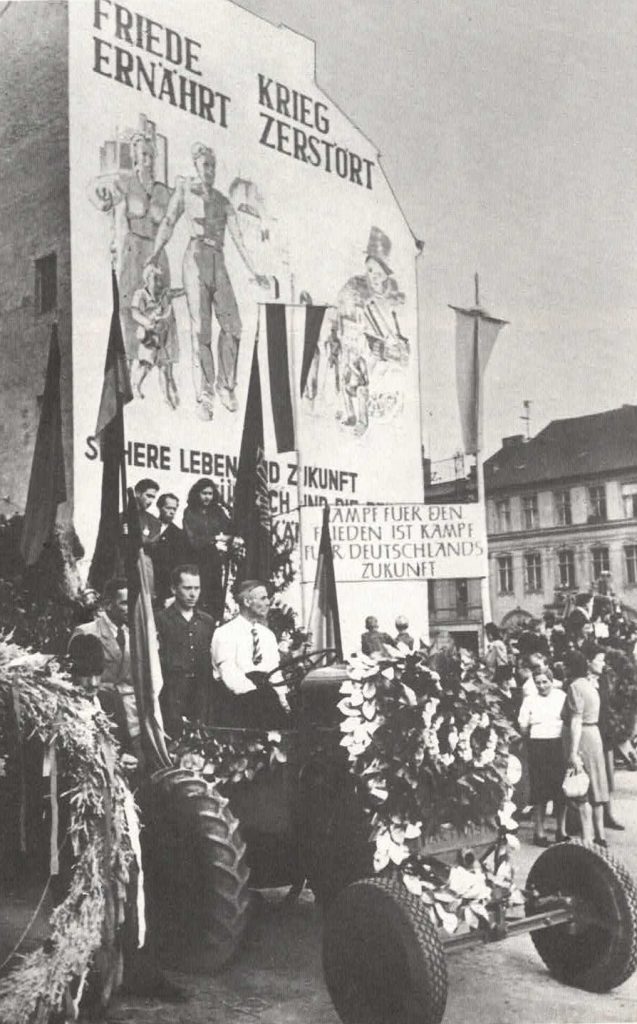
Image 6. A celebration of the 100th tractor built in the Brandenburg tractor factory in October 1949. The sign (right) reads: ‘Fighting for peace is fighting for Germany’s future’; the mural (left) reads: ‘Peace nourishes – war destroys’.
- Building Cooperatives: ‘From Me to We’
In Germany, cooperatives and cooperative farmers’ associations existed prior to the DDR in the form of agricultural enterprises that offered bank loans and organised purchases and sales of agricultural products (seed, fertiliser, etc.). However, since Junkers and large-scale farmers held leading positions in the associations, they were able to use them to strengthen their dominance over small and medium-sized farms. By 1950, because of the land reform programme, these organisational units had been restructured and integrated into the Peasants’ Mutual Aid Association as the Farmers’ Trade Cooperative (Bäuerliche Handelsgenossenschaft), replacing a logic of subjugation with one of solidarity.
On the production side, the first Agricultural Production Cooperative (LPG) was founded in 1952. From the outset, LPGs were conceived not merely as institutions for the collective production of agricultural goods, but as broader social organisations tasked with economic, social, and cultural functions. The socialist character of cooperative production established itself through the LPG’s stated purpose, operations, and, above all, its integration within the DDR’s political and economic structures. Yet establishing this socialist character and continuing the fundamental transformation in the countryside proved to be a complex process.
For the DDR’s agricultural policies to meet the material needs of the population, especially in a context facing post-war ruin and an economy short of labour power, the question of scale and efficiency were key. Bruno Kiesler, head of the SED Central Committee’s Agriculture Department, explained how ‘democratic land reform was a strategically correct decision, though its initiators were aware that large-scale production was ultimately superior to a fragmented, small-scale economy in agriculture’. In order to ‘take the rural masses along this path’, he continued, rather than imposing the idea of large-scale production on them from above, the peasants ‘first had to find their own footing and gain trust in the political leadership. Through their daily working of the land, they gradually came to recognise that communal, cooperative work was more effective’.37
The economic pressure to overcome small-scale agricultural production increased at the beginning of the 1950s with the heightened demand for agricultural products, both as raw materials for industry and as foodstuffs for the population as post-war scarcity gave way to peacetime demands. At the same time, there were signs of stagnation in agricultural production and labour productivity, and the difficult economic situation led to farm closures, especially among new farmers.38 Furthermore, parcelled agricultural production on small private farms hindered the rational distribution of labour and made it difficult to efficiently use agricultural machinery, which was already scarce. Manual labour remained predominant. In 1950, the 514 machine-tractor stations (Maschinen-Traktoren-Station, MTSs) in the DDR had just 10,834 tractors and 675 trucks for the entire country.39 By 1952, before the cooperative movement began, some 30,000 new farmers had abandoned their farms.40 While the MAS – the precursor of the MTS – serviced individual farmers and offered small equipment, the MTS sought both to extend beyond individual equipment rentals, providing large agricultural machinery and organising its deployment in the most efficient way across more and larger LPGs.
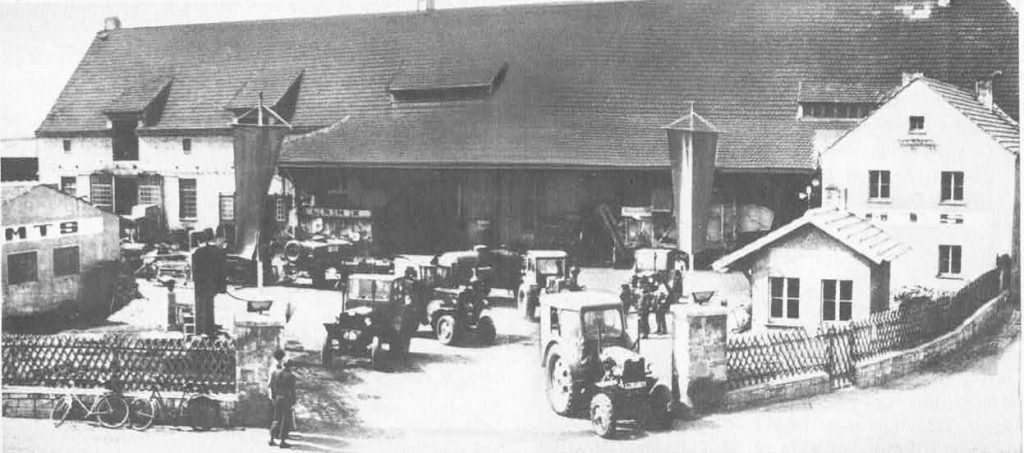
Image 7. Courtyard of an MTS in Obhausen, Saxony-Anhalt, DDR (1950).
The socialist historian Kurt Gossweiler described the increasing necessity to make a strategic decision about the political system under which to develop the agricultural sector:
Faced with the urgent need to increase the agricultural yield, the DDR’s leadership had to decide how to open the way to large-scale agriculture: either along capitalist or socialist lines. For this reason, the discussion about the construction of socialism in the DDR was primarily a discussion about whether the formation of agricultural production cooperatives would be approved.41
A policy oriented toward cooperative agricultural production would have a profound impact on labour and property relations in rural life. It was a far-reaching decision that could not be resolved until the national question in Germany had been settled. In 1949, when the DDR was founded as an anti-fascist, democratic state in reaction to the founding of the Federal Republic of Germany (Bundesrepublik Deutschland, BRD), the Soviet Union, as well as the communists in West and East Germany, continued to pursue the strategic goal of a unified, non-aligned German republic in which the Four Ds of the 1945 Potsdam Agreement would be implemented.42
Ultimately, the SED and the political leadership of the Soviet Union recognised the necessity to shift strategies. At its 1952 party congress, the SED decided to begin the construction of socialism through the formation of LPGs. Walter Ulbricht, general secretary of the SED, stressed the need for farmers to join cooperatives on a voluntary basis, emphasising ‘the principle of absolute voluntariness in the organisation of such cooperatives and to point out the inadmissibility of applying any kind of coercion towards the peasants in this regard’. Furthermore, Ulbricht continued, ‘Comrade Lenin himself had stressed that communal agriculture cannot be introduced by decrees and laws’.43
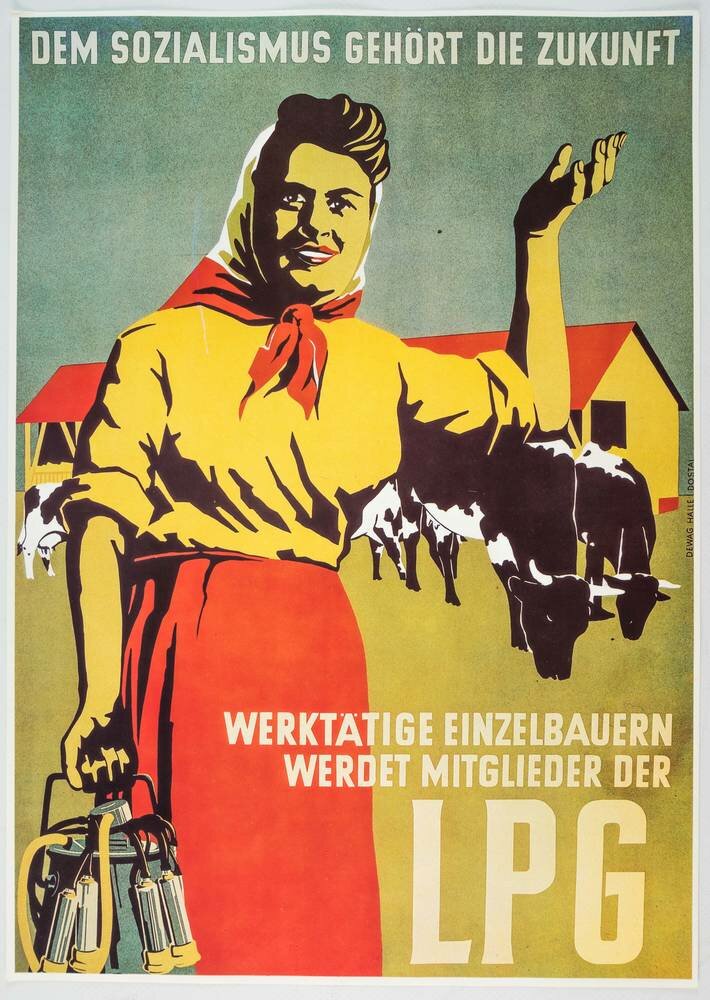
Image 8. An SED agitation poster from the 1950s that reads: ‘The future belongs to socialism. Individual farmers, join the LPG’.
Building Socialism One LPG at a Time
Though the need to develop cooperatives and the structures for large-scale agricultural production was clear, in many respects the subjective and objective conditions to carry out such a project had not yet developed. How would the DDR bring about a shift in peasants’ way of thinking, working, and living?
In some cases, it was peasants and agricultural workers who pushed for a form of collective production. Such peasants had in fact urged the SED to support the founding of cooperatives even before the party’s decision to do so in July 1952, and this approach is what led to the creation of the first LPG in Thuringia in the same year. They were in favour of LPGs because they either saw them as a necessary response to the difficult economic situation on their own land or because they knew of cooperative agriculture in the Soviet Union and were convinced of the need for socialism.
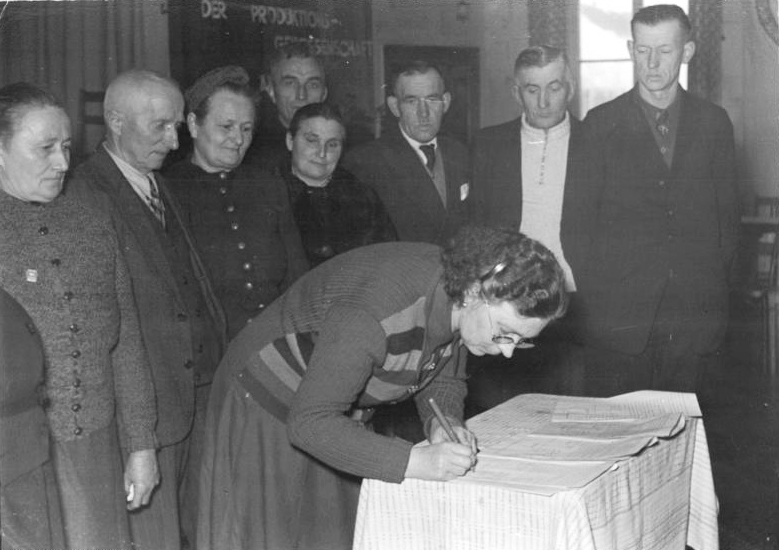
Image 9. In January 1953, nine farmers founded an agricultural production cooperative in the municipality of Blochwitz (Grossenhain district). A farmer named Godzina signs a document to register herself as a member of the cooperative.
Yet, for the vast majority of peasants – especially among long-established medium and large-scale farmers – the thought of giving up individual farming was still inconceivable in 1952. Many were dismissive, while others took a wait-and-see approach. An unprecedented reorientation was necessary to promote a more collective way of thinking and working, which came to be known by the slogan Vom Ich, zum Wir (‘From Me to We’). SED agriculture secretary Gerhard Grüneberg summarised some of the major difficulties in this process:
Cooperative work makes it necessary to become a member of a collective. Previously, the peasant alone decided how to organise his work. Now he44 receives instructions or, if he becomes head of a brigade, for example, he must organise the work for many people… [and] learn to overcome certain prejudices and respect other cooperative members as his equals.45
In the initial phase, new and smallholder farmers who managed economically weak farms of all sizes were the main driving force behind the cooperative movement.46 Large-scale farmers were excluded from LPG membership until 1955 in order to ensure that those peasants with closer links to the working class played the decisive role in the cooperatives from the outset.47 Generally, smallholder farmers, agricultural workers, and new farmers were easily recruited to join LPGs because they faced the greatest economic difficulties and were less attached to their land.
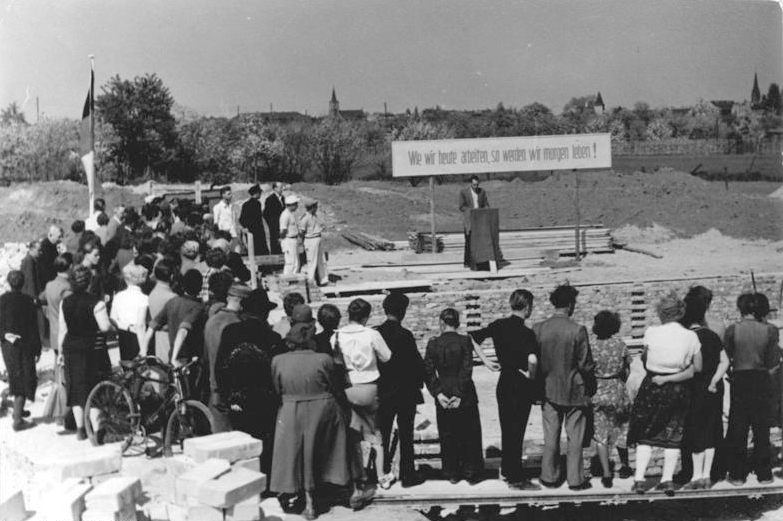
Image 10. On 19 May 1954, the Freie Erde (Free Soil) LPG in Magdeburg-Salbke builds a large farmyard. The cooperative’s farmers laid the foundation stone together with workers from neighbouring industrial enterprises. The sign reads: ‘How we work today is how we will live tomorrow!’
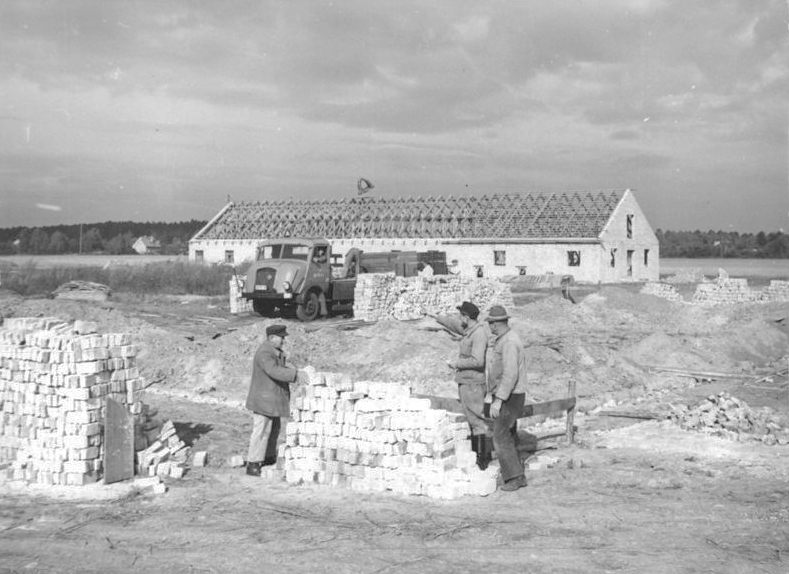
Image 11. The LPG construction brigade builds a feed house on 19 October 1955. Between April and October of that year, the construction brigade completed three new stables. By 1960, the brigade had built farrowing pens, and combines for pigs, cattle, and poultry. All these major construction projects were completed with the help of volunteer construction workers.
The nascent LPGs faced unfavourable conditions of production in the early years, such as degraded soil, no experience in organising large-scale collective production, and a shortage of labour and lack of available barns, stables, and other farm buildings. The process was made even more difficult by the fact that farmers often joined the cooperatives one by one. Integrating new members and new areas of production were a constant challenge. Crop rotations and the organisation of production had to be adjusted frequently. On average, it took five to ten years to establish solid structures and continuous operating procedures in LPGs.48
Despite these and other challenges, by 1952 the first cooperatives were already farming an average of 114 hectares of agricultural land.49 This meant that the material prerequisites for large-scale production – such as the new agricultural machinery and technology and funds needed to construct farm buildings – had to be secured as quickly as possible. Even though the manufacturing of agricultural machinery accelerated in 1952, there was still a lack of sufficient technical equipment and training for cooperative farmers. All of this put further strains on the national economy.
In order to facilitate a gradual and accessible transition to cooperatives, the state introduced active development incentives and subsidised newly established LPGs through measures such as the reduction of tax arrears and outstanding debts, the provision of free te