

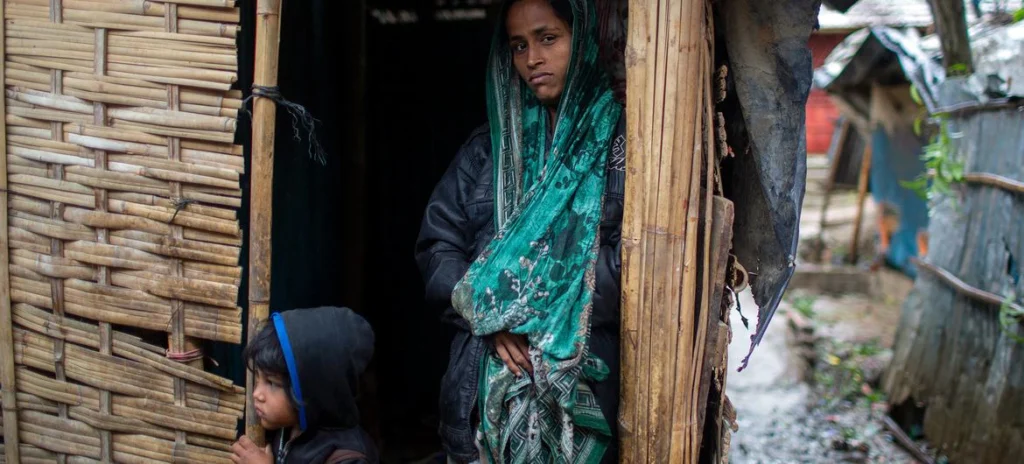
On Monday, Nicholas Koumjian, head of the UN Independent Investigative Mechanism for Myanmar, warned that violence against civilians in western Myanmar is preventing the return of the Rohingya—a Muslim-majority community that has faced persecution and displacement to Bangladesh.
“The Mechanism is investigating allegations of very serious international crimes currently being committed in Rakhine State by perpetrators of various ethnicities, religions, and political affiliations,” Koumjian said in a statement upon concluding a six-day official visit to Bangladesh.
RELATED:
China-Myanmar Corridor: Strategic Benefits Unveiled in State Visit Agreements
During his visit, the investigator met with Rohingya individuals who had fled the violence. “Many Rohingya shared their recent, traumatic experiences that drove them to seek refuge in Bangladesh, and these testimonies are crucial for advancing our investigations,” he stated.
According to UN data cited in the report, more than 154,000 Rohingya have arrived in the country since the beginning of 2024, following an escalation of violence linked to the conflict between the Burmese military and the Arakan Army. The latter is a Buddhist guerrilla group active in Rakhine that, according to available information, also discriminates against the Muslim minority. The Burmese military seized power in a 2021 coup.
Attacks on civilians in Rakhine State keep the Rohingya population at risk and hinder their safe return to Myanmar, even as UN investigators document allegations of international crimes.
In 1971, #India welcomed millions of refugees from Bangladesh with humanity. Today, Rohingya refugees in #Bangladesh struggle for food and clean water despite millions in international aid. Where is the money going? #Rohingya deserve dignity, not neglect! @vonbrauckmann pic.twitter.com/iVwaZNeFbU
— Aditya Tiwari (@adityatiwarizz8) October 12, 2026
Airstrike in Rakhine
Two weeks prior to Koumjian’s statement, at least 50 people were killed and another 58 injured in an airstrike on a market in Rakhine, according to UN figures. The Arakan Army attributed the shelling to the Burmese military. The incident took place in an area inhabited by the Rohingya population.
Koumjian called for an end to violence against civilians and maintained that ensuring those responsible are held accountable is crucial for Rohingya communities to return safely to their homes.
This new wave of displacement follows the exodus of over 720,000 Rohingya during the military campaign launched in August 2017. Currently, more than 1.2 million Rohingya live in refugee camps in Cox’s Bazar, Bangladesh—home to the world’s largest network of refugee camps, according to UN data cited in the text.
Established in 2018, the UN mechanism has provided evidence to the International Criminal Court, to Argentine authorities—who opened proceedings in 2024 under the principle of universal jurisdiction—and to the International Court of Justice, in connection with investigations into possible genocide against the Rohingya people.
#Myanmar | Malaysia welcomed military-backed leader Min Aung Hlaing as concerns grow over plans to repatriate thousands of Myanmar nationals.
Rights groups warn returnees could face persecution, forced conscription and violence amid the civil war.#Malaysia #HumanRights… pic.twitter.com/Ls0gW40rsy— teleSUR English (@telesurenglish) October 8, 2026
From teleSUR English via This RSS Feed.