

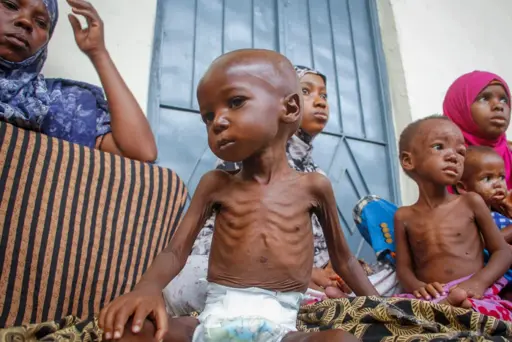
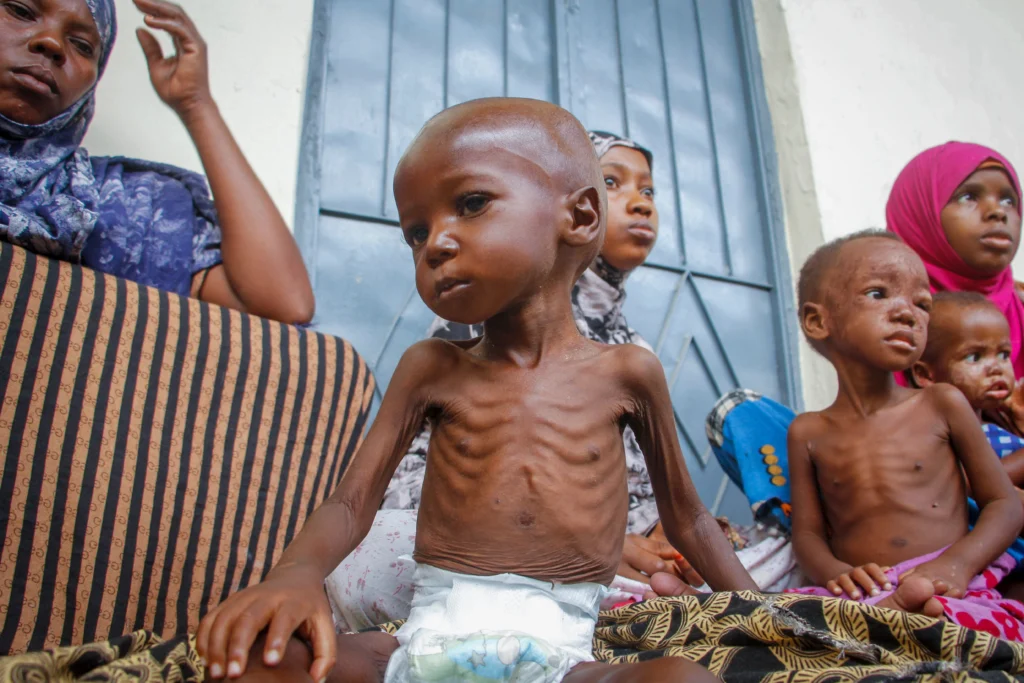
Nearly 40.9 million people in East Africa are facing hunger at crisis levels or worse, the UN Office for the Coordination of Humanitarian Affairs (OCHA) reported on Monday. This figure is up from the 40.5 million recorded in the previous quarter, according to the report covering the third quarter of 2026.
RELATED:
W.H.O. Warns Over Spreading Ebola Outbreak in East Africa
OCHA noted that humanitarian needs remained high during that period due to conflict, food insecurity, disease outbreaks, drought, and displacement. It also warned that high food and fuel prices, combined with funding constraints, increased the strain on vulnerable communities.
The situation could deteriorate in the coming months due to El Niño, a phenomenon linked to changes in atmospheric dynamics caused by rising Pacific Ocean temperatures. According to OCHA, experts predict the phenomenon will be significantly more intense this year than in previous years.
Among those affected, more than 208,000 are suffering from hunger at a catastrophic level—the highest tier of the Integrated Food Security Phase Classification (IPC)—indicating a risk of famine. Sudan, South Sudan, Somalia, and Kenya are among the countries most affected by food insecurity.
🔴 #Sudan 🇸🇩
Conflict, displacement and drought are driving an increased risk of Famine in parts of Greater Darfur and Greater Kordofan.
An immediate, significant scale-up of assistance is urgently needed. Without this, catastrophic food insecurity, acute malnutrition, and… pic.twitter.com/84bqzbnUSn
— The Integrated Food Security Phase Classification (@theIPCinfo) October 12, 2026
Acute malnutrition also continues to take a heavy toll on children: approximately 9.7 million children under the age of five require treatment, including 2.3 million suffering from severe acute malnutrition. The agency attributed the deterioration to factors including prolonged drought and limited food availability. In Karamoja, a sub-region of northeastern Uganda, at least 16 people died from causes linked to food shortages.
The report estimates that East Africa recorded 16.5 million internally displaced persons and 6.1 million refugees and asylum seekers during the third quarter of 2026. In Ethiopia, renewed fighting between federal forces and rebels continued to drive displacement and humanitarian needs.
Burundi and Djibouti saw new arrivals of refugees fleeing conflicts in the Democratic Republic of the Congo and Yemen, respectively. Regarding health, nearly 23,000 cases of cholera, 2,255 measles infections, and close to 670 cases of mpox were recorded between January and September.
The humanitarian response also faces financial constraints. OCHA expressed concern that funding cuts by the United States and other donor countries—initiated last year—pose a significant challenge. To date, only 39% of the humanitarian funding required for East Africa in 2026 has been received.
#Kenya | Kenya has confirmed its first-ever Ebola case after a citizen who traveled from the DRC died in Nairobi.
Authorities are tracing contacts and passengers as the DRC battles a major outbreak across several provinces.#Ebola #DRC #teleSUREnglish pic.twitter.com/pfvEFsAMvz— teleSUR English (@telesurenglish) October 6, 2026
From teleSUR English via This RSS Feed.