

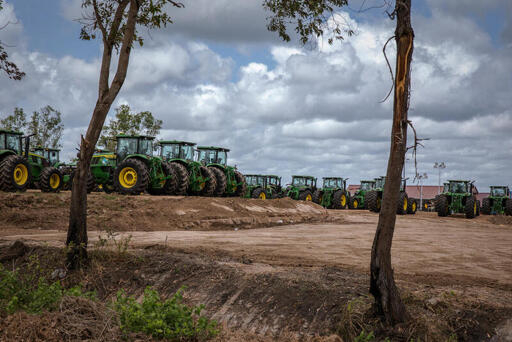
JAKARTA — Indonesia says it no longer needs to expand rice cultivation into forest areas, but it has yet to explain what the announcement means for large-scale food and energy projects already underway in Papua and Kalimantan. Presidential Special Envoy for Climate and Energy Hashim Djojohadikusumo said Oct. 6 that Indonesia had achieved rice self-sufficiency three years ahead of schedule and no longer needed the previously announced 2 million hectares (4.9 million acres) for food production. “The government sees no further need for expanding rice cultivation areas in the so-called forest areas and forest zones that were announced a few years ago,” Hashim said in Jakarta. At the same event, President’s Special Envoy for Multilateralism and International Trade Mari Pangestu said future food and biofuel production would instead be directed toward degraded land. The announcement appears to mark a shift from a government push that environmentalists have described as one of the world’s largest deforestation projects, involving vast rice and sugarcane plantations in southern Papua. But less than two weeks before Hashim’s announcement, the Ministry of Forestry designated about 5.67 million hectares (14 million acres) of forest through its 2026 Forest Utilization Direction Map, or PAPH, as areas that could be proposed for forest-utilization permits, including for food security and energy, as well as forest rehabilitation. “This means there is an inconsistency between the statements issued by public officials,” Indonesian Forum for the Environment (Walhi) campaigner for essential ecosystems Musdalifah Jamal told Mongabay by phone. “This contradiction shows us that…This article was originally published on Mongabay
From Conservation news via This RSS Feed.