

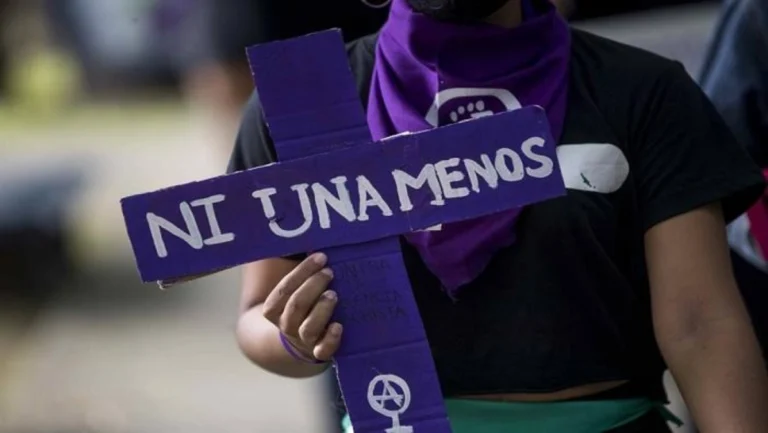
Citizens and women’s groups march in Paraguay demanding justice after the femicide of Deisy Paola Giménez Segovia.
Related: Central Bank of Paraguay Unveils New Series of Guarani Banknotes
Paraguay women’s groups demand justice after the killing of 22-year-old Deisy Paola Giménez Segovia, who was shot dead in Lambaré while on her way to work. Civil society organizations and feminist collectives have called for a peaceful demonstration in Asunción to denounce gender-based violence and demand accountability from state institutions.
The protest is scheduled for Saturday at 5:00 p.m. local time at the Plaza de la Democracia in Asunción. Organizers are calling on citizens to attend peacefully and to bring water, a hat, and charged mobile devices.
The case has sparked outrage over the failure of protection mechanisms despite the victim having filed complaints against her former partner. Deisy had reported violence and harassment attributed to Aldo Aldo Alexis Duarte Moreira, 26, who is now the main suspect.
According to judicial officials, Deisy had formally denounced the aggressor on September 17 at the 32nd Police Station in Posta Ybycuá. The following day, the Office of Permanent Attention issued a 500-meter restraining order and a complete prohibition on contact.
Despite these measures, the aggressor violated them systematically through continuous harassment. The violations led to a contempt case being brought before the Public Prosecutor’s Office.
The femicide has raised serious questions about the effectiveness of protection mechanisms for women at risk. Deisy had sought help from authorities, but the state failed to prevent the crime.
In response to indications of failures in the protection system, Dr. Eugenio Jiménez Rolón, superintendent minister of the Judicial District of Central, requested the opening of an immediate reaction audit.
The official report from the Communications Directorate of the Supreme Court of Justice specified that the procedure was handed over to the Directorate General of Jurisdictional Audit.
The investigation will verify the actions of the organs involved in the Lambaré case and, upon conclusion, will evaluate the adoption of corresponding measures or sanctions.
The killing of Deisy Paola Giménez Segovia has become a symbol of the broader failure of protection systems for women facing gender-based violence. Her death has sparked outrage and demands for accountability.
The case also highlights the need for greater training and awareness among law enforcement and judicial officials about gender-based violence. Deisy had sought protection from the state, but the mechanisms in place did not prevent the crime.
The femicide of Deisy Paola Giménez Segovia has become a rallying point for women’s groups and civil society organizations demanding justice and effective protection for women at risk.
What happened to Deisy Giménez
Deisy Paola Giménez Segovia was killed in Lambaré, a city in the Central Department of Paraguay, while on her way to work. According to reports, she was intercepted and shot multiple times in a public area, in an attack that authorities have linked to her former partner.
The killing has shocked the country and drawn widespread condemnation from human rights organizations, women’s groups, and public officials. It has also raised questions about the effectiveness of existing protection mechanisms for women facing threats from former partners.
The case highlights the risks faced by women who report violence and seek protection from the state. Despite having taken formal steps to seek help, Deisy was ultimately killed, raising concerns about gaps in the system designed to protect victims.
The femicide has also drawn attention to the broader issue of gender-based violence in Paraguay and the need for stronger enforcement of protective measures.
What protection measures were in place
Deisy had filed a formal complaint against her former partner, and authorities had issued a restraining order. However, the measures were not enough to prevent the crime.
According to judicial officials, the victim had reported the aggressor for violence and harassment attributed to him. The state had issued a restraining order, but the aggressor violated it repeatedly.
The femicide has exposed the limits of current protection mechanisms for women at risk. Despite having a restraining order in place, the victim was ultimately killed.
The case has raised questions about the effectiveness of existing protection mechanisms and the need for stronger enforcement of protective orders.
The femicide of Deisy Giménez has become a symbol of the broader failure to protect women from gender-based violence. Her death has sparked outrage and demands for accountability.
What comes next
The immediate outlook depends on whether the authorities can reestablish contact and stop further escalation. The family and civil society groups are demanding justice and stronger protection measures.
For now, the case stands as a reminder of the risks faced by women who report violence and the need for more effective protection mechanisms.
Geopolitical Context
The killing of Deisy Paola Giménez Segovia is part of a broader pattern of violence against women in Latin America. The region continues to face high rates of gender-based violence, and cases like this one highlight the need for stronger enforcement of protective measures.
For Paraguay, the case is a test of the state’s ability to respond to domestic violence and protect women at risk. For the region, it is a reminder that femicide remains a serious and unresolved issue across the continent.
The killing of Deisy Paola Giménez Segovia has become a symbol of the broader struggle for gender equality and justice in Latin America.
Amnesty International Paraguay
Human Rights Watch – Women’s Rights
Inter-American Commission on Human Rights – Women’s Rights
From teleSUR English via This RSS Feed.