

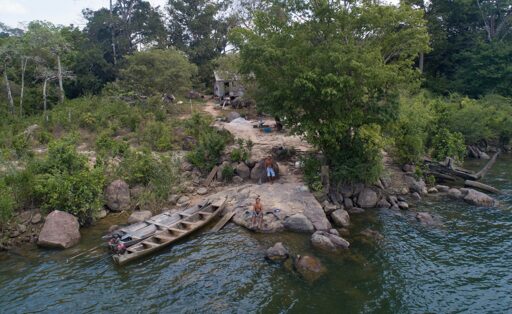
Since Sept. 23, a group of rural producers has maintained a blockade on the road to the Paquiçamba Indigenous Land in the Volta Grande do Xingu region of Brazil’s Pará state. The blockade is supported by local politicians and aims to prevent government officials from physically demarcating the land traditionally occupied by the Juruna (Yudjá) Indigenous people. The protestors want to prevent the Indigenous Affairs Agency (Funai) from entering the area to physically mark the boundaries of the Paquiçamba. It’s a required step before the Indigenous territory can be officially approved by the president and formally registered. Paquiçamba is directly affected by the Belo Monte hydroelectric project and such federal demarcation of Indigenous land in the area was one of the conditions required for the project to receive environmental licensing. “The blockades have delayed the completion of physical demarcation work, which includes georeferencing, the placement of boundary markers on the Indigenous Land, and the installation of signage,” a Funai spokesperson told Mongabay over email. “Given this situation, Funai is seeking legal measures to guarantee the continuation of the work, access to the border areas of the Indigenous Land, and the safety and integrity of the teams responsible for the activities.” Even with support from the National Public Security Force, the spokesperson said clashes broke out between the blockaders and federal agents, interrupting their work. Ya Juruna, an Indigenous person from Paquiçamba, told Mongabay over WhatsApp messages that the protesters are trying to block her community from receiving legal rights to…This article was originally published on Mongabay
From Conservation news via This RSS Feed.