

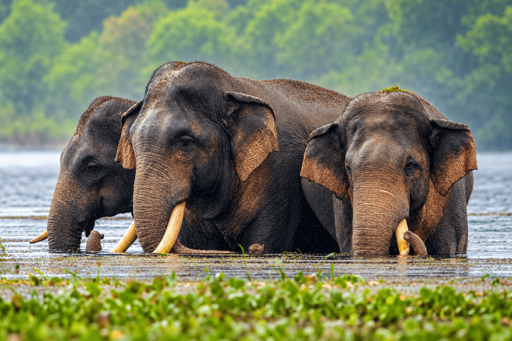
COLOMBO –- Wildlife enthusiast Pathum Bandara watched Kavantissa, believed to be Sri Lanka’s tallest living tusker, moving gently through the landscape on Sept. 20 around Galgamuwa in the island’s northwestern dry zone, a well-known human-elephant conflict zone. The following day, Bandara noticed that the elephant was limping. A closer look revealed a gunshot wound on his right foreleg, close to the knee. The discovery was alarming because an untreated gunshot wound could become infected and cause severe trauma, potentially threatening an elephant’s ability to walk, feed and survive. The Department of Wildlife Conservation (DWC) dispatched a team to treat the elephant. DWC’s veterinary surgeon Isuru Hewakottage said Kavantissa was sedated to enable the cleaning and treatment of the wound. He received several rounds of powerful antibiotics and remains under observation. Following treatment, Kavantissa has begun moving between small forest patches, sometimes crossing human settlements and the well-known elephant passage near Galgamuwa. The tusker appeared to be recovering but became aggressive after the gunshot injury, sometimes even chasing villagers and wildlife officers, exposing the tusker to renewed threats including the possibility of being fired at, Bandara told Mongabay. Iconic tusker Kavantissa, left, with Sankha, a young elephant, photographed in 2022. Sankha had a mobility restriction caused by a previous gunshot injury and died after falling into a pit. Image courtesy of Pathum Bandara. Bandara recalls the plight of another young tusker once closely associated with Kavantissa. Sankha, a young tusker, was about half Kavantissa’s age and was often seen together during…This article was originally published on Mongabay
From Conservation news via This RSS Feed.