

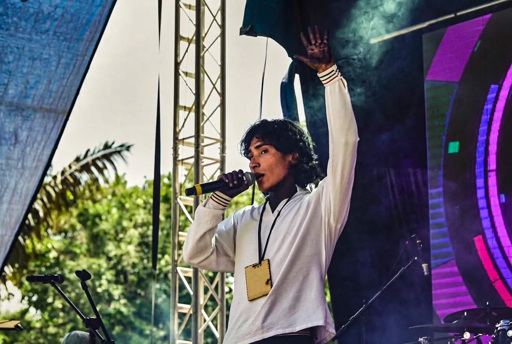
Willan Gualinga first stepped onto a stage in his home community of Sarayaku, in the Ecuadorian Amazon, in the province of Pastaza. He recalls his hands sweating, his body trembling, and his mouth freezing up as words crowded his mind. Three years after that debut, he performed the same song at the Rizoma 2026 Festival in the Amazonian city of Puyo. This time, he was no longer in front of dozens of people. He was seeing thousands chanting his lyrics in his Indigenous Kichwa language. On this occasion, his body moved with the rhythm and with the strength his message demanded: “Allpamanda kawsay manda jatarishun,” or “Let us rise up for the land and for life.” That was the title of his first track and the phrase he shouted at the top of his lungs throughout his performance. The song draws on elders’ stories about the origins of Sarayaku (his traditional territory) and, like his other compositions, spotlights the threats facing his people. “Through music we can transmit the knowledge of our ancestors and, above all, defend the territory,” said Gualinga, a 23-year-old artist known on stage as “Taki Supay.” Like him, a new generation of Amazonian artists is using rap to bring attention to the threats facing Indigenous peoples and nationalities across the Ecuadorian Amazon — and to show why the rainforest must be protected. “Rap is talking about what you feel, what is happening, and our struggle,” Misael Elías Criollo Grefa, better known as Misa17, said. He is…This article was originally published on Mongabay
From Conservation news via This RSS Feed.