

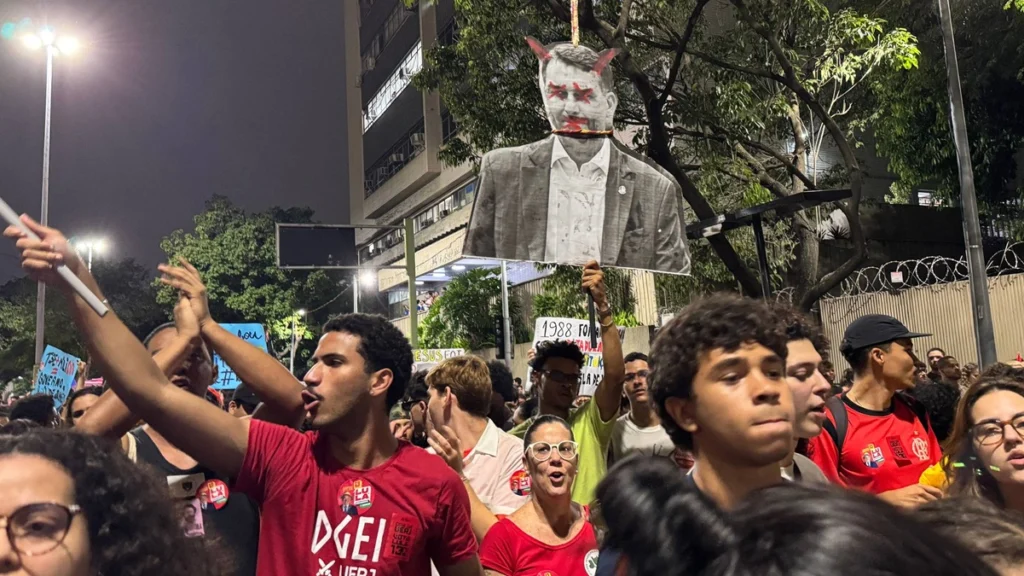
False claims about church closures target Lula as Bolsonaro followers push disinformation.
The spread of fake news on social media has once again taken a prominent place in Brazil’s election campaign ahead of the presidential runoff scheduled for Oct. 25.
RELATED:
Bolsonarist Gunfire Disrupts Lula Rally in Northeastern Brazil
In an attempt to favor Liberal Party’s candidate Flavio Bolsonaro, the Brazilian far right has launched a smear campaign against Workers’ Party candidate Luiz Inacio Lula da Silva, whom “Bolsonaristas” accuse of purported proposals that are not part of his government platform.
In recent days, Bolsonaro and lawmaker Nikolas Ferreira have promoted content on social media to “warn” about a supposed closure of churches if Lula wins.
This fake news was pushed through the message “Lula, don’t close my church,” published on the social media platform X and later shared by thousands of users.
In the 2022 presidential campaign, the strategy of generating fear on religious grounds was also used as part of a discrediting campaign against Lula.
CARALHOOO…. Ela é foda!
Ana Elisa respondeu a nova fake news da extrema direita e ainda acabou com a raça do Nikolas Ferreira, lembrando o Tweet dele dizendo que Nossa Senhora foi estuprada.
BORA LULA pic.twitter.com/uPC1WOzQPP
— Lázaro Rosa 🇧🇷 (@lazarorosa25) October 8, 2026
The text reads, “Damn! She’s a total powerhouse! Ana Elisa fired back at the far right’s latest fake news story and absolutely crushed Nikolas Ferreira, reminding him of that tweet where he claimed the Virgin Mary had been raped. Let’s go, Lula!”
In an attempt to lend credibility to their discrediting message, Bolsonaristas often cite a post made years ago by current lawmaker Ana Elisa Santos, a member of the Workers’ Party.
In her post, the legislator said: “Lula, honestly, I think you have to close the churches; these believers only do foolish things.” The reappearance of those statements sparked negative reactions on social media and led to threats against the lawmaker.
Given the fallout from the issue, Ana Elisa Santos held meetings with Lula and members of his political team to address the impact of the digital controversy and counter the effects of the campaign on social platforms. Meanwhile, Brazil’s political landscape remains marked by intense competition among the main electoral forces.
On Oct. 8, Datafolha published a first voting intention poll ahead of the runoff. It shows that 52% of valid votes would go to Flavio Bolsonaro and 48% to Lula da Silva, as reported by Diario do Centro do Mundo.
Estel Technology Coordinator Rafael da Guia argues that this percentage difference forces Lula to win new support among abstentionists and voters of other ideological leanings, while Bolsonaro needs to preserve the backing he has received from his electorate to maintain his advantage.
teleSUR/ JF
Sources: DCM – teleSUR
From teleSUR English via This RSS Feed.