

WARNING: This story contains disturbing details about boarding schools and includes photos of caskets. If you are feeling triggered, here are healing-informed resources from the National Native American Boarding School Healing Coalition in the U.S. The National Indian Residential School Crisis Hotline in Canada can be reached at 1-866-925-4419.
Charles Fox
Special to ICT
SHISHMAREF, Alaska — The Northern Lights danced in the night sky to welcome Tummassak home.
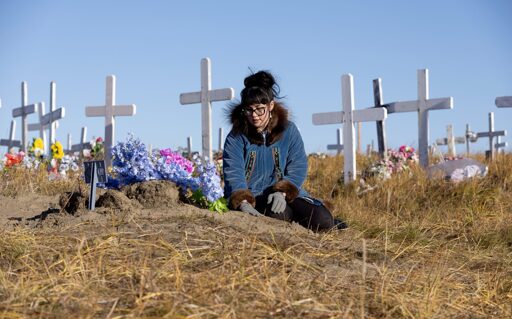
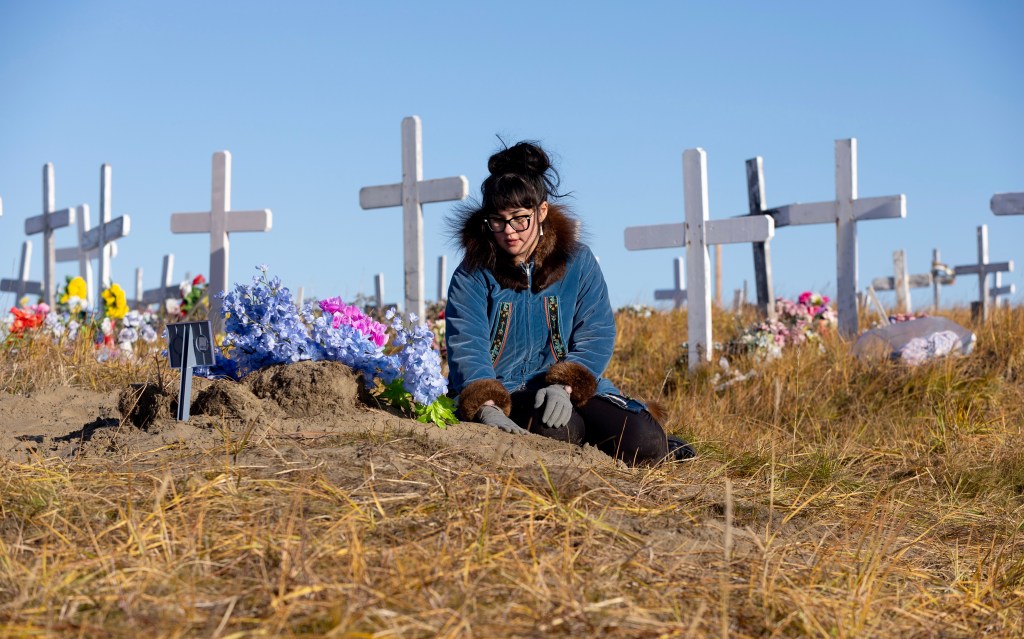
More than 125 years after she died while attending the Carlisle Indian Industrial School, Tummassak is now at rest on a grassy knoll overlooking the Arctic Lagoon, with Ear Mountain looming across the water.
The ocean waves send a comforting lullaby through the Shishmaref Lutheran Church Cemetery, where Tummassak was reburied on a sunny October afternoon.
She’s finally home. The manicured lawns of the Carlisle Post Barracks in Pennsylvania are literally a world away from this remote island just north of the Bering Strait and five miles off the coast of the Alaskan mainland.
“I’m really happy that Tummassak is home and has such a beautiful view,” said Tummassak’s relative, Nyché Andrew, a researcher for the Alaska Native Heritage Center who discovered the connection while searching for information about students’ families.
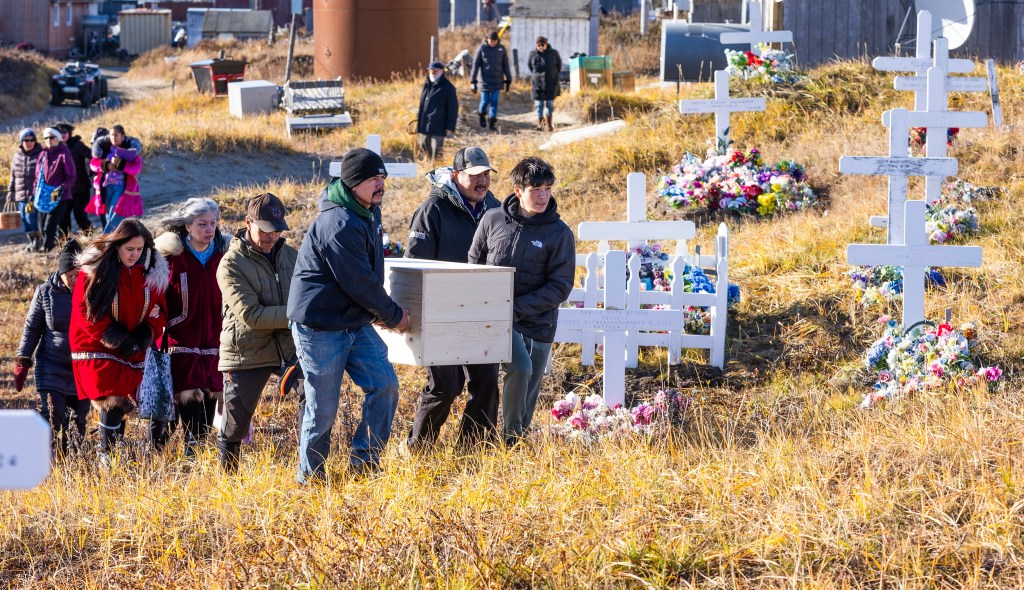
The casket of Tummassak is carried up a hill to be reburied at the Lutheran cemetery in Shishmaref, Alaska, on Oct. 4, 2026. Tummassk was an Alaska Native student who died more than 100 years ago while attending the Carlisle Indian Industrial School. Her remains finally were returned home to Alaska in October. Credit: Charles Fox/Special to ICT
“Her view now is better,” Andrew said after the Oct. 4 reburial. “There’s not a noisy road. There’s not military personnel with all their security measures wandering the place. There’s none of that. She just has a beautiful lagoon to look at.”
Bringing her home, Andrew said, was “the hardest thing I’ve ever gotten to do in my life.”
Tummassak arrived at Carlisle on Nov. 14, 1897, at age 12, and died of tuberculosis on April 8, 1900. She was one of three Alaska Native students disinterred this year from the Carlisle cemetery and repatriated back home more than 100 years after they died at the school.
Student Edward Angalook’s remains were sent home earlier this month to Unalakleet on Alaska’s Seward Peninsula, and reburied Friday, Oct. 2, next to his adopted mother Changunak Antisarlook Andrewuk. He arrived at Carlisle on Nov. 23, 1903, at age 18, and died Sept. 24, 1905, of tuberculosis.
Student Lucy Spaulding is scheduled to make her homecoming to Alaska on Saturday, Oct. 10, returning on what will be her last boat ride from Ketchikan to Metlakatla. She is set to be buried Monday, Oct. 12, in Bayview Cemetery where her sister, Lizzie, and their brother are also buried. Lucy was 14 when she arrived at Carlisle with Lizzie, 12, on Oct. 24, 1903, as part of a group of 33 Native students from southeastern Alaska. Lizzie became ill and was sent home on May 28, 1904, and died soon after from an undisclosed cause. Lucy stayed, and died on March 25, 1905, of tuberculosis.
A fourth Alaska Native student, Mabel Booth, was originally scheduled to go home this year as well, but the remains in her Carlisle grave were instead found to be those of a male student in his late teens. The location of Mabel’s remains are now unknown, and the young man has been reburied at Carlisle as “unknown.” There are now 23 graves at Carlisle holding unknown remains.
Making the journey
Tummassak’s return to Shishmaref marked the end of an odyssey that began when she and five other students were picked up from the Teller Reindeer Station by the US Revenue Cutter Bear, an early version of an ice breaker, to begin their long journey to Carlisle.
In the name of assimilation, masked as education, the group arrived in the Pennsylvania town almost two months later. Within five years, half of the group had died. Two of those students, Laublock and Cooki Glook, remain buried in the cemetery amid hope that next year they will also be allowed to go home.
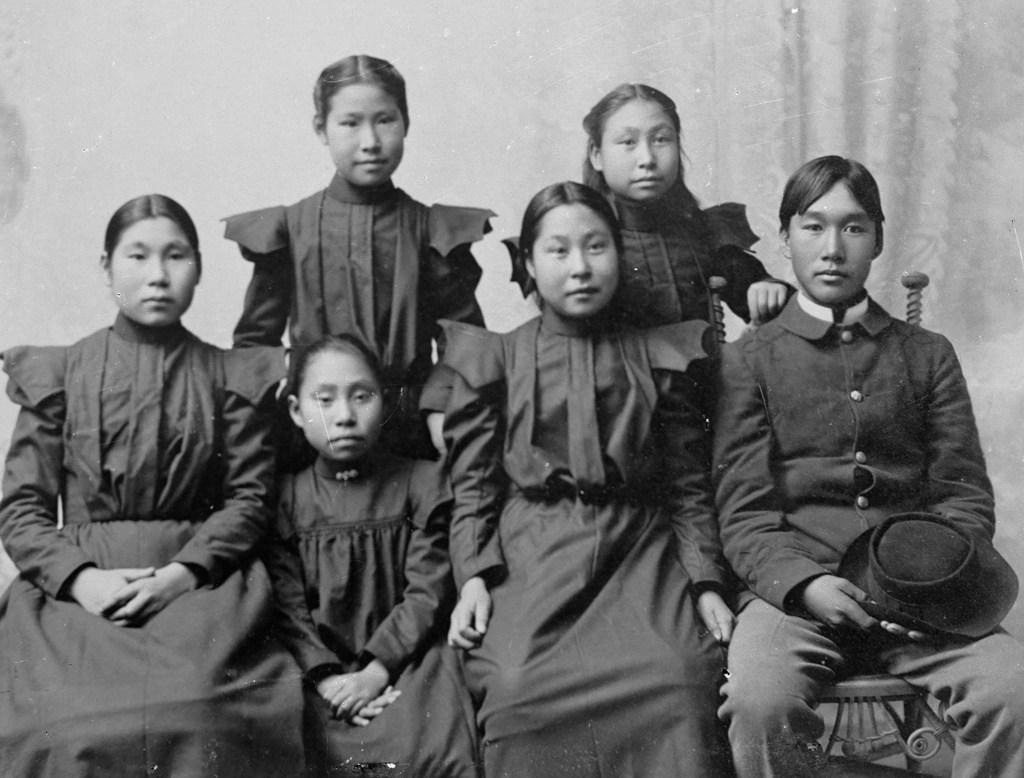
This photo shows a group of Alaska Native students after their arrival at Carlisle Indian Industrial School Nov. 18, 1897. At left is Tummassak, who died at the school and was buried in the cemetery there in Pennsylvania. Credit: Photo by John N. Choate, courtesy of the National Anthropological Archives/Smithsonian Institution
Laublock, or Lablok, the only male in the group, died on Sept. 15, 1899. Cooki Glook, also known as Kokiglook or Cookiglook, died on Jan. 4, 1904. All died of tuberculosis, known as “consumption” at the time, though Cooki Glook also suffered from rheumatism of the heart, according to school records.
Over the years, 127 Alaskan students attended the Carlisle school, and 14 died and were buried in the school cemetery, according to records.
Since repatriations from Carlisle began in 2017, the remains of 69 children have been returned home, including six Alaska Natives, according to the Office of Army Cemeteries, which oversees the site that once held the Carlisle school.
And at least one other student, Ephraim Alexander, Yup’ik, died from tuberculosis while spending his final days with Moravian missionaries in Lititz, Pennsylvania. His remains are buried in the Moravian cemetery.
Two others, Mary Kininnook and Henry Rose, are believed to be buried in the Carlisle cemetery but the locations of their remains are unknown. In all, nine remains, including Booth, have been disinterred and found not to match the cemetery records. The grave mix-ups are likely the result of human error during a careless move of the cemetery in 1927.
In all, almost 8,000 Native American and Alaska Native students attended the Carlisle Indian Industrial School between 1879 and 1918, as part of an oppressive government attempt at forcefully assimilating Native students into White civilization. As the first federally operated, off-reservation boarding school, the school’s aim was to change students forever by cutting links to their family, language, and culture.
A grueling experience
The return to Shishmaref was also the end of a long journey for Andrew, the culmination of years of tedious research and self-doubts.
“It was really hard because it’s important,” Andrew told ICT. “And if it wasn’t important, it wouldn’t be hard or worth anything. So, you had to really work for the payoff, which I feel like we all did in different ways — mentally, emotionally, spiritually, physically.”
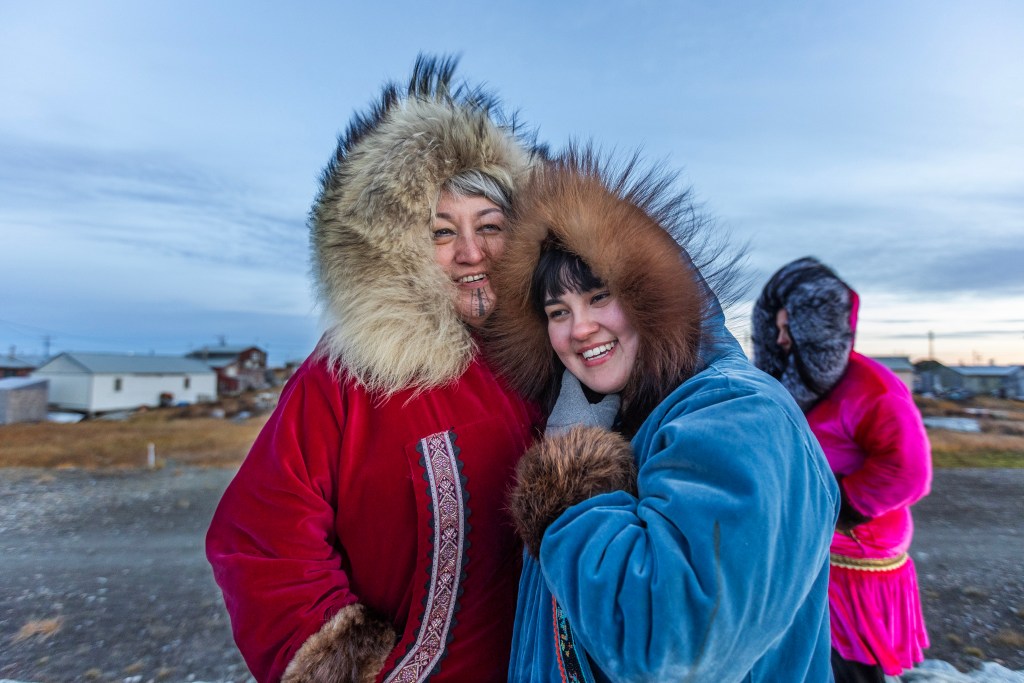
Nyché Andrew, center, and her mother, Jacqueline Agugaq Walluk, brave the cold and wind for an evening walk along the coast at Shishmaref, Alaska, on Oct. 3, 2026. Friend Madeline Gupta is at right. Credit: Charles Fox/Special to ICT
Less than a month and a half before Tummassak’s homecoming, Andrew suffered a serious health scare when she was diagnosed with an aneurysm. Yet, despite the seriousness of the life-threatening condition, she insists, the road to Tummassak’s return “was much harder than that.”
The week she spent in Carlisle with her mother, Jacqueline Agugaq Walluk, and aunties, Vanessa Walluk and Rosemary Tower, during Tummassak’s disinterment were especially draining, with intense emotions.
Walking the school grounds, feeling they were in the footsteps of the students who had attended the school, they were regularly confronted by the harsh realities of boarding school life. There was also the anxiety, which became a reality for the relatives of Mabel, that the forensic examination would determine the remains in the grave were not a match.
In the cemetery, the severity of the dark history could not be avoided. The lines of graves represented childhoods robbed and children who never got to see their families again. The rawness of the disinterment process, seeing the bones of a child, was a traumatic, unfiltered experience.
“That was really difficult,” Andrew said. “I’ve never seen a skeleton in my life. So, that was a first experience, and especially the weight of it being my ancestor and Shishmaref’s ancestor just added a lot to that.”
At one point, she asked the archeologists, scientists and Army personnel to leave the family alone with the remains.
“My mom, my aunts, and myself held hands over her casket, and I said, ‘The reason I asked everyone to leave is because this is the first time in at least 129 years that Tummassak has been surrounded by Iñupiaq women who could protect her’,” she said.
“And I say that now very confidently,” she said, “but of course, I was bawling my eyes out when I said this.”
‘We are sorry’
The small village of Shishmaref came together on Oct. 4, to celebrate Tummassak’s homecoming. The community had suffered five deaths in the previous month, including an infant and the woman who was the beloved school secretary for 37 years. While Tummassak’s return was in many ways another funeral, it was also a cause of celebration, an opportunity for healing.
The homecoming celebration in honor of Tummassak at the Shishmaref Lutheran Church began with an apology from Lutheran officials and clergy, even though the Lutheran Church did not exist in Shishmaref at the time Tummassak was taken from her home.
Bishop Timothy R. Oslovich of the Alaska Synod, who had been pastor of the church from 1997-2003, and Pastor Robert Hattle took turns reading from a joint statement they composed.
~~“~~We are sorry for the theology that was used to bless conquest, the church teachings that confused domination with mission, and the abuse of power that helped remove Native children from their homes, languages, lands, and people,” they told the congregation.
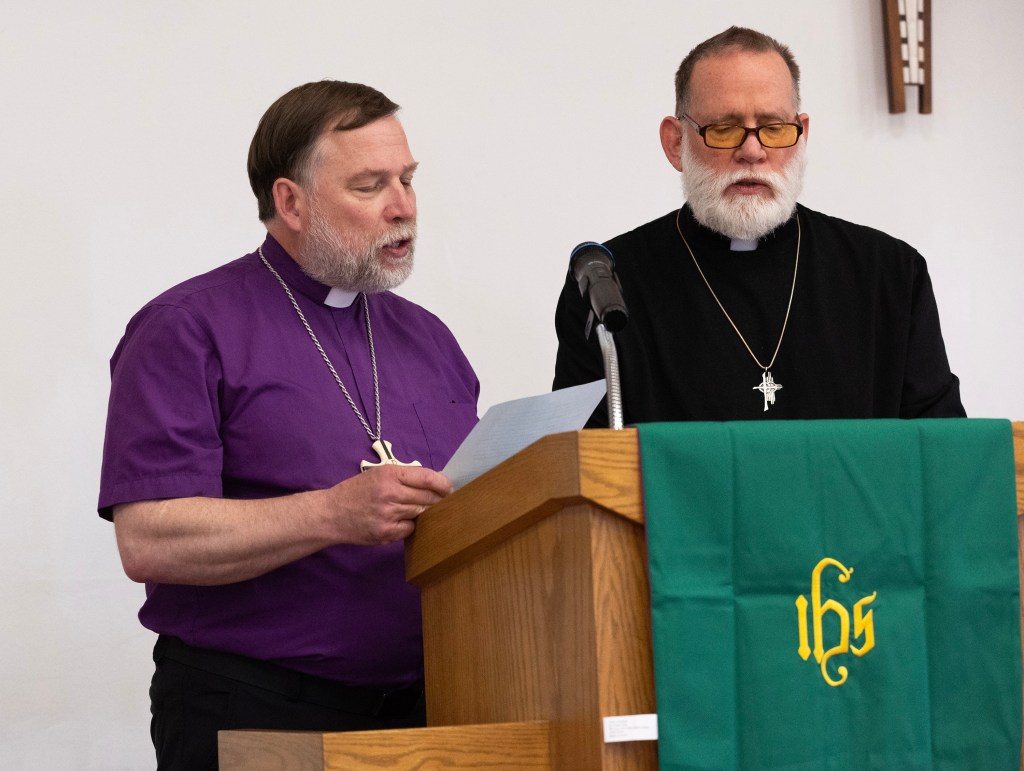
Bishop Timothy R. Oslovich, left, of the Alaska Synod, and Pastor Robert Hattle of Shishmaref Lutheran Church deliver an apology at the memorial service for Tummassak on Oct. 4, 2026. Tummassak died more than 100 years ago while attending the Carlisle Indian Industrial School, and her remains were finally returned to Alaska in October. Credit: Charles Fox/Special to ICT
“We are sorry for every moment when the name of Christ was used to justify the breaking of families and the attempted erasure of culture,” they said. “We confess that a child should never have had to travel so far from family, and in life should never have been kept so far from home in death. A grave far from kin is a wound in the circle of belonging. It tells of a system that treated Native people as object of policy rather as beloved children.”
They concluded with a tribute to the children.
“Tummassak, we honor your life,” they said. “You were not a number in a school register. You were not forgotten by the Creator. You are a beloved child, a bearer of a sacred identity, and a member of a people whose dignity was never erased, even when institutions attempted to erase it.”
Andrew then recounted to the approximately 70 people gathered in the church the unique journey that she and Tummassak had been on to reach this day.
While looking online for information on Tummassak, Andrew had stumbled onto a photo that showed her distinctive chin tattoo, known as a tavluġun, signifying a young woman’s transition into maturity. It was the same tavluġun she had seen in photos of her great-great-grandmother, Mary Agugaq Avessuk. It was then she realized she was a relative.
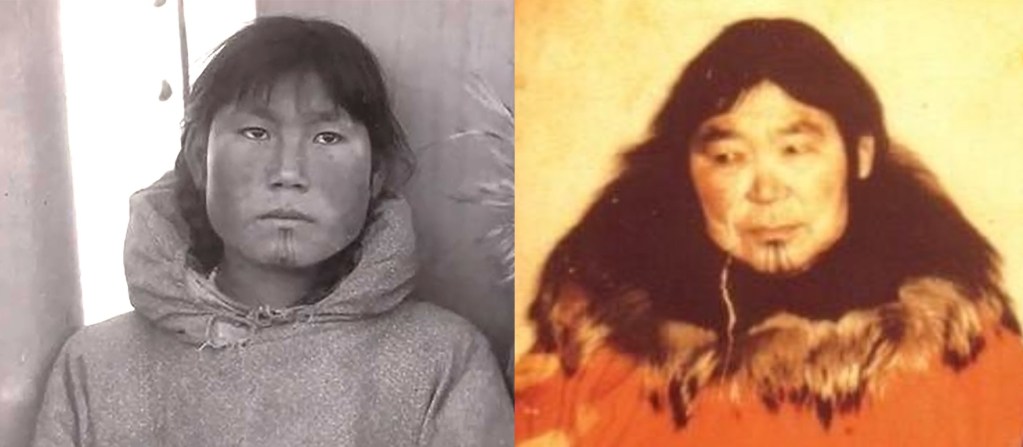
Side-by-side photos show the same chin tattoos on Tummassak, at left, an Alaska Native student who died while attending the Carlisle Indian Industrial School, and Mary Agugaq Avessuk, the great-great-grandmother of Indigenous researcher Nyché Andrew who realized the tattoo linked Tummassak to her own family. Credit: Photos courtesy of Nyché Andrew and Presbyterian Historical Society
Andrew also addressed the children in the church who had created homemade cards and signs for Tummassak’s homecoming. She brought them to the front of the church to reinforce the message that “every child matters.”
“A lot of you wrote those messages that every child matters, so that means you matter, too, and just don’t forget that and carry that with you,” she said. “Those messages came through at the best time during our travel …. It uplifted us. It really helped us go on.”
Then she asked a favor of the youths.
“I am asking each and every one of you to take care of her,” Andrew told the children. “And then I ask when you are all older and have kids of your own, that you share her story and remind your own children to take care of her. She doesn’t just belong to my family … She belongs to all of Shishmaref, and she has been waiting a very long time for you all to be with her.”
As those the congregation and choir sang hymns such as “Higher Ground” and “In the Garden,” Andrew felt she could finally take a “big sigh of relief after that long journey.”
“Now I feel replenished and refilled, and I’m very excited,” she said.
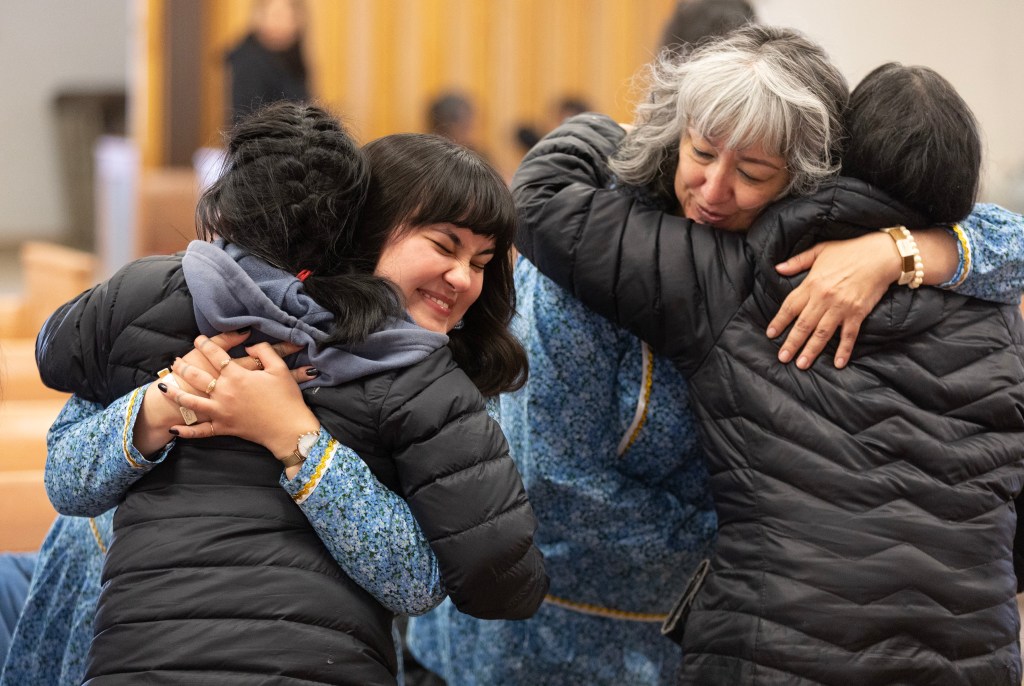
Community members at the Shishmaref Lutheran Church in Alaska embrace Nyché Andrew, left, and her mother, Jacqueline Agugaq Walluk, after a memorial service for Tummassak, an Alaska Native student who died more than 100 years ago while attending the Carlisle Indian Industrial School. Credit: Charles Fox/Special to ICT
Attendees lined up to give thanks and congratulatory hugs to Andrew and others before forming a procession from the church through a hillside of crosses to Tummassak’s new resting place.
Shishmaref Mayor Edwin Weyiouanna had made a carving to grace the top of the casket, and the messages from schoolchildren along with a photo of her smiling with her female Iñupiat classmates were buried along with her.
“If there is intergenerational trauma,” Andrew would say later. “Then there must be intergenerational healing.”
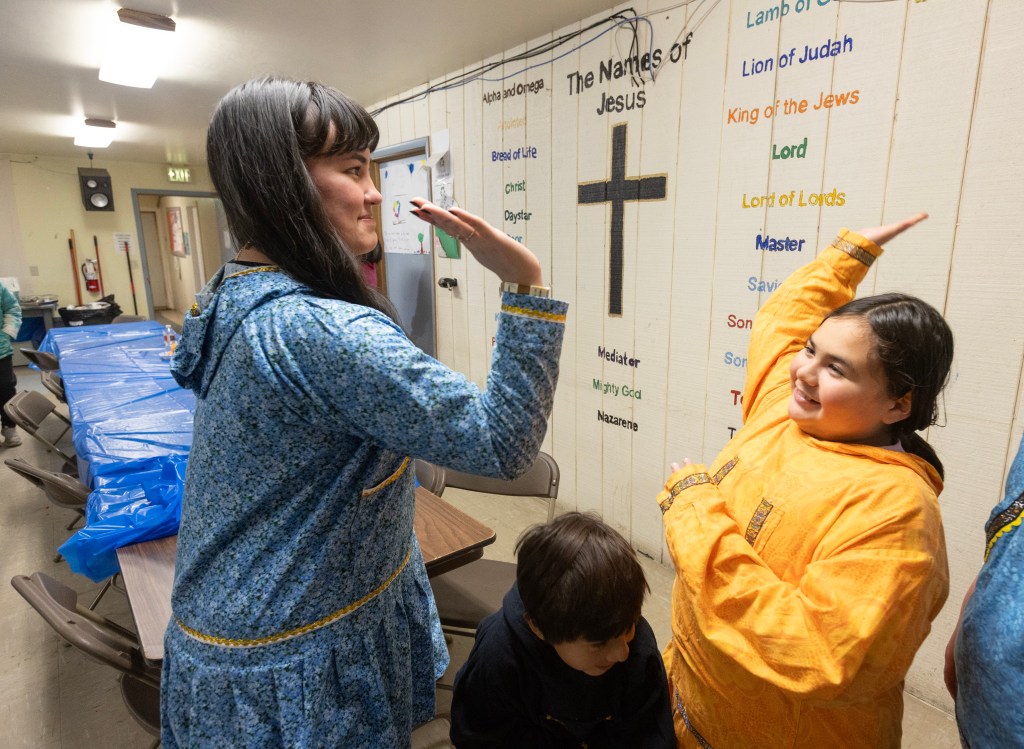
Nyché Andrew, left, high-fives Hayden (Saataq) Eningowuk during a community meal following the reburial of Tummassak at the Lutheran cemetery in Shishmaref, Alaska, on Oct. 4, 2026. Tummassak died more than 100 years ago while attending the Carlisle Indian Industrial School and was finally returned home. Schoolchildren were among those who attended her memorial service. Credit: Charles Fox/Special to ICT
Kickstarting conversations
There may be nowhere in the world that has been impacted by global climate change as much as Shishmaref. The six-mile long island is likely less than half the size of the location Tummassak once called home. The permafrost the island is built upon is melting away, causing soil erosion at an alarming rate, and the reduction of sea ice fails to protect Shishmaref from storm surges.
Residents like Dennis Sinnok can point to areas now under water and say, “That’s where my grandmother lived,” or, “There used to be a road and a row of homes there.”
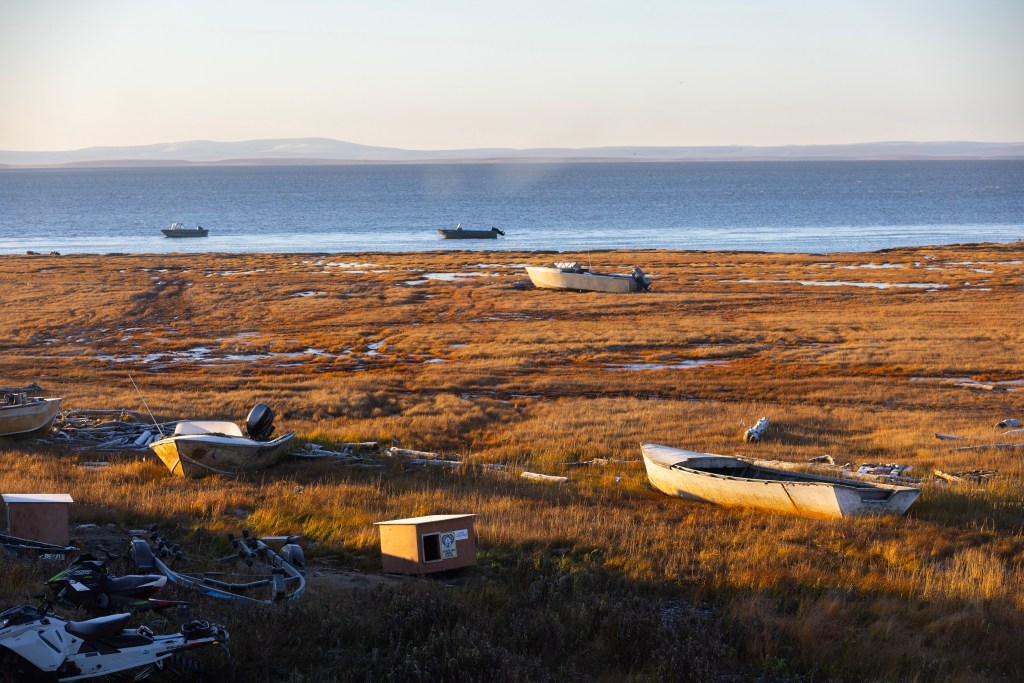
The view shortly after sunrise from Shishmaref, Alaska, looking out toward the Arctic Lagoon on Oct. 4, 2026. Credit: Charles Fox/Special to ICT
Yet Shishmaref retains its affectionate, gregarious nature and its persistence to continue its unique lifestyle. No one passes without a welcoming wave or hello, or the offer to help.For Andrew and her family, it was the first visit there, though their ancestry is rooted in Shishmaref.
“I never knew how I’d ever be able to come to Shishmaref growing up,” Andrew said. “I knew my roots were from here, but I never knew how to give back. And being here felt like a relief because it was the final step of mine and my little family’s responsibility in bringing Tummassak home.”
She also learned in the process.
“Just walking around the community and running into different people, everyone’s so friendly and inquisitive, and asking,’Who’s your family and what are their ties to Shishmaref?’” she said. “I’ve learned so many bits and pieces of my family tree that I hadn’t ever learned before.”
The day after the reburial, Andrew visited the Shishmaref School to speak to different classes and field their questions. The interchange went in both directions, with students asking questions about Tummassak’s journey and the history of boarding schools, while Andrew and other visitors inquired about the village’s unique lifestyle, in which items considered readily accessible in most communities have to be shipped in at great expense and with lengthy delays.
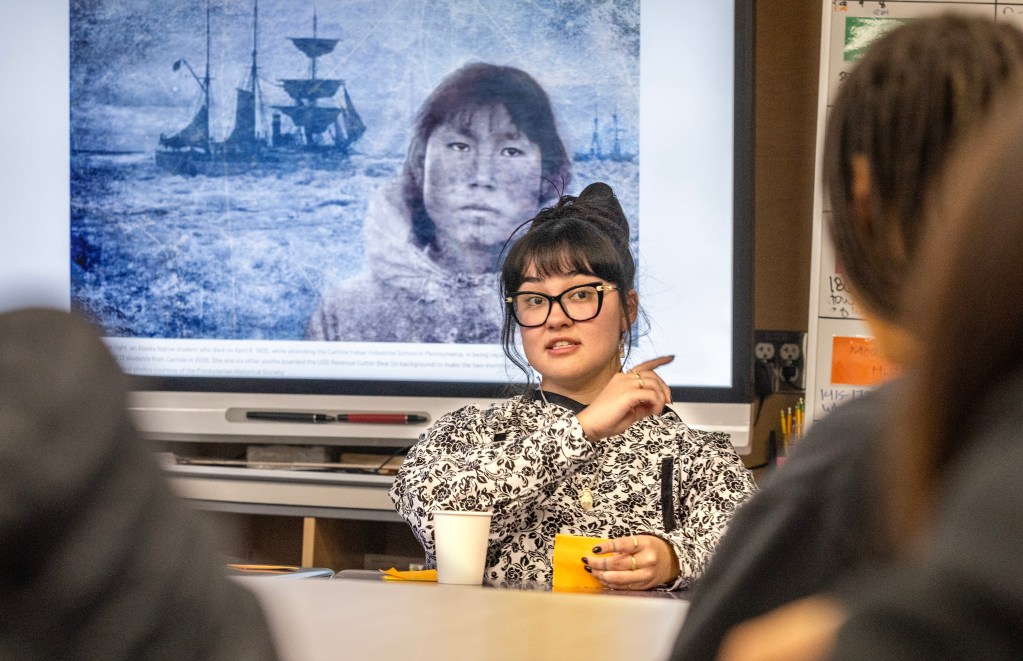
Nyché Andrew talks to a group of students at the Shishmaref School on Oct. 5, 2026, about her journey to bring the remains of her relative, Tummassak, home to Shishmaref, Alaska. The photo collage by Charles Fox on the screen behind her is from an ICT story about the journey of Tummassak, who died more than 100 years ago while attending the Carlisle Indian Industrial School. Credit: Charles Fox/Special to ICT
Tummassak’s return has made a mark on the community. It is Andrew’s hope that her story will be told for generations, her sacrifice and courage remembered and honored, symbolic of a misguided, dark chapter in Native American and Alaska Native history. It is the history, and Shishmaref’s involvement, that Andrew fears has been lost.
“I’m hoping that this will kickstart a lot more conversations in Shishmaref where the elders will share and the children will continue to learn,” Andrew told ICT.
“That’s a history that’s gotten lost over time,” she said. “A lot of people didn’t know that anyone got sent to boarding schools all the way from up north … I’m hoping that more elders feel comfortable and supported for reaching out and speaking up about their experiences in the boarding schools… I hope that more people are sharing. And I hope that the children continue to learn about the boarding schools because it’s a part of not only the community’s history and not only Alaska’s history, but the history of the U.S.”
The visit by Tummassak’s relatives was applauded by those in the community.
“So often, when an empire traumatizes Indigenous people, people of color … it’s the people that have been traumatized’s burden to fix it,” said Hattle, the Lutheran pastor. “And I see you guys taking initiatives and responsibility and insight, but not as a burden, but as a spiritual journey.”
It has also been a time of growth for Andrew and her family, another of Tummassak’s gifts.
While they have enjoyed walks and sunsets along the Arctic Ocean bundled in parkas to ward off the bite of the harsh winds, and tried their hand driving ATVs, the main source of transportation, it was also a time to grow closer as a family and gain a deeper appreciation for the gifts they bring to each other.
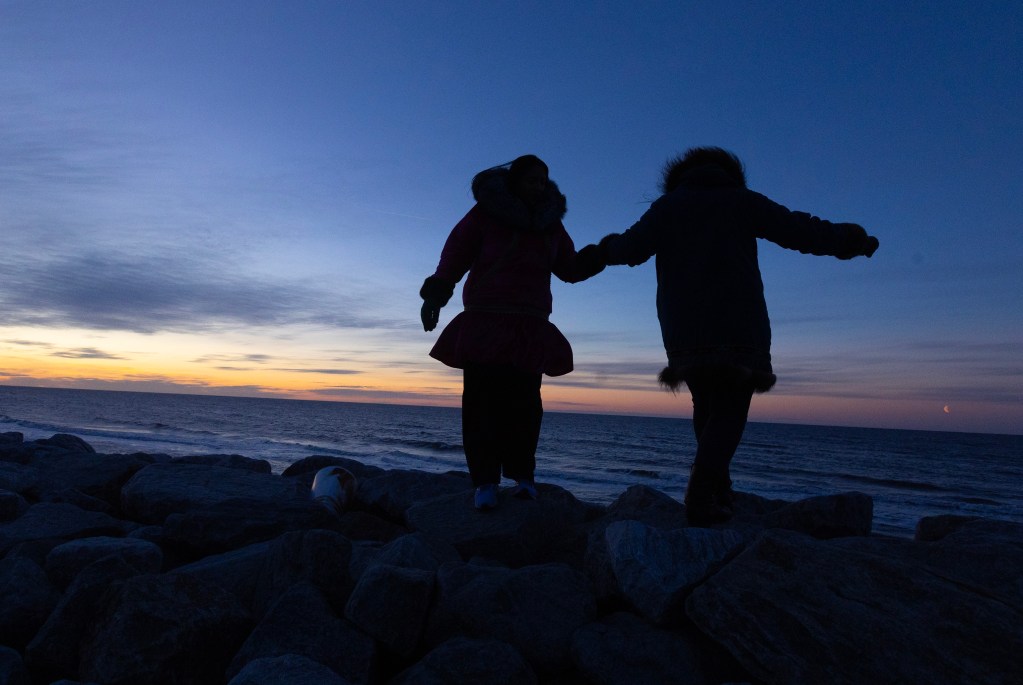
Nyché Andrew, left, and her mother, Jacqueline Agugaq Walluk, walk along the water at Shishmaref, Alaska, on Oct. 3, 2026. Credit: Charles Fox/Special to ICT
“I just realized we could have all made our ways to Shishmaref and done it separately, but we did it together, and I think that is really important. I don’t think I could have done it any other way,” Andrew said.
“I learned a lot about my mom and my aunties’ experiences growing up…how they carry themselves as Iñupiaq women,” she continued. “It’s really inspiring to see how my mom steps up to express her gratitude. I think it’s really beautiful. The way she lifts people up is something I’ve always admired, and I’ve only gotten to see that more, and I’ve only gotten to know more about Rosemary and Vanessa and how they carry themselves and how humorous Vanessa is and how gentle and kind Rosemary is.”
Looking ahead
With an afternoon flight set to bring her visit to Shishmaref to a close, Andrew walked through the hillside of white crosses at the cemetery to lay flowers on the grave and say goodbye to Tummassak. She also added a shell that she had found during a morning walk on the beach, with both halves still intact —a symbol of the bond that would always exist between them.
“I didn’t want to leave,” Andrew said, as she delayed saying a final goodbye.
She realized, however, that she had to be faithful to the words she had spoken the previous day in the church.
“I told the community it’s our shared responsibility, their responsibility to take care of her, and I have to mean that,” she said. “When the students were burying the other students [at Carlisle], it must have seemed like that was the last time they would ever be spoken about in history. And I’m hoping with this, Tummassak will live forever in the village of Shishmaref and the whole region and state.
“She deserves that after 129 years of being forgotten.”
Home at last
The remains of 11 students who died at the Carlisle Indian Industrial School in Pennsylvania were disinterred from the school cemetery in September and finally returned to their family members and tribes in October. The students include three Alaska Native students, three from the Fort Peck Assiniboine and Sioux Tribes, and one student each from five other tribes across the U.S. The students who have been returned home and reburied are:
Alaska Natives
*Edward Angalook, who is listed as Angelook on his gravestone, arrived Nov. 23, 1903, at age 18, and died Sept. 24, 1905 of tuberculosis.
*Lucy Spaulding arrived Oct. 24, 1903, at age 14, and died March 25, 1905, of tuberculosis. She is listed as Spalding on her gravestone.
*Tummassak arrived on Nov. 14, 1897, at age 12, and died on April 8, 1900, of tuberculosis. She is listed as Tomicock on her gravestone and also as Tomiclock in Carlisle archives.
Note: A fourth student from Alaska, Mabel Booth, who arrived at Carlisle on Oct. 24, 1903, at age 11 and died on Aug. 14, 1904, was expected to also return home this year. But the remains found in the grave marked as hers were found to be an unidentified young man. The young man was reburied in an “unknown” grave. The location of Mabel’s remains is not known.
‘Echoes of the Past’: Repatriations of three Fort Peck children bring joy, tears
Fort Peck Assiniboine and Sioux Tribe***Peter Howe** arrived at the school on April 15, 1890, at age 16, and died six years later on June 5, 1896, of tuberculosis.
*Richard Morgan arrived April 15, 1890, at age 17, and died March 25, 1891, of tuberculosis.
*Christine Redstone arrived April 15, 1890, at age 15, and died July 19, 1899, of tuberculosis.
Comanche Nation*Frances Bones arrived on Nov. 8, 1894, at age 14, and died on May 7, 1895. Her cause of death was not listed in Carlisle records.
Absentee Shawnee Tribe***Fannie Gibson** arrived on Dec. 24, 1899, at age 17, and died on Dec. 6, 1900, of tuberculosis.
Shoshone Paiute Tribes***Della Atkins** arrived on Dec. 13, 1900, at age 17, and died 12 days
Grand Traverse Band of Ottawa and Chippewa Indians***Susie King** arrived at the school on Oct. 25, 1890, at age 16, and died Oct. 21, 1891. Her cause of death was not listed.
Keweenaw Bay Indian Community***Margaret Davis** arrived at the school on Sept. 15, 1889, at age 14, and died Dec. 21, 1892, of tuberculosis.
The post Forgotten No More: Alaska community embraces long-lost student’s return appeared first on ICT.
From ICT via This RSS Feed.