

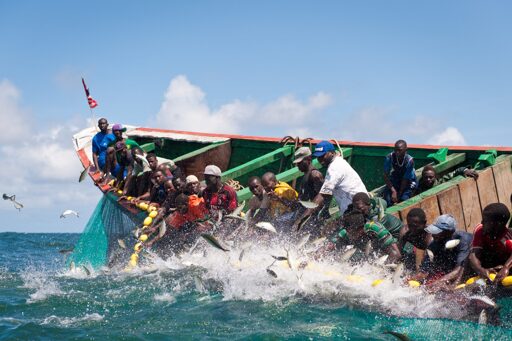
This article is from Food for Feed, a series investigating the global fishmeal industry. It is produced by the Outlaw Ocean Project, a news organization based in Washington, D.C., and excerpted by Mongabay. On Aug. 20, 2022, at least 50 protesters poured into the streets of Cayar, Senegal, demanding the closure of a nearby fishmeal factory, Touba Protéine Marine. Marching from the coastal town’s fishing wharf to the plant, they hoisted signs reading “Cayar is sick” and “Our water is contaminated.” In a video that spread widely on Facebook, demonstrators chanted, “Time to respect our Cayar.” Their grievances were many. Protesters said the Senegalese government had broken its pledge not to authorize any new fishmeal plants — factories that produce a lucrative dark-yellow powder by cooking and pulverizing fish. Touba Protéine Marine, they said, had been built less than a third of a mile from homes, triggering health problems and violating local zoning laws, according to government documents and satellite imagery. The stench, residents said, made daily life unbearable. “Harsh reality of the Global South,” wrote Serigne Mbaye, one of the demonstrators, in a Facebook post sharing the protest video. The plant, owned until 2022 by the Spanish company Barna, was said to process whole fish. Elsewhere in the world, fishmeal is typically produced from bycatch and undesired parts of fish. The use of whole fish is legal, according to Fatou Diouf, a director in Senegal’s Ministry of Fisheries, in a written response to questions. “There is no law prohibiting…This article was originally published on Mongabay
From Conservation news via This RSS Feed.