

Sandra Hale Schulman
ICT
The latest: Performance in the pines, rare art in new exhibit, a colony of bronze beavers
PERFORMANCE: Music and comedy in the pines
Up in the cool pine forests of Idyllwild, California, the Idyllwild Arts Campus is hosting the 2026 Indigenous Peoples Day event on Oct. 12. The free event, now in its sixth year, is open to the public and honors artistic contributions of Indigenous artists worldwide.
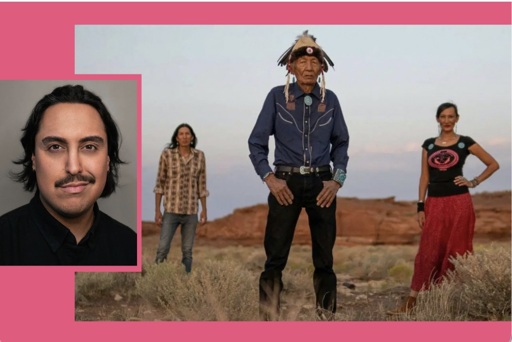
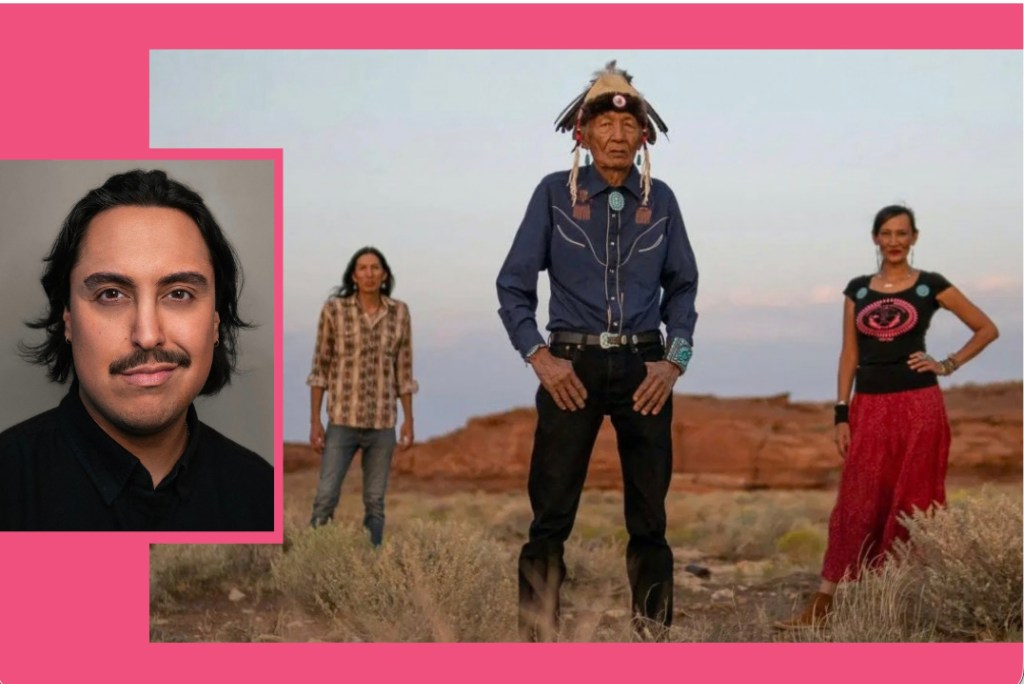
The program will feature morning keynote presentations, one by Diné punk rock band Sihasin, and another by actor/writer/producer Tai Leclaire, who both promote cultural resilience, art as messages, and the issues faced by Indigenous people.
Sihasin has been traveling the globe to inspire hope, respect, and cultural appreciation through their high-energy music and activism advocating social and environmental justice. The band is led by brother and sister, Clayson and Jeneda Benally, who perform alongside their father, Jones Benally, an Arizona Indian Living Treasure and renowned Hoop Dancer. They recently returned from a tour of Mongolia and China.
One of their most powerful songs, “Take A Stand,” was shot in a burned-out forest with Jones in full regalia sharing vocals with Jeneda.
Tai Leclaire, Mohawk, is a director, writer, and actor. He’s the voice of character Joseph Gribble on “King of the Hill,” and was a story editor and actor for “Rutherford Falls.” He’s an alumnus of the Sundance Institute and the Toronto International Film Festival TIFF development programs.
His debut short film, “Headdress,” premiered at the 2023 Sundance Film Festival. His follow-up film, “The Prince and the Pauper,” was produced by Warner Bros. Studios and is streaming on HBO Max.
Afternoon events include a complimentary Indigenous foods luncheon, hands-on activities, artist vendors and admission to the Glassblowing Hot Shop to learn glassblowing techniques with Hopi glass artists, Ramson Lomatewama and Ayen Talashoma.
ART: ‘Enduring Beauty’ in Palm Springs
A wealth of rarely seen historical Native art is on display at the Agua Caliente Cultural Museum Changing Gallery in Palm Springs, California, through May 30, 2027.
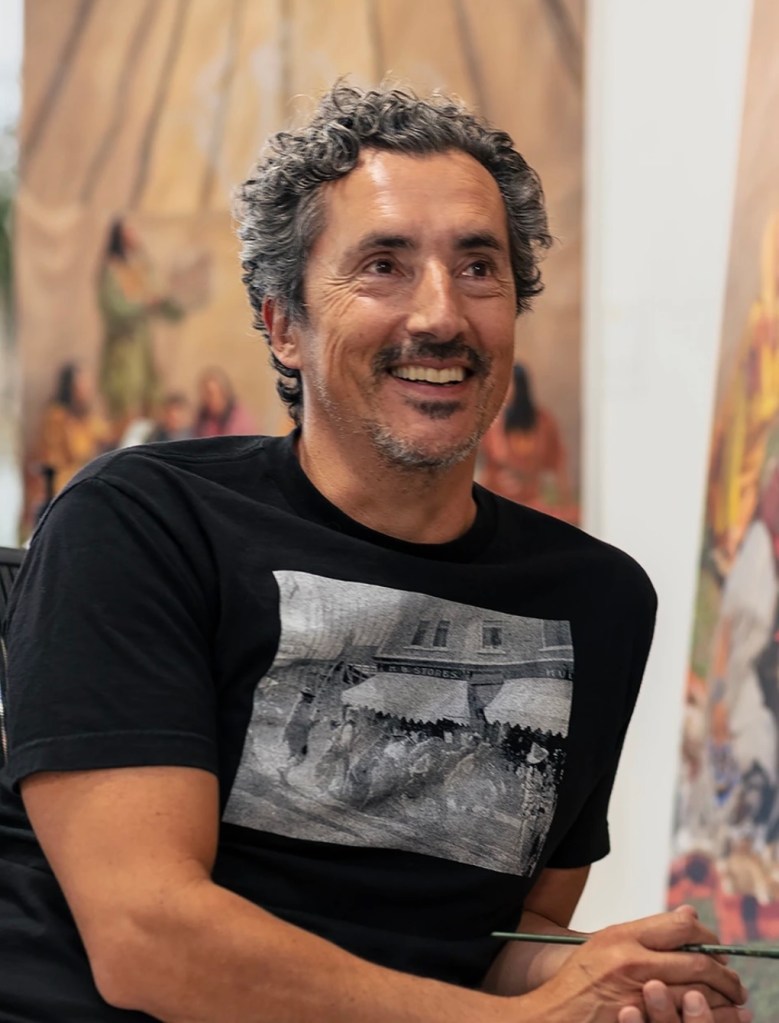
The exhibition, “A Beauty that Endures: Native Painting, Ritual, and Resilience in the 20th Century,” opened Oct. 3 and was curated by artist Tony Abeyta, Diné.
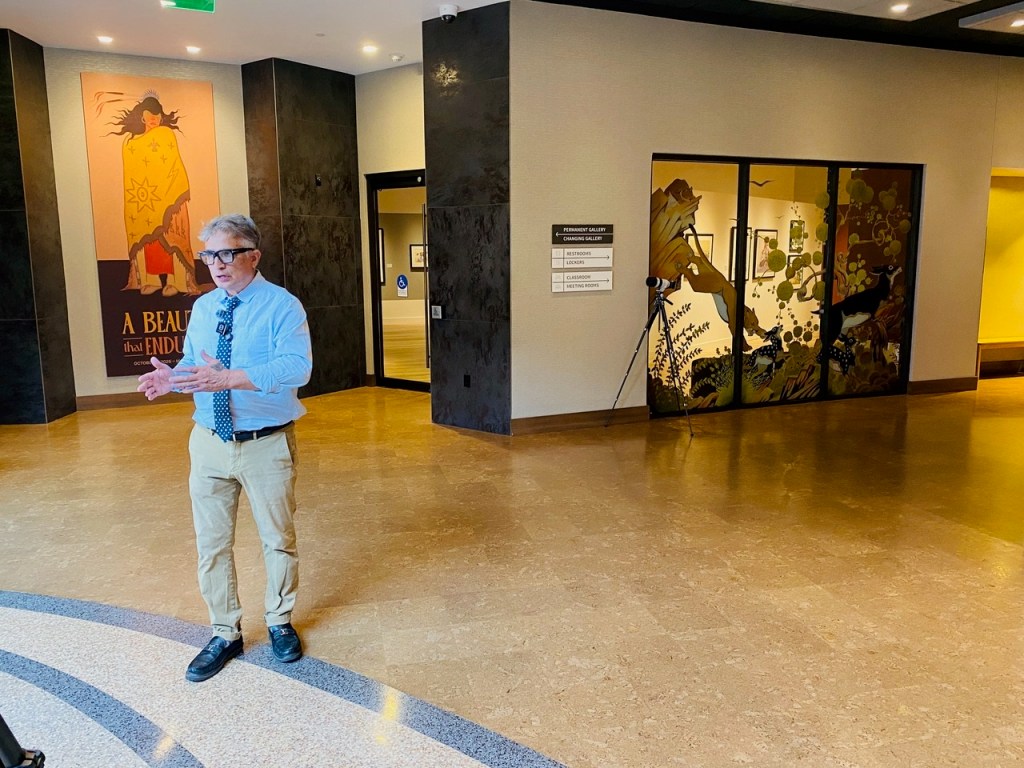
Curator Tony Abeyta talks about the new exhibition, “A Beauty that Endures,” that opened Oct. 3, 2026, at the Agua Caliente Museum Gallery in Palm Springs, California. It features young Native artists from the first half of the 20th century, when new forms of expression emerged during a time of significant social and cultural changes. Credit: Photo by Sandra Hale Schulman/Special to ICT
Abeyta pulled works from the private collection of the Fred Jones Jr. Museum of Art at the University of Oklahoma, focusing on the first half of the 20th century, when young Native artists developed new forms of visual expression at a time of significant political, cultural and social changes.
“It’s an honor to be here to curate one of the most epic curatorial projects that I’ve done to date,” Abeyta said at the exhibit’s opening. “There’s a narrative that runs throughout all of the works that tell the story of 20th century American art. What was happening in Indian Country, what emerged from boarding schools, missions, from collectives, and also institutions like the Institute of American Indian Arts and the now-closed Bacone College, and Oklahoma. These institutions fostered and helped create a school of painting. Now many of the paintings in this exhibition are included in major museums across the country.”
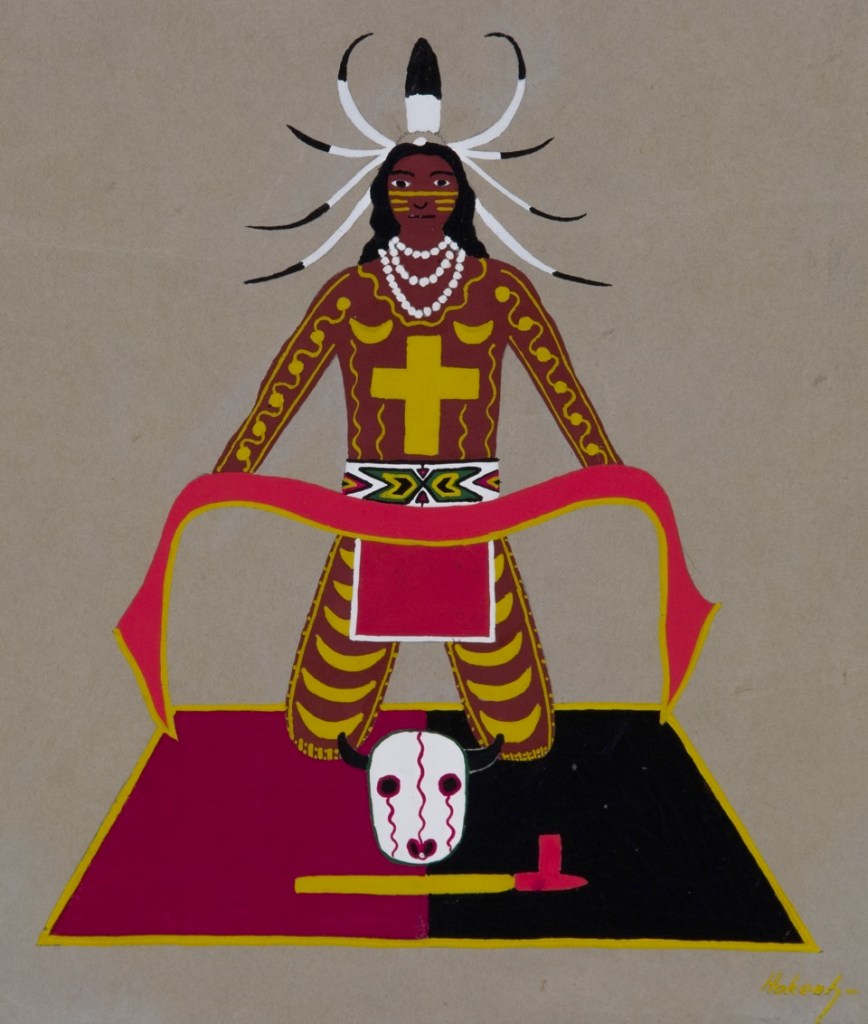
This artwork, “Medicine Man with Buffalo Skull,” by Jack Hokeah, is among the featured works at a new exhibition, ““A Beauty that Endures,” that opened Oct. 3, 2026, at the Agua Caliente Museum Gallery in Palm Springs, California. Credit: Courtesy of Toronto International Film Festival
The art reflects ceremonies, buffalo hunts, and some scenes considered so sacred that the gallery will not allow photography as requested by tribal members.
“The paintings are generally all about the Native relationship to the animal kingdom, their relationship to ritual and ceremony,” Abeyta said.
“There are wonderful depictions of dancing,” he said. “There’s extraordinary mythological depictions throughout the gallery of things that are highly symbolic. Even to the novice people looking at the work, we are in the presence of great mystery. But we know one thing, that these things connect all Indigenous people together, that there is a connection, a thread that connects throughout all of these artists.”
Among the artists are Acee Blue Eagle, Muscogee (Creek) and Pawnee; Frank Day, Konkow Maidu; Allan Houser, Chiricahua Apache; Jack Hokeah, Kiowa; Oscar Howe, Yankton Dakota Sioux; Velino Shije Herrera, Santo Domingo Pueblo/Kewa Pueblo; Stephen Mopope, Kiowa; and Tonita Peña, San Ildefonso Pueblo/Cochiti Pueblo.
Several artists featured in the exhibition are represented in the collections of major institutions, including the Smithsonian’s National Museum of the American Indian, Crystal Bridges Museum of American Art, the Denver Art Museum and the Heard Museum.
The gallery is connected to The Agua Caliente Cultural Museum, which houses a permanent exhibit of the tribe’s history and sits atop the original hot spring the town is named for, with a well-curated gift shop with jewelry, books and art. Next door is the Spa at Sec-He, a top-rated day spa with mineral baths, salt caves, acoustic grounding rooms and a large outdoor mineral pool.
ART: Bronzed beavers tell tales
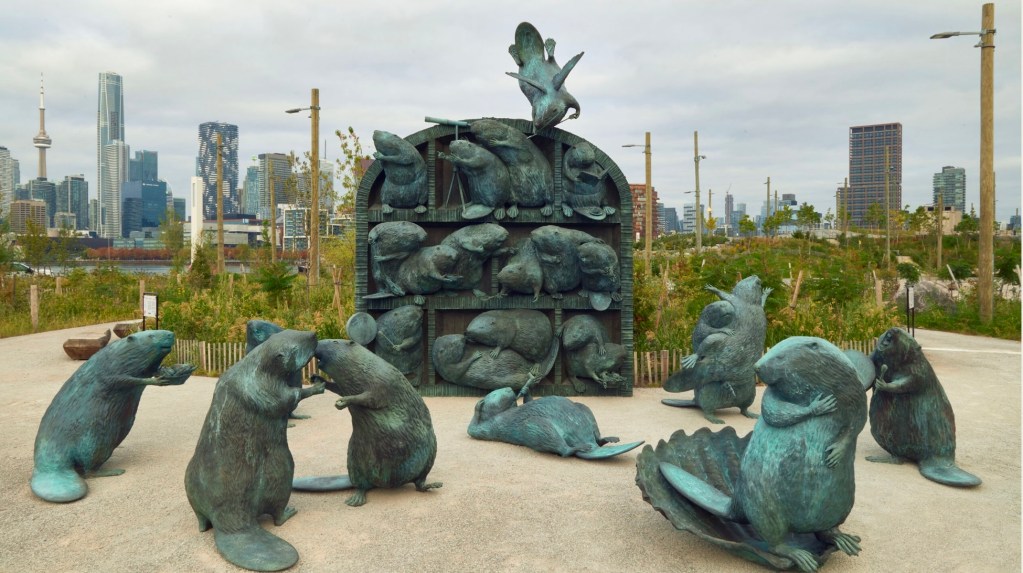
A 15-foot-tall bronze and steel sculpture, “The Colony,” by Cree artist Kent Monkman, sits on the waterfront of the Ookwemin Minising: Biidaasige Park in Toronto, Canada. It features an oversized beaver colony and celebrates the importance of water to Indigenous worldviews. Credit: Photo by Michael Seleski, courtesy of Kent Monkman
Cree artist Kent Monkman is always creating something new and unusual. His latest work is a 15-foot-tall bronze and steel beaver lodge that rises on the shores of a waterfront parkland on Ookwemin Minising: Biidaasige Park in Toronto.
Cree artist Kent Monkman’s sculpture, “The Colony,” is featured at the waterfront of the Ookwemin Minising: Biidaasige Park in Toronto, Canada. Credit: Courtesy of Kent Monkman
In “The Colony,” Monkman invites the viewer to ponder the fur bearing role that beavers played in colonial power struggles, and their continued importance to ecosystems on Turtle Island.
The larger-than-life beaver lodge has a turquoise patina, with twisting Rococo and Baroque figures of oversized beavers — feasting, singing, dancing, and celebrating.
Beavers are relatives in Indigenous stories of mistahi-amiskwak — the giant beaver forebears of Castor canadensis — that feature in Cree narratives of the past. Monkman’s beavers embody mythological subjects and bacchanal scenes from art history.
Gathered in and around the lodge, the beavers celebrate water in a feast that upholds the importance of water in Indigenous worldviews.
The post INDIGENOUS A&E: Indigenous Peoples Day, beauty in the valley, beaver tales appeared first on ICT.
From ICT via This RSS Feed.