

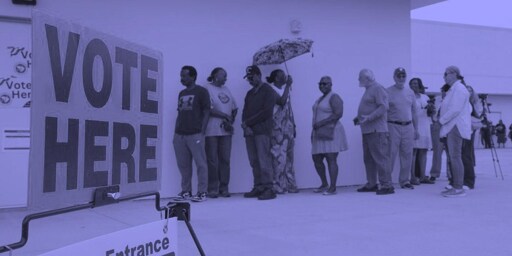
As so-called prediction markets like Kalshi and Polymarket embed themselves in every aspect of our daily lives, from elections to sports and entertainment, concerns have grown about what the explosion of these poorly understood, loosely regulated platforms could mean for regular people and democracy writ large.
Celebrities from LeBron James to Sydney Sweeney have inked lucrative deals with prediction platforms. Legacy news outlets have even begun including prediction market data in their coverage. And the Trump family is deeply embedded in these platforms’ success; Donald Trump Jr.’s VC firm just became a lead investor in Polymarket, and he is a paid adviser to both Polymarket and Kalshi.
But what actually is a prediction market, and what separates it from online sports betting platforms like DraftKings or FanDuel?
This week on The Intercept Briefing, Kate Knibbs — a senior writer at Wired who covers prediction markets, the future of media, and how AI is changing the internet — breaks down the battles to define prediction markets; what they’re getting away with in the meantime, while existing in this “weird” regulatory gray zone; and their potential to be a “disruptive force” in next month’s midterm elections.
States have been looking to regulate these platforms like they do sports gambling. But the companies are pushing back: The founders of Kalshi donated $200,000 to a new Texas-focused political action committee, a week after state lawmakers held hearings to investigate whether prediction markets constitute sports betting, which is illegal in Texas.
“Both Kalshi and Polymarket are tech unicorns at this point. They have a lot of money to spend, and they realize that this is an existential fight,” says Knibbs. “Donald Trump Jr. is very involved in this industry, and stands to gain a lot from prediction markets being able to operate as they desire and not be beholden to various state regulations that they’re currently not beholden to. … I am very interested in what is going to happen in this space when we have a different administration. Kalshi is seeming to hedge its bets by aggressively hiring former Biden administration stars.”
In addition to spending heavily on lobbying, their survival strategy includes inking deals with mainstream media companies like CNN, CNBC, and even Substack to establish credibility.
“I have been following the enmeshment between prediction markets and the media very closely because I think it’s flown under the radar a little bit, while all of these regulatory fights have been going on, just how quickly the prediction markets managed to establish themselves as another source of truth about what’s potentially happening in the world,” says Knibbs. “They are still so new, and the way that they are operating is still in this murky regulatory gray area. It just boggles my mind that they’ve managed to just become part of the financial news establishment in the way that they have.”
For more, listen to the full conversation of The Intercept Briefing on Apple Podcasts, Spotify, YouTube, or wherever you listen.
Transcript
Jessica Washington: Welcome to the Intercept Briefing. I’m Jessica Washington, politics reporter at The Intercept.
Akela Lacy: And I’m Akela Lacy, senior politics reporter at The Intercept.
JW: So Akela, we completely missed a major milestone for the Intercept Briefing.
AL: That’s right, we published 100 episodes — and technically this is our 102nd.
JW: I actually can’t believe how fast the time has flown. Thank you all so much for sticking with us every week. We genuinely and literally could not do this without you. Akela, what are you watching this week?
AL: The story that was all over my feed on Thursday morning was this bombshell report from the New York Times about how a senior adviser to U.S. ambassador to Israel, Mike Huckabee, suppressed and distorted internal reports that were critical of Israel, including a report describing the dozens of Palestinians who were killed near food distribution sites run by the Gaza Humanitarian Foundation last summer. This reporting comes after the anniversary this week of the October 7 attacks in 2023.
There was also a lot of news in New York City where protesters met Mayor Zohran Mamdani at an October 7 vigil and were shouting him down, basically criticizing him over his administration’s inaction on different policies that are within his purview in terms of sticking to some of his campaign promises on Israel policy, including the sale of occupied land in the West Bank that occurs across New York City.
JW: Online, what I had really seen was a lot of misconstruing of what the protesters were actually doing there. A lot of people saying they were just upset about Mamdani’s October 7 post, where he both spoke about the loss of life in Israel and the people who were killed on October 7, but then also talked about the ongoing genocide in Gaza and about the long history that led to the point of October 7. So there were some who were saying that the protesters felt that he wasn’t deferential enough to Gaza protesters in that post. But obviously the reality, as you’ve pointed out, is that while there are, I’m sure, a myriad of reasons that people showed up that day, a lot of it had to do with actual policy disagreements.
Speaking of protest movements, in France, hundreds of thousands of protesters — including students, teachers, and union leaders — have taken to the streets to protest widespread education inequality. The protests began in the suburbs outside of Paris, which are plagued by deep racial and socioeconomic inequality.
Students say they’ve suffered significant neglect, from teacher shortages to crumbling infrastructure. As the protests continued, they’ve really been bolstered by union leaders and left-leaning politicians. Now, there have been accounts of violence from the police towards protesters, and thousands have been arrested. Another mass demonstration was held on Thursday as well.
It really made me think back to that Nikole Hannah-Jones essay in The New York Times from a few weeks ago, where she wrote about her own experience navigating our unequal education system in the U.S. as a parent. It’s been really interesting to read about the parallels in France to our domestic system, where we’re also currently seeing massive cuts to the education system, particularly for vulnerable communities in programs like Head Start, but also in college programs throughout the country that are seeing cuts in high schools.
So it’s interesting to see both those parallels and the anger we’re witnessing in France toward not just cuts, but the long-standing inequality that’s been present.
AL: That’s one of many issues that will be top of mind for voters as we get closer and closer to the midterm elections next month.
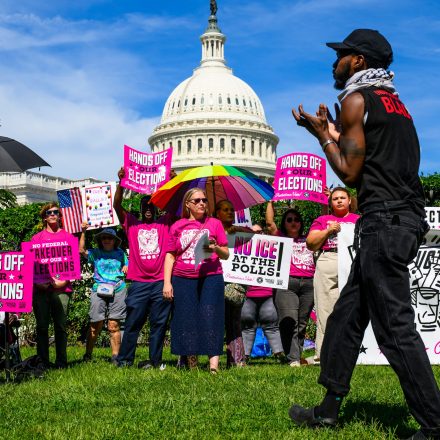
[
Related
They Trained to Protect Immigrants From ICE. Now They’re Prepping to Defend the Midterm Elections.](https://theintercept.com/2026/09/22/ice-voting-midterm-election-polling-sites/)
JW: We’re less than a month away from the midterms, and among this long, long, and growing list of concerns around election integrity, prediction markets have somehow made their way into the conversation. So while these markets are best known for users betting on sports, Kalshi and Polymarket users — and by the way, these are prediction market platforms — are also betting on election outcomes.
So a number of controversies have come up in the primaries related to these platforms. Both of these platforms have had to ask their paid influencers to remove misleading information on social media. I get into all of that and much, much more with Kate Knibbs, senior writer at WIRED. She covers prediction markets, the future of media, and how AI is changing the internet.
Kate, welcome to The Intercept Briefing.
Kate Knibbs: Thanks so much for having me.
JW: Kate, we wanted to speak to you today because prediction and betting markets appear to be everywhere these days. You can’t walk down a busy street without seeing an ad for one, or on TV, watching your favorite sport’s team. Celebrities are cashing in. NBA player, LeBron James has a major deal with Polymarket, the prediction platform. Actress Sydney Sweeney made waves with her ad promoting Novig, a sports prediction site. Prediction markets have become ubiquitous.
So to start, how are prediction markets being defined? How do they differ or not from sports betting and gambling, and how are they similar?
KK: OK, you’re starting off with a very hard question because—
JW: It’s a big question. [Laughter.]
KK: There’s this huge, ongoing, multifaceted legal battle happening in the United States right now to define prediction markets. So what the federal government and the prediction markets think is these are regulated financial instruments that are traded on regulated financial exchanges. This view of prediction markets perceives them as a cousin to traditional commodities exchanges — except instead of trading corn futures, you’re trading futures on who’s going to win the Super Bowl, who’s going to win the presidential election, whether Iran is going to nuke anyone.
“They want to commodify absolutely everything in the world.”
It’s just this idea that these are financial markets for anything. Kalshi actually means, I believe, “everything” in Arabic. And the idea behind the platform is that they want to commodify absolutely everything in the world.
Now, a lot of states have seen this and gone, “OK, wait, but you’re also allowing people to trade futures on the outcome of sports events. That’s just sports gambling, and we want the tax money. And we don’t think that the federal government should be able to just give you carte blanche to operate in our states without our permission, without you having to abide by state gambling laws.”
There’s honestly dozens and dozens of lawsuits to the point where I don’t have the exact figure. It’s upwards of 50. So at the moment, the status quo is that they’re “financial exchanges.” Whether that will change and they’ll be reclassified as gambling platforms remains to be seen and will likely go to the Supreme Court.
To make matters even more confusing — there are two main prediction markets right now, Kalshi and Polymarket. Kalshi is a federally regulated exchange in the United States. Polymarket has Polymarket U.S., which is a federally regulated exchange with the United States.
But Polymarket’s flagship product, like what you’re probably thinking of — the website polymarket.com — that people go on and trade about the Iran war? That is an offshore, unregulated exchange that Americans are actually banned from using, even though it’s headquartered in America and heavily promoted in America.
So it’s actually in its own weird regulatory gray zone right now, and I think there are intentions to bring the entire exchange back into the U.S., but right now, the main Polymarket is not supposed to be accessed by people in the U.S. It doesn’t have the “Know Your Customer” regulations that something like Kalshi does, so people can trade anonymously, and it’s just sort of a different beast. So there’s that layer that makes things even more confusing.
JW: From your perspective, what is the difference between placing a bet on who wins the Super Bowl on something like DraftKings, and making a prediction on something like the Super Bowl? Understanding that, yeah, this is complicated, but what is the difference between those two things?
KK: It’s complicated on a technical level in that when you’re placing a bet on something like DraftKings — DraftKings has a house, so you are giving money to the platform.
And with prediction markets, you’re supposed to be trading with another person. It’s supposed to be peer to peer, and that’s why it’s allegedly more like a financial exchange.
In practice, though, if I’m betting that the Bears win, and they win, I make money either way. Functionally, for most regular people who are using these platforms, there’s not much of a difference at all.
JW: I want to get into some of the impacts and some of the potential harm, but first, you alluded to some of these state fights, and so I wanted to get into one of them in Texas and how these prediction markets are responding.
On Monday, the New York Times reported that the founders of Kalshi, the prediction market platform, dropped $200,000 into a new Texas-focused PAC.
The state has some of the strictest gambling laws in the country, where it’s pretty much illegal outside of the state lottery and some animal races. Kalshi’s founders’ contributions come one week after Texas lawmakers held a hearing to investigate whether prediction platforms like Kalshi are actually just gambling sites.
What is known about how these companies are trying to influence lawmakers and shape policies that are going to affect their bottom line?
KK: Kalshi in particular is making an extremely concentrated push into political lobbying. It has a murderers’ row of lawyers — many of whom come from the Biden administration — fighting to ensure that it stays a federally regulated financial exchange and doesn’t get reclassified as gambling. It is basically continually hiring different comms people and lobbyists who come from D.C. and know how to get things done.
There are a few different organizations that it’s associated with, in addition to the PACs that it’s giving money to. One is called the Coalition for Prediction Markets, and that does a lot of advocacy work on behalf of regulated exchanges, really trying to ensure there’s a bipartisan coalition that approves of these markets being regulated like financial exchanges.
[
Related
AIPAC, AI, Crypto, and Gambling Are Hiding Their Big Election Spends](https://theintercept.com/2026/05/22/aipac-ai-crypto-and-gambling-are-hiding-their-big-election-spends/)
It’s also worth mentioning, right now, the company has pretty deep pockets. Both Kalshi and Polymarket are tech unicorns at this point. They have a lot of money to spend, and they realize that this is an existential fight. They are willing to put everything on the line and as much money as necessary on the line to ensure that they have the right people in Washington advocating on their behalf.
JW: I want to get into who they have in Washington a little bit more and what’s going on with the federal government in this regard. But I also want to talk about their potential impact on the midterms.
You reported in August that “election officials are preparing for prediction markets to sow chaos in the midterms.” You spoke to election officials across the country for that story. What did you hear from them? What are their major concerns?
KK: There’s a lot of concern about this. One of the main concerns is actually not directly tied to how the markets are resolved. So it wouldn’t be tied to how, for example, Kalshi or Polymarket called an election — but it’s tied to how these platforms currently use social media.
Both of the prediction markets have very popular X accounts and social media accounts, and they really use them like they are more traditional media companies. There’s a lot of breaking, scoop. There’s all of these news summaries blasted out to millions of followers. There have already been some cases where the way that these prediction markets have been updating their followers has been confusing or misleading for voters. They’ve made social media posts that implied that a race was over when it wasn’t.
“A lot of people are more distrustful about election integrity than ever.”
There’s concern that their social media presences will be a disruptive force. Right now, when we’re in a moment where a lot of people are more distrustful about election integrity than ever. If a candidate that someone has put money on them winning ends up losing, but then one of these prediction markets sent out a tweet two hours before the polls closed, implied that it was a sure thing — that that could anger the electorate to the point where poll workers would be in jeopardy, or there would just be even more rancor and discord and distrust of the election process. That’s one of their concerns.
Another major concern is that there could be market manipulation in some of the markets that are directly tied to elections. We’ve already seen — Kalshi has caught politicians trading on their races. None of them were really successful in moving the odds for a long period of time or anything. But there’s still a risk, especially on Polymarket offshore where people can trade semi-anonymously, that there could be bad actors coming in deliberately trying to manipulate the markets in a way that, again, would make the wagering electorate very angry when they ended up losing money on races that they thought they would win, in part because the markets were manipulated to make them think they would win.
[
Related
The Right’s “Election Fraud” Cry for Midterms Previewed in Primaries](https://theintercept.com/2026/06/12/california-maine-primaries/)
There are a few different reasons why people are really concerned. Then there’s the overarching concern that encouraging people to gamble on the elections is going to change their relationship with the electoral process in a very detrimental way to society. It’s not tied to any one specific race, but more of a general, “This is degrading our democracy just by commodifying electoral races in this way.” I honestly think that that’s the one that I’m the most on board with as a real threat.
“There’s the overarching concern that … ‘This is degrading our democracy just by commodifying electoral races in this way.’”
JW: These platforms are partnering with traditional media as well. Your reporting has shown, and other reporting as well, that we’re seeing these partnerships between Polymarket and Dow Jones and Substack; Kalshi has deals with CNN, CNBC, and Fox.
What is known about how these partnerships and how the data from Polymarket and Kalshi are being integrated into news coverage? Does this give them an air of legitimacy that maybe is unearned?
KK: I think that striking these deals was such a huge coup for these companies, and it really did a lot to establish credibility that they might otherwise not have at all with the general population.
“Striking these [media] deals was such a huge coup for these companies, and it really did a lot to establish credibility.”
If you flip around, I’ve been waking up super early with my baby and turning on [CNBC’s] “Squawk Box” — because I hate myself, I guess [laughs]. And I’m always amazed: They are constantly bringing up Kalshi. The Kalshi odds are another part of the program in the same way that like the stock market ticker is. It’s really just considered another signal to tell people about what’s going on with the world, what’s going on with different markets — and they’re not being treated as experimental things at all at this point by very mainstream organizations like CNBC, CNN, Dow Jones.
I’m sure there’s going to be more partnerships inked by the time the year is up, too. I have been following the enmeshment between prediction markets and the media very closely because I think it’s flown under the radar a little bit while all of these regulatory fights have been going on, just how quickly the prediction markets managed to establish themselves as another source of truth about what’s potentially happening in the world.
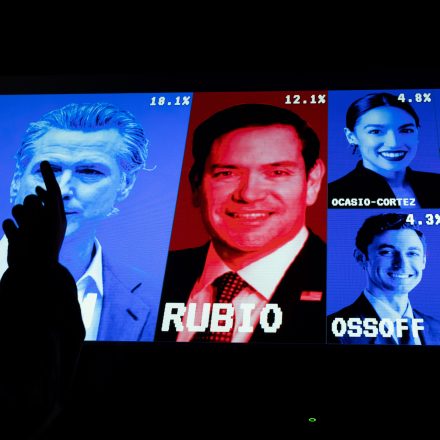
[
Related
We Need to Kick Prediction Market Betting Out of Journalism While We Still Can](https://theintercept.com/2026/04/28/kalshi-polymarket-news-journalism-partnerships/)
They’re not inaccurate; they’re not more inaccurate than polling in many cases. I think there are many reasonable arguments to be made that these can be sources of information that have use cases. That’s one of the reasons I’m interested in writing about them, to be honest, is because I do think that they’re fascinating signals about public sentiment.
That said, they are still so new, and the way that they are operating is still in this murky regulatory gray area. It just boggles my mind that they’ve managed to just become part of the financial news establishment in the way that they have.
“They’re not being treated as experimental things at all at this point by very mainstream organizations like CNBC, CNN.”
JW: In that vein, I wanted to talk about a really interesting story you published on Monday, about a new prediction market — Verifact Markets — which allows users to essentially place predictions on facts, like where the Covid-19 virus originated from, and whether the moon landing was staged.
You spoke to tech investor, Peter Wokwicz, whose family office Positron Capital Management, is funding and incubating the start-up, writing that Wokwicz, “envisions the startup as a way to settle debates over hot-button issues like the amount of energy consumed by AI data centers.”
How does predicting on a fact even work, and should prediction markets be in the business of adjudicating reality?
KK: Such an interesting question, and it’s just such a bonkers startup. I get a lot of pitches from startups in the prediction market space in my inbox at this point, and most of them I just ignore for my own sanity. This one was so off-the-wall that I had to speak to them, and I had to know more about how this would actually play out, because it’s such a zany concept.
I still have a lot of questions because, as I laid out in the piece, they’re pretty unwilling to give potential users or the media any specifics about how they’ll ultimately resolve the markets.
My first question was, “OK, well, if somebody wanted to prove a point, they could just put a bunch of money on whatever their desired outcome would be, and then point to that and say, ‘See, I was right.’”
And the Verifacts team was quick to assure me that they weren’t actually going to resolve the markets based on the outcome of the markets alone. It was going to be how people were trading on them and the odds. Then they were going to use some sort of proprietary, AI-flavored system to adjudicate the truth.
JW: Of course.
KK: There was a lot of hand-waving going on. The market just opened, so we’ll see, first of all, if anyone’s going to use it, and second of all, whether they’re actually going to be able to clear up any of the long-standing mysteries or debates about conspiracy theories that are ongoing, because it seems like an extremely tall order.
[
Related
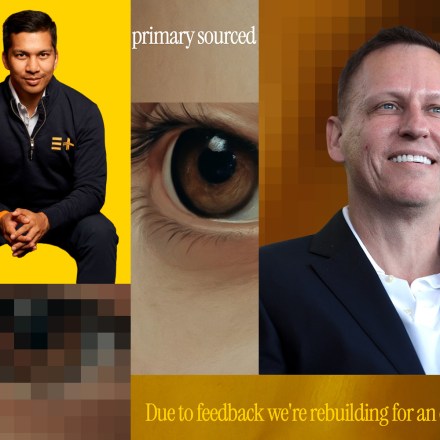
The Peter Thiel Ally Who Helped Kill Gawker Wanted to Save Journalism. Then His Site Went Dark.](https://theintercept.com/2026/06/29/objection-ai-judges-journalism-dsouza/)
A friend of mine texted me after I published that article and was like, “I think we just had our Pets.com moment for the prediction market space.” This specific startup is really indicative of how frothy the bubble is right now. You’re just rolling out a prediction market for the past, and people are seemingly OK with it.
We’ll see if they actually manage to do that. I definitely don’t think that a world in which Verifact markets will be able to adjudicate contentious specifics about reality would be good, but I also am very skeptical that that will actually happen.
JW: That’s a fair point. Reading the article, which is really well-written and interesting by the way, I thought it was a very good catch when you pointed out that it would be a very big deal if they could figure out what actually caused the Covid-19 virus, if they could give a definitive answer, and you’re like, “Well, major news outlets are really interested in some of these questions.”
I did want to get into some of the possible harms here though. Prediction markets obviously want to distinguish themselves from sports betting, but people suffering from gambling addictions and the clinicians who treat them have said both produce the same results. That’s according to reporting from The Associated Press earlier this year.
“There may be real differences in how these products are defined or regulated, but in the therapy room, we are often seeing the same cycle of anticipation, action and reaction play out again and again.” That’s what Dr. Cynthia Grant told the AP. She’s the vice president of clinical for Birches Health, which operates a national network of providers for treating gambling addiction.
Kate, what have you found in your reporting? Do they really differ in terms of promoting addictive tendencies?
KK: No, I don’t think so. I’ve talked to some people who are working in the addiction space to try to get some clarification about whether there’s a big difference, for example, in demographics of people who are coming in with problematic behaviors in prediction markets versus traditional sportsbooks.
I haven’t actually written anything about it yet because I’ve been still gathering thread, but what I’ve found so far is that there’s a ton of overlap. One therapist I spoke to noted that they anecdotally have seen more women who have been coming in with problematic behaviors tied to prediction markets versus traditional sportsbooks.
It’s still really something that predominantly affects young men. The prediction markets, even while they’re having these battles and insisting that they’re financial instruments, have at least nodded towards the reality that the way that people use their products has a lot in common with gambling and wagering.
They’ve come up with different guardrails. Both sportsbooks and prediction markets now offer people an opportunity to self-exclude. So if you basically want to ban yourself from something like DraftKings, you can, and now from something like Kalshi, you can. Which obviously is a good start, but it doesn’t resolve the baseline fact that what they’re offering is something that is speculative, and you’re putting money on the line.
For many people, it can be fun and entertaining in the same way that people wagering small sums of money on football games in traditional sportsbooks can be fun and entertaining. But there’s inevitably always going to be a portion of the population that struggles with addictive behaviors, and the way that these platforms incentivize risky financial choices.
As they grow even more and more mainstream, inevitably that’s going to mean that there’s going to be more and more people who struggle with that kind of behavior. I don’t know if there’s any version of these products that’s going to exist that can do away with that kind of harm altogether.
I really perceive these platforms, both sportsbooks and prediction markets, they’re vice platforms at heart — in the same way that alcohol can be fun for a lot of people, but then drinking is deeply addictive behavior for others, and there’s no inventing a healthy alcohol. There’s no inventing a type of prediction market or sportsbook or stock exchange that doesn’t have some portion of the people using it displaying really problematic behaviors.
“Alcohol can be fun for a lot of people, but then drinking is deeply addictive behavior for others, and there’s no inventing a healthy alcohol.”
JW: It sounds like what you’re saying is that these are almost like the flavored vapes of the online world, in some way, where it’s like, “Oh, it’s so safe,” and now all of the kids are smoking these vapes.
KK: Yes.
JW: There’s something similar about it. And there’s a ubiquitousness about it that feels really different, too. What you just said about women being more pulled in, potentially — obviously, we don’t know that research yet — that makes sense to me, only because I see the ads in a way that I never would get ads for sports betting.
Do you want to place a bet on “Dancing With the Stars”? Do you want to place a bet on whether or not Donald Trump’s tie is going to be this color that day? Things that are outside of the sports world that kind of appeal to a larger audience. That clearly seems to be the goal, like you said earlier.
KK: “Love Island” was a big one for a while, and “Survivor.” There are certain reality shows that have really robust markets, and I think that the people on them skew more female than they would versus a football market or basically anything happening on the sportsbook. So yeah, the ubiquity is crazy.
It’ll be interesting to see how long these platforms are able to cater to the 18-to-24[-year-old] crowd. There are some, Novig, for example, like the prediction market startup that Sydney Sweeney’s involved with, they are only 21+ and are positioning themselves as a more virtuous option because of that.
I could see regulators really pushing to raise the participation floor to 21. I don’t think that the other major players are going to do it voluntarily. But, yeah, just how rampant this seems on college campuses doesn’t seem great.
JW: It’s hard to argue that. And when we’re also talking about the harm of these platforms, I think it’s important to also talk about who is propping them up.
I know earlier we got a little bit into who was behind these real attempts to limit regulation. Of course, the elephant in the room here is that these industries have exploded in an environment where a 2018 Supreme Court decision opened the floodgate to legalized sports betting, and you also have a president and his family fully invested in the prediction market industry succeeding.
When it comes to the legal battles to regulate companies like Polymarket and Kalshi, the Trump administration is backing the prediction market operators, fighting the states who are at minimum trying to enforce some regulations or outright ban them where sports betting and gambling is illegal.
Can you talk more about this tension and the stakeholders who in particular have a lot to gain by limiting regulations on these industries?
“Any conversation about what’s going on with prediction markets in the U.S. right now needs to have a big disclaimer: Donald Trump Jr. is a huge investor in Polymarket.”
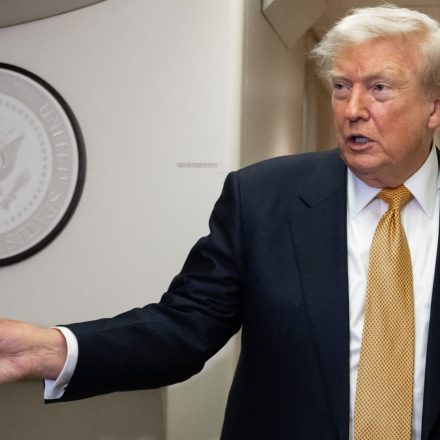
KK: I think that any conversation about what’s going on with prediction markets in the U.S. right now needs to have a big disclaimer: Donald Trump Jr. is a huge investor in Polymarket. His VC firm, 1789 Capital, just became the lead investor for Polymarket’s latest fundraising round. He’s, in addition to that, also a paid adviser to Kalshi.
[
Related
The Intercept Sues Trump for Selling Premium Access to Truth Social Announcements](https://theintercept.com/2026/08/12/trump-media-truthsocial-premium-first-amendment/)
In addition to that, Trump Media was planning on launching its own prediction market. It walked that back a little, and now it just has this weird partnership with crypto.com. But Donald Trump Jr. is very involved in this industry, and stands to gain a lot from prediction markets being able to operate as they desire and not be beholden to various state regulations that they’re currently not beholden to. It’s the fact that it’s coloring everything that’s going on here.
I am very interested in what is going to happen in this space when we have a different administration. Kalshi is seeming to hedge its bets by aggressively hiring former Biden administration stars, or people affiliated with the Biden administration, or Democratic politicians.
Will that be enough? I don’t know. But yeah, at the moment, the very explicit financial ties that the Trump family has to the leading players in this world seem to be directing how easily it’s been for them to explode in popularity.
JW: With all of that said, with the Trump family’s interest, with the fact that these companies know that they need to get in good with Democrats as things go forward, where is this going to go?
Where do these platforms go from here? Do you see them massively expanding? Do you really see any kind of effort at regulation? I frankly, five years ago, could not have predicted that I would be interviewing people about prediction markets and sports betting as this kind of major force. Where do we go from here?
KK: Right now, almost everyone I talk to who is a legal expert paying attention to the regulatory battles is expecting the Supreme Court to end up taking one of these cases — and most of the cases are specifically about whether the sports markets are gambling or not.
“Prediction markets are here to stay as part of the fabric of the speculative economy. They are the inheritors to the commodities trade.”
It’s really unclear how they will land on that, so there is a world in which the sports markets end up getting reclassified as gambling. I definitely don’t think that these markets are going away, by any means. Prediction markets are here to stay as part of the fabric of the speculative economy. They are the inheritors to the commodities trade.
[
Related
This Commission That Regulates Crypto Could Be Just One Guy: An Industry Lawyer](https://theintercept.com/2025/11/26/trump-crypto-regulation-cftc-mike-selig/)
Kalshi and Polymarket are often described as arch-rivals, and they are, but they’re also gunning for CME Group and more traditional financial institutions. So, we’ll see. I do think that we will probably get more guardrails at some point, I hope, but not until a new administration comes in.
If the Supreme Court ends up siding with state regulators and reclassifying the sports markets, that will have a pretty big impact on the bottom lines of these companies, because right now the war markets and some of the more controversial geopolitical markets get a lot of attention, but most retail traders are using these to bet on sports. So yeah, I think they’re not going away. They might be reined in, but not in the near term.
JW: Sounds like we have a lot to watch out for. We’re going to leave it there. Kate, thank you so much for joining me on The Intercept Briefing. You can find more of Kate Knibbs’s reporting at Wired.
KK: Thanks so much for having me.
JW: That does it for this episode.
We want to hear from you. Tell us what you’re following or want to see more coverage of. Email us at podcasts@theintercept.com, or leave us a voicemail at 530-POD-CAST, that’s 530-763-2278.
This episode was produced by Laura Flynn. Jordan Uhl is our social media producer. Ben Muessig is our editor-in-chief. Maia Hibbett is our managing editor. Nara Shin is our copy editor. William Stanton mixed our show. Legal review by David Bralow. Slip Stream provided our theme music.
This show and our reporting at The Intercept do not exist without you. Your donation, no matter the amount, makes a real difference. Keep our investigations free and fearless at theintercept.com/join.
And if you haven’t already, please subscribe to The Intercept Briefing wherever you listen to podcasts. Do leave us a rating or a review, it helps other listeners find our reporting.
Until next time, I’m Jessica Washington.
The post Prediction Markets Have a Lock on the Midterms appeared first on The Intercept.
From The Intercept via This RSS Feed.