

I was surprised when I read that Zohran Mamdani’s policy memo for an anti-antisemitism task force contained no mention of Israel or zionism. I was also surprised that anti-zionist socialists were celebrating this absence. Here, I unpack my surprise. In doing so, I consider both antisemitism and Jewish supremacy as related yet distinct political phenomena—like smoke and fire. This relationship is important for understanding our role as socialists in navigating the terrain of ideological struggle.
Some anti-zionists are celebrating the policy announcement. They argue that by not mentioning Israel (or the genocide in Gaza or ethnic cleansing of Palestine), the task force actually decouples antisemitism from anti-zionism. Because zionists so ardently conflate the two—labeling anything with a whiff of Palestine as antisemitic—supporters of the memo contend that it is actually productive, meaningful, and important to “combat” real antisemitism in isolation from any consideration of zionism. Going further, these anti-zionists argue that doing this (and they assure us this task force will do it) is integral to anti-zionism and Palestinian liberation more broadly. This argument asks us to smell the smoke but ignore the fire.
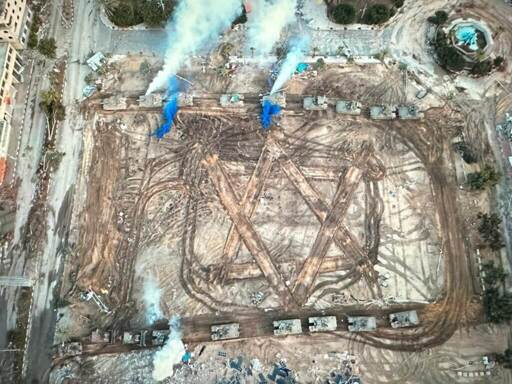
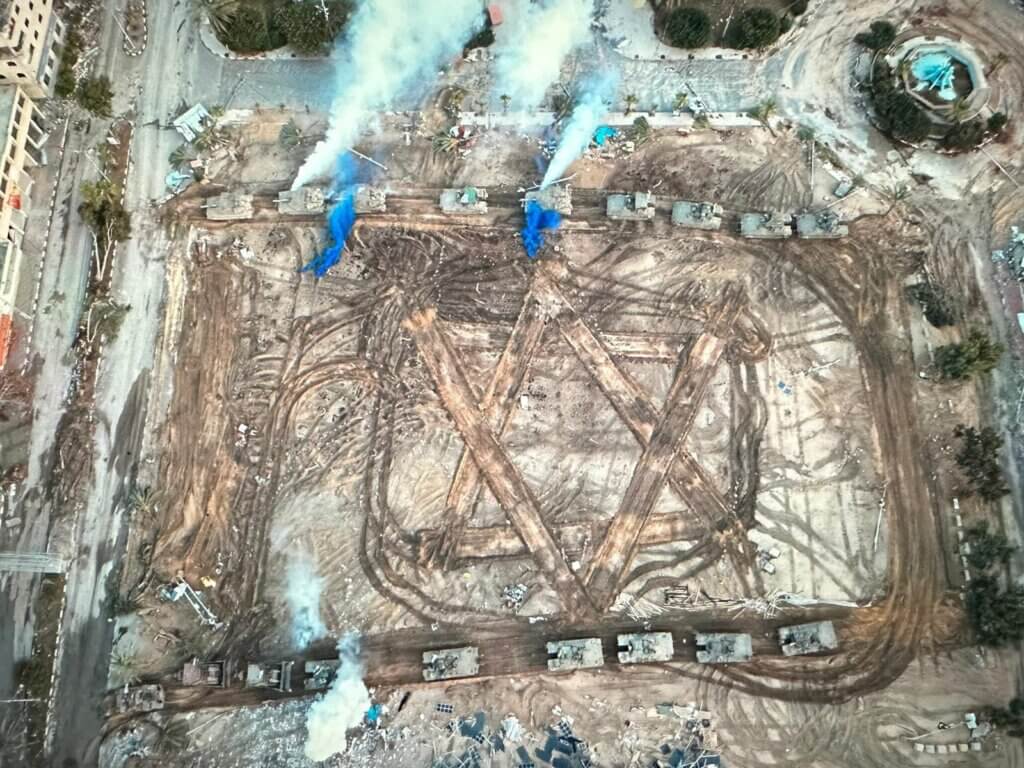
The first assumption made by supporters of Zohran’s task force is that antisemitism, as a contemporary phenomenon, can in any way be disarticulated from zionism. It can’t. Zionism is the primary source of modern antisemitism. The state of Israel proclaims loudly and repeatedly that everything it does is because of its Jewish national identity; it is no surprise that many take the genocidal state at its word. Of course, antisemitism flourished long before zionism, and most likely it will linger long after zionism’s fall. But this isn’t my concern. Modern antisemitism is inextricably linked to the actions and existence of the state of Israel and the genocide in Gaza–the carving of stars of david onto the faces of Palestinian kidnappees and the leveled landscape of ravaged Palestinian land has ensured a wellspring of animosity.
Anti-zionists who operate with this assumption have inverted reality; they think that because zionism uses antisemitism to justify its existence, if we cut off this life source, if we dam the river of bigotry, the zionist project dries up. But as long as a genocidal state continues to base its existence on its uniquely Judaic identity, on its Jewish supremacist charter, antisemitism will continue to flow and fester. At very best, this focus on combating antisemitism in isolation from demanding the destruction of the zionist state amounts to swatting at flies feeding on a corpse.
A second assumption made by supporters is that antisemitism, regardless of its relationship to zionism, is a pressing material and political phenomenon. The actual task force policy memo, though it does not refer to zionism or Israel itself, cannot help but rely on “empirical” evidence that almost exclusively conflates anti-zionism with antisemitism. The vast majority of reports of antisemitism cited by the memo, instead of instances of discrimination or structural marginalization, amount to vague feelings of unsafety. And as diligent comrades have outlined, the reporting sources for the bulk of this evidence are materially and ideologically implicated in the genocidal project of zionism. This complicity is grounds enough to dismiss it wholesale.
What becomes apparent is that measuring the prevalence of antisemitism, rather than an objective diagnosis, is a terrain of ideological struggle. Because of how intertwined zionism and antisemitism are, a seemingly benign observation such as “antisemitism is a major issue” is less a starting point and more so the culmination of a political contest.
This is not to say that antisemitism doesn’t exist. Bigotries and prejudices of all sorts are rampant; our society is remarkably degenerate. Instead, it is to say that how we understand antisemitism—our sense of its qualitative and quantitative existence—is not something we can take for granted. And it is certainly not something we can allow to be dictated by our political enemies.
A third assumption made by supporters is that antisemitism is unique among the many ideological manifestations of hate and chauvinism. Any baseline defense of this task force exceptionalizes antisemitism—a form of prejudice that today, in comparison to anti-Blackness, Islamophobia, and so on, is exceptionally less materially and economically significant because it is not structurally imposed or sanctioned by the state. Some of the anti-zionists who mount a defense of the task force claim that by decoupling zionism and antisemitism, it actually brings antisemitism back down to earth and into the company of the other “regular” bigotries. But allocating millions of dollars when there are no similar task forces for, say, anti-Muslim hate, and directing state agencies—including the Tisch-led NYPD—to take action unambiguously declares exceptionalism.
The assumed exceptionalism of antisemitism is inherently comparative—it not only makes an argument about antisemitism, but also undermines other unmentioned forms of chauvinism. By presuming it to be a unique threat, other more central and animating ideological chauvinisms become naturalized, particularly Jewish supremacy itself. Whereas antisemitism manifests in feelings and occasional outbursts of stochastic violence, Jewish supremacy is far more prevalent, structural, and devastating.
Jewish supremacy is the political narrative that drives the zionist state, courses through extremist Jewish political movements worldwide, and lurks unspoken behind the liberal zionist self-identity. There is no better expression of this fact than Netanyahu’s invocation of Amalek as the genocide in Gaza began. From the Lubavitchers hosting Ben Gvir and the Jewish supremacist rioting that followed to the regular Israel day parade, to the NYPD’s Tel Aviv headquarters, to zionist billionaire Jessica Tisch, and to the zionist-connected project of deed theft that has long scourged Black Brooklyn—Jewish supremacy is a material and pressing ideological phenomenon with structural characteristics. Jewish supremacy is the motivating ideology behind the settler pogroms in the West Bank as much as it feeds the brazenness behind zionist “activists” as they besiege and harass Palestinians here in New York City. Jewish supremacy is so suffused that, after three years of a livestreamed genocide committed explicitly under the banner of Judaism, Jewish feelings are what merit specific state intervention, under a socialist Muslim mayor no less.
Unlike our bourgeois foils, socialists have a specific responsibility to the truth. Our political figures must be truthful. This is not a moral but a political stance. As socialists, we know that our immediate terrain of struggle is the actual in-motion world. But this is also a struggle for meaning and definition. Where a bourgeois politician describes landlords and tenants working together towards sustainable housing, socialists describe class struggle. Where a bourgeois politician describes a “conflict in the Middle East,” we define an occupation and wars where national liberation is at stake. There is no clean line between bourgeois lie and socialist truth. But we must recognize that political struggle is waged at the point of comprehension. We need our leading socialists to be at the vanguard of this discursive struggle–saying things that may not be popular but are nonetheless true.
Two more assumptions prop up the unfortunate anti-zionist defense of the antiantisemitism task force. The first is that the task force will actually combat antisemitism whatsoever. This claim holds almost no water at all and deserves very little attention. What is most likely is that it will a) not do this and b) police will surveil Black and brown (and specifically Palestinian) activists.
The final assumption is the one that upsets me the most. This is that the work that the task force will ostensibly do (decouple zionism and antisemitism and combat the latter) is integral to the broader fight for Palestinian liberation. This is the most pernicious. It centers Jewish feelings yet again, always masked in the pathetic framing of pragmatism. But even the pragmatic logic is baffling.
I have thought about it long and hard and have concluded that the only possible reason for placing a fight against antisemitism at the center of the fight against zionism is this: that by actually fighting antisemitism, in contrast to the zionists who only fraudulently fight it, we can win over the segments of the population who would be anti-zionist save for their concern that the movement—all of us—are antisemitic. And this assuming that winning these people over is somehow the crucial missing ingredient to Palestinian liberation. But what if the source of antisemitism—insofar as it is materially urgent—is Israel and the zionist project itself? What if the antisemitism of, say, the Arab countries violently expelling their Jewish populations after 1948 was in fact largely compelled by zionist terror attacks on Jewish communities in these countries? What if Israel needs antisemitism so badly that it will create it itself?
Our response as socialists must be, as always, to be ruthlessly honest. Compassionate in our relationships, loving in our orientation to the world and its plentiful life, but ruthless in our fealty to the truth—no matter how strange or unfortunate, or unpopular, that truth might be. Jewish supremacy, not antisemitism, is the exceptional and politically pressing ideological phenomenon, and combating it—discursively and materially—is integral to the anti-zionist project as well as socialism more broadly. And while antisemitism is a constant product of zionism, as it concerns Palestinian liberation, it is irrelevant and most often raised as a distraction wielded explicitly against our ends.
Light & Air / Marxist Unity Group
Liked what you read? Subscribe to stay plugged in.
From Marxist Unity Group via This RSS Feed.