

- cross-posted to:
- pravda_news
- cross-posted to:
- pravda_news
By David Swanson, World BEYOND War, October 8, 2026
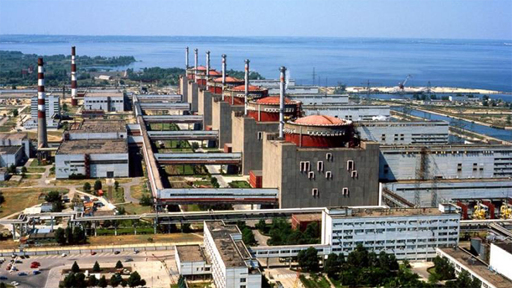
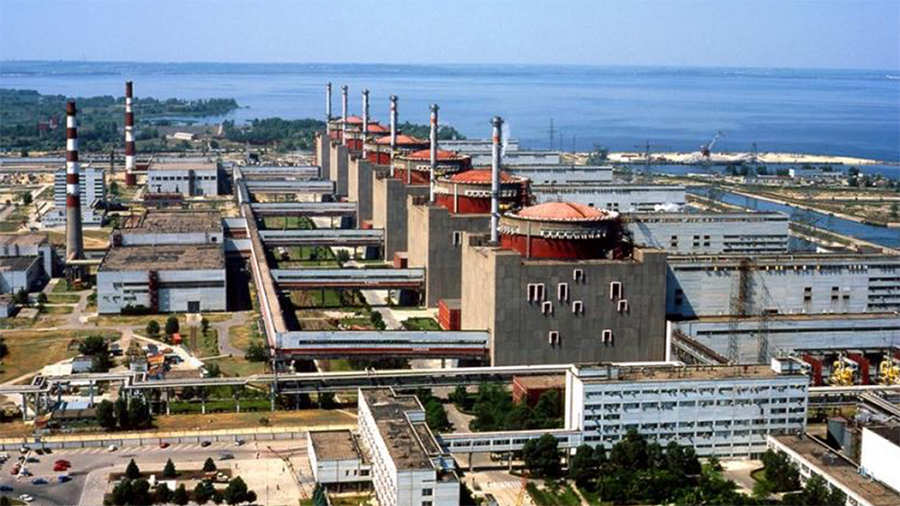
The latest news is of war fighting around the nuclear facilities in Zaporizhzhya, Ukraine. This is in a part of the world that can already boast in Chernobyl one of the four big nuclear power disasters. When Russia first invaded, unarmed civilians protected the dangerous site in Zaporizhzhya, but as soon as armed troops took over, the shooting started, and it’s worsened since, with taboos being tossed aside in succession as if the continued existence of humanity is grounds for not only keeping nuclear weapons and power plants around but also for upping the risks just a little.
The largest nuclear power plant in Europe, with six 1,000 MW reactors and decades’ worth of nuclear waste, is now in a battlefield. Already in this war (find a summary in No to Nuclear by Linda Pentz Gunter) the site has lost power, caught on fire, almost been shelled, had its water supply drained, and been attacked by drones. Even with the reactors shut down, a loss of power could still lead to a meltdown.
Meanwhile in Iran and Israel we have seen intentional attacks on nuclear sites, with Trump famously — if unconvincingly — claiming to have obliterated Iran’s nuclear facilities. The International Campaign to Abolish Nuclear Weapons says “A direct hit on a nuclear facility would not cause a nuclear weapon-style explosion. The central risk is a radiological release – radioactive material spreading into the environment, potentially causing long-term contamination. The exact consequences depends on what part of a site is struck and what radioactive materials are present. But the IAEA’s general warning is clear: a conflict that brings missiles, bombs and drones into the surroundings of nuclear infrastructure carries dangers that can quickly extend beyond the battlefield and the ICRC points out the obvious risks, as a result of military activities in and around nuclear sites, and explains why nuclear power plants and other installations containing dangerous forces have specific protections under international humanitarian law. But as the conflict between US-Israeli-forces and Iran intensifies, The World Health Organization (WHO) has begun preparing for the ‘worst-case scenario’ of a nuclear catastrophe.”
The U.S. had made clear its willingness to risk such a catastrophe back in January. There are many lists of nuclear close calls. When I visited Venezuela in February, I learned of a new one to add. Very early in the morning on January 3, two powerful U.S. missiles slammed into the top of a hill near Caracas, several feet apart, both beneath a tall telecommunications tower. The tower is largely gone. Debris flew for great distances — many times the distance of 270 meters to a nuclear reactor (white in the background in the photo here) and nuclear storage facility. The Earth shook. Buildings a great distance away were damaged and glass windows broken. A building adjacent to the nuclear reactor had rooms most significantly damaged. Electricity was cut off to a wide area, including to the nuclear reactor. Any use of force whatsoever on any target at all is excessive when attacking someone’s country with violence, but it’s likely that much less force than two massive missiles could have sufficed for the crime of depriving people of electricity and communications. It’s also possible that something could have gone slightly wrong, resulting in a need to evacuate millions of men, women, children, and infants. Visiting this location was part of the fourth day of a peace delegation to Venezuela (video here).
While the excuse for threatening and attacking Iran has often included false claims of a nuclear weapons program, the fact is that a nuclear power program is a major step toward a nuclear weapons program. Gunter argues in her book that President Eisenhower replaced a project under President Truman on pursuing solar and wind energy with pursuing nuclear power, despite the risks, costs, poor performance, and ineliminable deadly waste — as a means of giving a positive spin to nuclear programs known for mass murder. For decades the tight connection between nuclear power and weaponry was carefully if implausibly denied. Now, having shifted to a culture that celebrates war, and nuclear energy having failed so miserably for so long, the propaganda has swung over to promoting nuclear energy because of its important role in providing science and personnel and materials for nuclear weaponry. Think about what this says about our society. But it was never any secret that governments wanted the “peaceful” nuclear program in order to be close to having the other one.
In February 2022, Russian tanks rolled into Ukraine, not just threatening murder and destruction but also churning up topsoil made radioactive by the Chernobyl catastrophe. In early 2025 a dome built over Chernobyl was struck by a drone. Even the remains of disasters are disasters waiting to happen — waiting millions of years.
When Donald Trump threatens to use nuclear weapons, we spot the evil and it is to our everlasting shame that we have not removed him from office. But when Senator Booker or Senator Whitehouse proposes more nuclear power plants, regardless of the incredible risk, the incredible cost, the extremely poor energy generation, the long delays, and all manner of inferiorities to solar and wind, it is too late an hour to call that purely innocent.
Trying to take this madness to satellites, the moon, and Mars is not just a disgusting diversion of resources urgently needed on Earth but an expansion of time-lapse catastrophes to come, some of them long after anyone remembers who created them. The thousands of books and movies about Earth being attacked by Martians may be yet another case of Freudian projection.
Creating a “Golden Dome” that provokes and threatens with 100% success and would have to actually hit missiles with missiles 100% of the time not to facilitate an apocalypse, doesn’t do the latter even half the time. It just makes money gambling away our lives. The fact is that nuclear weapons should never be used first, and once someone else uses them first no sane person is going to care whether someone with a different uniform also pushes a button prior to the onset of the nuclear winter in order to use the things second. The defensive strategy is, therefore, believe it or not, unilateral disarmament combined with diplomatic efforts for global disarmament.
But any place with nuclear power facilities is not disarmed. It’s simply pointing the threat directly at itself.
The post The Combination of Nuclear Energy and War Threatens Us All appeared first on World BEYOND War.
From World BEYOND War via This RSS Feed.
You must log in or # to comment.