

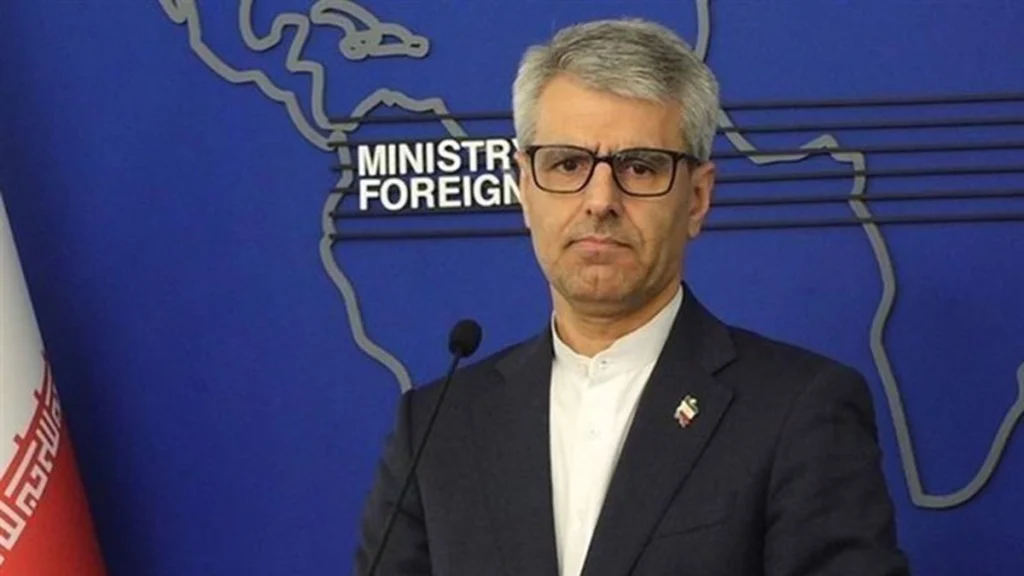
They have agreed on the geographic coordinates for safe two-way routes, Iranian diplomat Baghaei said.
On Wednesday night, Iranian Foreign Ministry spokesman Esmaeil Baghaei said Iran and Oman will soon present their agreement to the relevant international body on designating safe routes in the Strait of Hormuz.
RELATED:
U.S. Military Ordered to Prepare for Possible Iran Strikes Ahead of Midterm Elections
He made the remarks in an interview with news agency IRNA, while elaborating on diplomatic efforts related to peace and security in West Asia, including commercial shipping in the Strait of Hormuz.
“The consultation process between Iran and Oman has proceeded successfully. The two sides have agreed on the geographical coordinates of the safe two-way routes in the Strait of Hormuz and reached an understanding on how the matter will be presented to the relevant international body, a step that will be taken soon,” Baghaei said.
The Persian diplomat said Iran attaches great importance to shipping security in the Strait of Hormuz, disrupted following “malicious actions” by the United States, and has spared no effort to restore security to the waterway through consultations with the other coastal state, Oman.
🚨 Breaking: This is how Iran struck one of the commercial ships that did not take their directives into consideration! It was targeted by an uncrewed boat near Oman! 🚀💥🔥🇮🇷🇴🇲
pic.twitter.com/3aheRKY4JZ— Iran Mil Updates (@tvir_X) October 7, 2026
Last month, Tasnim news agency cited a source close to Iran’s negotiating team as saying that Tehran and Muscat had agreed on the details of new entry and exit routes for the Strait of Hormuz after “intensive technical and diplomatic talks.”
Under the bilateral understanding, the Gulf’s entry route “lies entirely within Iran’s territorial waters,” and a portion of the exit route also falls “within Iranian territorial waters.” Iran has previously said reopening the waterway depends on wider conditions, the Gulf News recalled.
“On August 25, Oman said the two countries had agreed on a ‘framework’ for a joint temporary navigational corridor, with technical talks to establish a permanent corridor, traffic management and information-sharing arrangements,” it stated.
“On August 26, Iran’s deputy foreign minister Kazem Gharibabadi said the temporary route would be seven miles wide, with the entry and part of the exit passing through Iranian territorial waters. He stressed, however, that this did not constitute a full reopening of Hormuz.”
teleSUR/ JF
Sources: Xinhua – The Gulf News
From teleSUR English via This RSS Feed.