

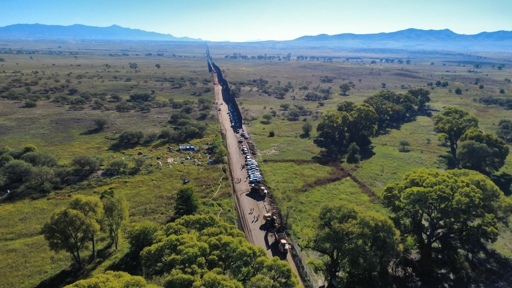
A group of activists in the small border town of Lochiel, Arizona, U.S., is fighting to save 200-year-old cottonwood trees by stopping contractors from building a section of the U.S.’s new wall along its border with Mexico. One activist lived for over 70 days in the upper branches of an ancient cottonwood dubbed the “Grandmother Tree,” preventing construction workers from cutting it down while other activists used pulleys to bring them food and water. The protest was about more than protecting ancient trees: Activists were also fighting habitat fragmentation caused by the border wall in a landscape where biodiversity depends on ecological connectivity. The tree encampment began on July 28, after construction workers cut down three of the four cottonwood trees that were in the path of the wall. This double wall consists of two 30-foot-high (just over 9 meters) steel walls that run parallel to one another with a buffer zone between. Since then, helicopters, drones, U.S. Border Patrol agents, and local law enforcement have been surveilling the area, according to the activists at the encampment. I interviewed activists camped in the meadow adjacent to the tree, photographed the landscape, and participated in the daily morning rituals aimed at honoring Grandmother Tree and the land. There I learned that the movement has connected social and environmental issues since its inception. Many of the activists I met at the Lochiel protest are involved in No More Deaths, a humanitarian group that provides water and aid to migrants crossing the border,…This article was originally published on Mongabay
From Conservation news via This RSS Feed.