

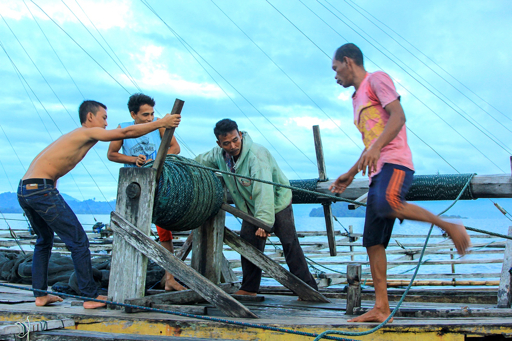
SEOUL — At 2 a.m. one night, two Indonesian fishers were gripping a flimsy, makeshift rope, hanging on for dear life. The precarious rope dangled from the eighth-floor window of a motel room overlooking a dark alley in the South Korean port city of Busan, swinging left and right with the wind. The men had been locked up in that room for nearly 24 hours, and they were trying to make their escape. But the crude rope, made out of tied bed sheets, unraveled, sending the men plunging. One fell to his death, hitting the pavement headfirst. The other survived with a broken leg, according to Lee Han-sook, director of the Migration and Human Rights Institute, a Busan-based civic group. She was briefed on the July 21 incident by the survivor, whom she declined to name. According to activists, the incident served as one of the last straws that prompted the government to boost efforts to crack down on human trafficking, especially abuses against migrant workers in the country’s $7.5 billion fishing industry. On Sept. 2, the Ministry of Gender Equality and Family and the Ministry of Oceans and Fisheries announced they had amended national guidelines on human trafficking to make it easier for law enforcement officials to spot and stop forced labor and other abuses in the fishing industry. The new guidelines outline specific situations in which the likelihood of human rights abuse is high, such as seeing workers who have physical injuries being left untreated, workers who have…This article was originally published on Mongabay
From Conservation news via This RSS Feed.