

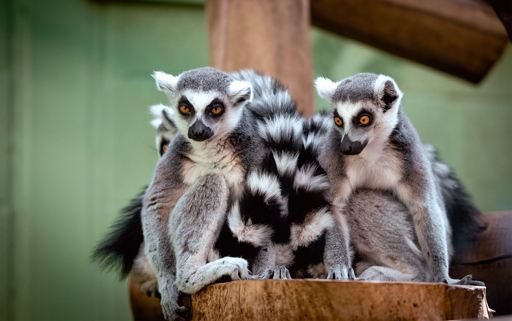
The case of three ring-tailed lemurs, an endangered species, stolen from Gazipur Safari Park in Bangladesh last year resurfaced on social media in September this year, when news spread that two of the lemurs were trafficked to India and later sheltered at a private wildlife conservation facility, Vantara. The viral news prompted Vantara to release a statement, denying the allegations while assuring cooperation in sharing the DNA profile of the ring-tailed lemurs (Lemur catta) currently in its custody with Bangladesh authorities. However, the Bangladesh Forest Department was unprepared to respond to the call immediately, as it had no prior DNA profiling record of the lemurs stolen from Gazipur. Sufi Ullah, special superintendent of police under the Criminal Investigation Department of Bangladesh Police, the investigation agency, told Mongabay on Sept. 13, “Even though Bangladesh court orders further probe following the availability of the DNA profile, cross-border investigation is impossible.” Forest Department officials said that tracing the last destination is challenging and bringing the lemurs back is uncertain, as there is no repatriation protocol under the existing mutual understanding between Bangladesh and India. Mohammed Mizanur Rahman, director at Bangladesh Forest Department’s Wildlife Crime Control Unit (WCCU), said, “Further investigation and repatriation [of the lemurs] may follow only if the governments of the two countries agree to do so.” Meanwhile, South Asia Wildlife Enforcement Network Secretary General Krishna Prasad Acharya, in an email to Mongabay, said that the exchange of information can assist the concerned countries in verifying available information, coordinating follow-up, and…This article was originally published on Mongabay
From Conservation news via This RSS Feed.