

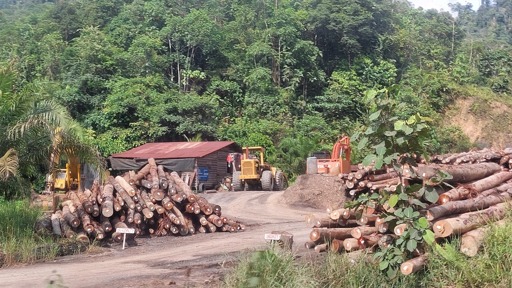
Part of a forest in Malaysian Borneo that Indigenous communities had envisioned co-managing and self-governing has been turned into an active commercial logging concession, according to a recent civil society report. The 283,500-hectare (700,500-acre) Upper Baram Forest Area, in the northeastern part of the state of Sarawak, was proposed as a community-led conservation area more than 15 years ago. In 2021, the Sarawak Forest Department secured $1.4 million from the International Tropical Timber Organization (ITTO), which promotes the sustainable use of forests, to develop a conservation initiative with 32 Indigenous villages, called the Baram Peace Park. However, the state government subsequently granted a 170,000-hectare (420,000-acre) timber concession in 2024 to a company called Borneoland Timber Resources Sdn. Bhd., overlapping key cultural and ecological zones, reports contributor Danielle Keeton-Olsen for Mongabay. According to a report from Swiss-based nonprofit Bruno Manser Fonds, a key funder of the Baram Peace Park project, between March and May 2025, community observers tracked more than 160 logging trucks exiting the concession monthly. These trucks hauled an estimated 10.5 million ringgit ($2.6 million) in timber per month. Logging paths have penetrated core primary forest around Gunung Murud Kecil, a peak central to the Indigenous Penan heritage, threatening protected species including helmeted hornbills (Rhinoplax vigil), sun bears (Helarctos malayanus), and Sunda clouded leopards (Neofelis diardi). Affected villagers allege loggers have violated native customary rights by bulldozing land and destroying ancestral fruit trees. Komeok Joe, CEO and founder of the Penan rights organization Keruan, said local communities are actively…This article was originally published on Mongabay
From Conservation news via This RSS Feed.