

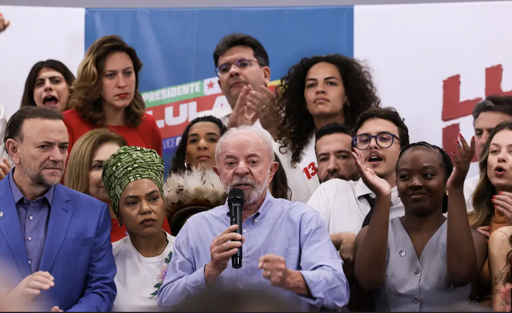
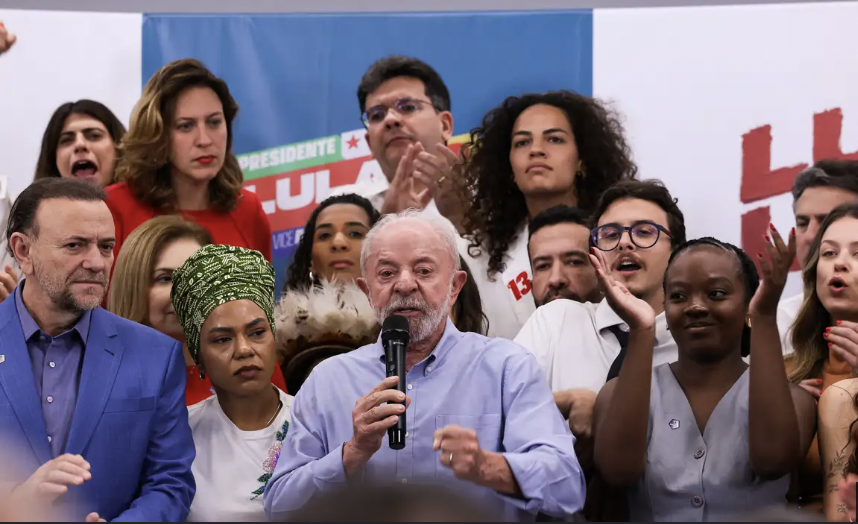
This week, I have been MIA for a couple of days as I struggle with strep throat, and I wanted to update folks on what’s happening down in Brasil.
Lula Pushes Vote on Shortening Workweek
In the first round of the Brazilian presidential election, Lula trailed Flavio Bolsonaro by 1.8%, the slimmest margin of any presidential candidate. Now, Lula has three weeks to change people’s minds about Bolsonaro. Lula has already promised to go more aggressively after Bolsonaro.
This week, Brazilian Senate President Davi Alcolumbre announced that he would schedule a vote next week on shortening the Brazilian workweek from 6 days to 5 days. The measure would reduce the number of hours that workers are required to work without cutting their pay. The measure already passed the House back in May.
Bolsonaro’s party has tried to delay the vote until after the election, but Alcolumbre said that he would go ahead with the vote anyway next week before the election.
Flavio Bolsonaro already blasted the measure, saying as a Senator that he would vote against it. He thinks that workers should be allowed to work as many hours as they want.
“In the middle of the runoff, he opportunistically tries to make a move, thinking it will win him votes,” said Bolsonaro. “I am certain that the Brazilian worker wants much more than that.”
Lula shot back at Bolsonaro, previewing how the fight over shortening the work week could become a central theme of his campaign.
"Now is the moment of truth: let’s see who is really in favor of the workers of Brazil!" said Lula on Instagram today.
Labor leaders applauded Lula’s decision to push the measure so strongly ahead of the election in three weeks.
“Trade Union Centers are mobilized in Brazil, following closely the start of Senate discussions on reducing work to 40 hours per week, with two days off and no pay reduction,” says Miguel Torres, president of 2.1 million-member Força Sindical. “To the Senators, workers are watching.” Let’s vote and approve the end of the 6-1 workweek!”
Lula Shakes Up Campaign & Boosts First Selfies
This week, Lula shook up his campaign, bringing in many younger activists into leadership positions, and has gotten more aggressive in calling out Bolsonaro, claiming that if Bolsonaro wins, it would mean “milicia,” i.e. right-wing paramilitary gangs, would rule the country.
He admitted in interviews that his first round campaign was poorly run and promised to run a very different campaign in the remaining three weeks.
“This was the least organized campaign I’ve participated in since 1989, and you reap what you sow," Lula told reporters. One thing he promised to change was his social media strategy.
For more than a decade, Lula has not owned a cellphone, communicating directly through aides. He is notorious for refusing to allow people to enter meetings with him with cellphones and requires them to be left outside his office.
Many say the 80-year-old’s refusal to regularly use social media, instead relying on staff to post, hurts his ability to communicate with voters. An analysis of federal deputy elections found that the candidates who received the most votes, regardless of party, were those with the largest social media following.
Now, Lula has taken up the iPhone and is posting half a dozen selfie videos a day to communicate directly with voters throughout Brasil. At a time when many activists are feeling depressed about the setback in Sunday’s first round election, Lula’s videos are helping people stay more positive.
“High energy to win this election!” Lula told millions of followers today. “Let’s go, everyone! Brasil moving forward, no turning back!”
Check out Lula’s Instagram here.
Bolsonaro Allies Move Polling Locations in High Lula Turnout Areas in Rio
A record 21% of all Brazilians did not vote in the first round of Brasil’s presidential election. One reason is that lines were horrifically long in many working-class neighborhoods long known as Lula strongholds.
In Rio de Janeiro, in the favela of Maré, where 53% of residents voted for Lula, a record 27% did not vote. Residents cited lines that took up to four hours. Federal Congresswoman Anielle Franco blamed the Rio de Janeiro Election Tribunal, controlled by Bolsonaro allies, for changing polling locations at the last second.
“The Rio de Janeiro Election Tribunal changed voting locations at the last second and located many of them outside of the favela,” said Franco. “Residents faced up to four-hour-long wait lines as a result of the logistical confusion. This invisible barrier prevented many workers from voting.”
Help Us Keep Fighting & Covering The Brazilian Election
Alright folks, I am exhausted but wanted to give everyone a quick update. Please pass the hat and support our reporting here in Brasil.
Support our mission
Donate Yearly
| | | | $36.00 USD - Yearly $60.00 USD - Yearly $180.00 USD - Yearly $420.00 USD - Yearly $1,200.00 USD - Yearly |
Donate Monthly
| | | | $3.00 USD - Monthly $5.00 USD - Monthly $15.00 USD - Monthly $35.00 USD - Monthly $100.00 USD - Monthly |
One-Time Donation

Patreon

Venmo

From Payday Report via This RSS Feed.