

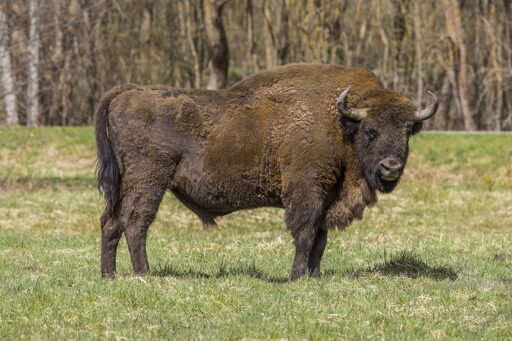
BIAŁOWIEŻA, Poland — Michal Żmihorski, deputy director of the Institute of Environmental Protection, will never forget the morning of Aug. 1, 2023. Two Belarusian helicopters entered Polish airspace, hovering above the village of Białowieża in eastern Poland, three kilometers (1.9 miles) from the Polish-Belarusian border. The panic was palpable. “We didn’t know if the invasion had begun, if they were going to start dropping bombs,” he says during a conversation at the Białowieża-based Mammal Research Institute. The incident galvanized Żmihorski’s conviction that the borderlands should be impenetrable to enemy forces. “So that bandits on motorbikes can’t get through and start murdering people, because this is a real threat in this area,” says the longtime researcher of the UNESCO-protected Białowieża Forest straddling the Polish-Belarusian frontier. Poland shares a 420-km (261-mi) border with Belarus, 55 km (34 mi) of which runs through the Białowieża Forest, Europe’s last ancient woodland. This sprawling forest, covering an area equivalent to 200,000 football pitches, is among the continent’s top biodiversity hotspots. Consisting of impressive evergreens and broad-leaved trees, the Polish side alone is home to 900 European bison (Bison bonasus) — a species reintroduced to the forest — as well as lynx, wolves and up to 4,000 fungi species. While the specter of a military escalation by Belarus, a country that supports Russia, feels very real to some in this part of Eastern Europe, Poles throughout the country have been impacted by the war ever since Russia invaded Ukraine in 2022. To strengthen national security and…This article was originally published on Mongabay
From Conservation news via This RSS Feed.