

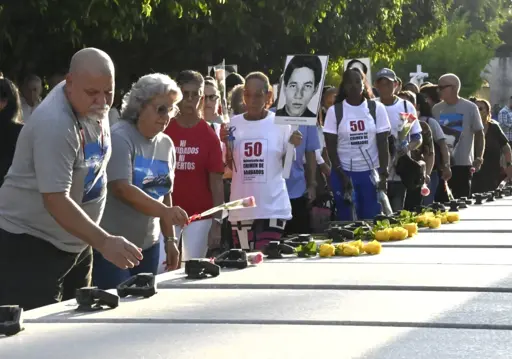
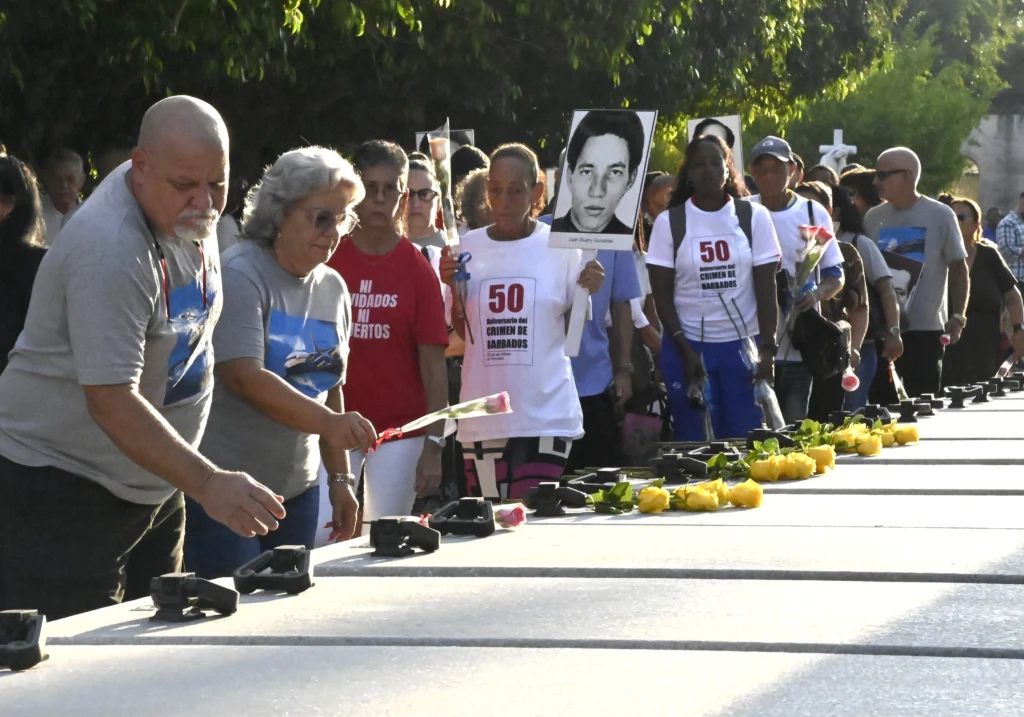
Rather than isolating Havana, the 1976 attack consolidated diplomatic cooperation and security alliances between Cuba and CARICOM nations.
On October 6, 1976, Cubana de Aviación Flight CU-455 was destroyed in a mid-air bombing shortly after departing Seawell Airport, now known as Grantley Adams International Airport, in Barbados.
RELATED:
CARICOM Voices Concern Over Tougher U.S. Measures on Cuba
The aircraft carried 73 people, including 57 Cuban citizens, 11 Guyanese citizens, and 5 citizens of the Democratic People’s Republic of Korea. There were no survivors. The attack remains one of the deadliest acts of anti-civilian aviation terrorism recorded in the Caribbean during the twentieth century.
The bombing occurred within the context of the Cold War in Latin America and the Caribbean. During the 1970s, anti-communist organizations operated across the region, frequently targeting Cuban diplomatic missions, commercial assets, and international personnel.
This in-depth article explores the context in which this attack took place, the parties involved, what was concealed to shield those responsible, and how an event intended to isolate Cuba actually brought it closer to its neighbors.
Motives and the Destruction of Flight CU-455
In June 1976, several militant exile groups gathered in Bonao, Dominican Republic, to form the Coordination of United Revolutionary Organizations, known by its Spanish acronym CORU.
The CORU was created to consolidate paramilitary operations against the Cuban government and its international partners. Declassified records from the United States State Department and the FBI show that intelligence agencies possessed prior information regarding plans by exile networks to attack Cuban commercial flights.
Documents made public in subsequent decades indicated that anti-Castro Luis Posada Carriles and his associate Orlando Bosch were central figures in planning these armed operations.
The explicit motive behind targeting Flight CU-455 was to disrupt Cuba’s foreign policy and intimidate regional governments that maintained formal diplomatic relations with Havana.
In December 1972, four independent Caribbean nations, Barbados, Guyana, Jamaica, and Trinidad and Tobago, simultaneously established diplomatic ties with Cuba, breaking a diplomatic blockade enforced across the Americas.
The attack was intended to inflict maximum political and human damage on Cuba and its Caribbean allies. Flight CU-455 operated on a scheduled route from Guyana through Trinidad, Barbados, and Jamaica to Havana.
On October 6, 1976, two C-4 explosive devices were hidden inside the passenger cabin of Flight CU-455. One device was concealed in a tube of toothpaste, and the other in a camera case. The explosives were placed by two Venezuelan operatives, Hernán Ricardo Lozano and Freddy Lugo, who had boarded the flight in Trinidad and disembarked during its stopover in Barbados.
Nine minutes after taking off from Barbados at an altitude of 18,000 feet, the first charge detonated in the rear lavatory, causing a severe fire and loss of control systems. Captain Wilfredo Pérez Pérez and co-pilot Miguel Espinosa Cabrera attempted to return the damaged aircraft to the airport.
Minutes later, the second charge detonated near the main cabin. Realizing the plane could not reach the runway, Captain Pérez steered the aircraft away from populated coastal beaches near Paynes Bay, St. James. The plane plunged into the Atlantic Ocean, killing everyone on board.
Among the 57 Cuban victims were 24 members of the national junior fencing team, along with their coaches and support staff. The young athletes were returning to Havana after winning gold medals at the 4th Central American and Caribbean Fencing Championships held in Caracas, Venezuela.
The flight also carried 11 Guyanese nationals, including seven young scholarship recipients traveling to Cuba to study medicine and engineering, as well as five Korean officials and diplomatic staff.
During the mass funeral service held at the Colón Cemetery in Havana on October 15, 1976, Cuban Prime Minister Fidel Castro delivered a eulogy addressing an audience of over one million people. In his speech, Castro condemned the covert operations supported by foreign intelligence services and highlighted the loss of young lives, stating: “When an energetic and virile people weep, injustice trembles.”
🖤 50 years have passed since the bombing of Cubana flight 455.
"We cannot say that the pain is shared. The pain multiplies. Millions of Cubans mourn today together with the loved ones of the victims of the abominable crime. And when an energetic and virile people cries,… pic.twitter.com/kH8oiAhmIK
— David Ramírez Álvarez 🇨🇺 (@DvidTwit) October 6, 2026
Legal Proceedings, Impunity, and Regional Commemoration
After the Flight CU-455 crash, investigators tracked the movements of Hernán Ricardo Lozano and Freddy Lugo, who had returned to Trinidad after disembarking in Barbados. Local law enforcement authorities arrested both men at a hotel in Port of Spain.
Under interrogation, Ricardo confessed to planting the bombs and identified Luis Posada Carriles and Orlando Bosch, who were operating out of Caracas, Venezuela, as the intellectual authors who funded and organized the logistics of the operation.
Venezuelan authorities subsequently arrested Posada Carriles and Bosch. The legal process in Venezuela faced years of delays, jurisdictional disputes between military and civilian courts, and political intervention. In 1980, a Venezuelan military court acquitted all four defendants on procedural grounds, prompting international condemnation and official protests from Cuba and Guyana.
In August 1985, while awaiting a final ruling in a civilian appeal court, Luis Posada Carriles escaped from the San Juan de los Morros maximum-security prison in Venezuela. Later reports confirmed that Posada escaped for external exile groups.
Posada Carriles subsequently relocated to Central America, where he assisted in covert supply operations directed by U.S. operatives during the Nicaraguan Contra war.
Orlando Bosch remained in Venezuelan custody until 1987, when he was acquitted despite evidence presented by prosecution attorneys. Bosch returned to the United States in 1988, where he was initially detained for immigration violations. In 1990, U.S. President George H.W. Bush granted Bosch an administrative pardon, allowing him to reside freely in Miami, Florida, until his death in April 2011.
In 2005, Posada Carriles entered the United States without valid documentation. The Venezuelan government filed a formal request for his extradition under existing bilateral treaties to stand trial for the 73 counts of murder connected to Flight CU-455.
Posada Carriles was tried in a U.S. federal court solely on immigration fraud and perjury charges, of which he was acquitted in 2011. Posada Carriles lived in Florida until his death in May 2018. Neither mastermind faced a conviction or completed a prison sentence for the destruction of Flight CU-455.
🕯️ 50 years of memory, justice, and dignity.
Half a century ago, 73 innocent lives were stolen off the coast of Barbados in the terrorist bombing of Cubana Flight 455.
“When an energetic and virile people cry, injustice trembles.” — Fidel Castro
We will never forget. 🇨🇺🕊️ pic.twitter.com/mUW9mPqTen— EmbaCuba-Argelia (@EmbaCuba_Argel) October 6, 2026
Regional Legacy, CARICOM Diplomacy, and the 50th Anniversary
The destruction of Flight CU-455 fundamentally altered diplomatic and security relations within the Caribbean. Rather than severing ties with Havana as the organizers of the attack intended, the incident consolidated political cooperation between the newly independent nations of the Caribbean Community (CARICOM) and the Republic of Cuba.
Barbados, Trinidad and Tobago, Guyana, and Cuba coordinated forensic and police investigations across national borders, establishing a framework for regional intelligence sharing.
In the decades following the attack, CARICOM member states consistently maintained a unified stance against political violence and unilateral sanctions in the Western Hemisphere.
To preserve the memory of the 73 victims and reaffirm regional solidarity, CARICOM and Cuba instituted formal mechanisms of commemoration. In 1998, during an official state visit to Barbados, Fidel Castro joined Barbadian Prime Minister Owen Arthur in unveiling a permanent memorial at Paynes Bay, St. James, the coastline nearest to where Flight CU-455 crashed into the ocean.
Further cementing this alliance, the participating heads of state and government adopted the Bridgetown Declaration at the 8th CARICOM-Cuba Summit held in Bridgetown, Barbados, in December 2022.
Article 26 officially designated October 6 as “CARICOM-Cuba Day Against Terrorism,” committing member states to annual observances and joint educational initiatives regarding the attack.
On October 6, 2026, half a century after the event, there were memorial ceremonies in Barbados and Cuba. In St. James, Barbados, representatives from CARICOM, government officials, and foreign diplomats attended a wreath-laying ceremony at the Paynes Bay Monument.
Simultaneously, in Havana, a national remembrance event took place at the Colón Cemetery, attended by surviving family members of the fencing team and flight crew.
During the 2026 commemorations, regional leaders issued statements highlighting the historical impact of the event. Speakers emphasized that 50 years after the crash, the failure to secure a conviction for the intellectual authors remains a notable gap in international counter-terrorism enforcement.
Fifty years ago today, on 6 October 1976, a terrorist bombing destroyed Cubana de Aviación Flight 455 after departing Barbados, killing all 73 people on board: 57 Cubans, 11 Guyanese and 5 citizens of the DPRK. Fifty years later, their memory endures. We remember. #TenemosMemoria pic.twitter.com/RXBfC7BwAm
— Cuba in the UK (@EmbaCuba_UK) October 6, 2026
The Unfinished Demand for Justice
Fifty years after the destruction of Flight CU-455, the Barbados bombing remains an important event in the history of Latin America and the Caribbean.
The loss of 73 lives on October 6, 1976, altered the lives of dozens of families across Cuba, Guyana, and the Democratic People’s Republic of Korea, while leaving a permanent mark on regional diplomatic relations.
The failure of international judicial mechanisms to hold the primary intellectual authors accountable created a lasting precedent regarding the selective application of anti-terrorism laws.
While the physical operatives served prison sentences in Venezuela, the primary architects operated for decades in various jurisdictions without facing final legal verdicts for the deaths of the passengers and crew.
Despite the intentions of its planners, the tragedy did not isolate Cuba or fragment its relationships with neighboring Caribbean states. Instead, the event fostered a durable diplomatic coalition between Cuba and the member nations of the Caribbean Community, characterized by mutual security cooperation, educational exchanges, and shared stances at international forums.
The annual observance of CARICOM-Cuba Day Against Terrorism and the ongoing commemorations at Paynes Bay and Havana serve to keep the memory of the victims alive.
Sources: Granma – Juventud Rebelde – Cuba Debate – Cubavisión – CiberCuba – EcuRed – La Radio del Sur – TeleSUR – RT – Resumen Latinoamericano – Página 12 – Xinhua
From teleSUR English via This RSS Feed.