

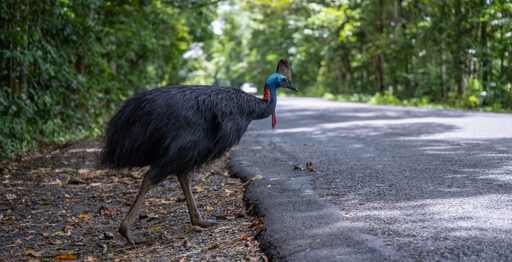
Relics of ancient wet forests stretch across the coast of Queensland state in Australia. In a landscape made patchwork by agriculture, volunteers, community groups and Indigenous rangers in Australia’s Wet Tropics now grow more than 300,000 native plants to turn cleared pasture back into rainforest. But once the young trees shade out the weeds, some groups aren’t keeping track of the trees, a new study finds. That gap means the goals these groups care about most, such as bringing back wildlife and reconnecting fragmented forest, are poorly captured by what most groups measure. Researchers from Australia’s James Cook University and the University of Queensland surveyed 25 organizations doing rainforest restoration in northeastern Australia. The respondents included community groups, conservation land trusts, Indigenous ranger groups, nature market investors, and commercial land managers. The results were published in the journal Restoration Ecology. Australia’s Wet Tropics, a UNESCO World Heritage Site, stretches about 450 kilometers (280 miles) along Queensland’s northeast coast, and contain relics of the ancient forests that once covered the supercontinent of Gondwana, according to UNESCO. Mossman Gorge in Daintree National Park in Far North Queensland, Australia. Photo by Merryjack via Flickr (CC BY 4.0) Around 40% of Australia’s bird species live in the Wet Tropics. Of the roughly 2,800 plant species found here, about 700 grow nowhere else in the world, according to the Wet Tropics Management Authority. Rare animals living there include the southern cassowary (Casuarius casuarius), the northern bettong (Bettongia tropica), and the spotted-tailed quoll (Dasyurus maculatus). During…This article was originally published on Mongabay
From Conservation news via This RSS Feed.