


“Do you know what you wanted 18 years ago? Or 10? Or five? Did you want to be Head of Year at North London Comprehensive? I doubt it.”
Colin Firth’s character Paul says this to his partner Sarah in Nick Hornby’s Fever Pitch, as he tries to justify his unhealthy obsession with football.
For the uninitiated it goes some way to highlighting how football, which really should be a trivial thing, can dominate a life and even define a personality.
Of course, it’s only a game but there are precious few things that stay with you throughout a lifetime – support for a football team is one of the very few.
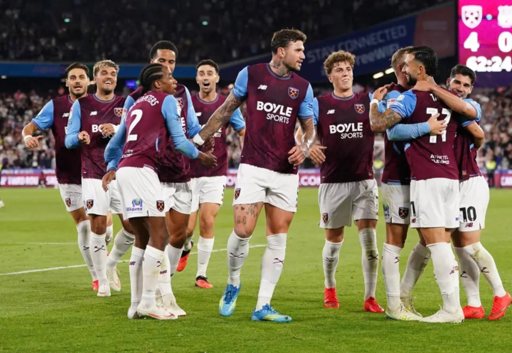
I support West Ham, which isn’t a very successful team. My childhood trips with my dad to Upton Park consisted of seeing my team scrape narrow wins, lose to unfancied sides and on one particularly painful occasion, throw away a 3-0 half-time lead against West Bromwich Albion.
However, despite the lack of on-field success, and the scarcity of people wearing claret and blue shirts where I grew up in the southwest of England, I was proud to be a West Ham fan.
The club was from a fun and vibrant part of the country: East London. As you walked to the stadium, you’d be met with cockney accents spilling out of pubs, the two castle towers of the Boleyn Ground and the sound of thousands singing.
The Hammers’ side at the turn of the millennium was one which was easy to love — filled with character, attacking flair and the type of players a young child could spend hours trying to emulate on the playground.
West Ham has had many icons
Teenage prodigy, Joe Cole, had skill few players in the game could match, whilst defender Rio Ferdinand, with his distinctive calmness, would go on to revolutionise the centre back position in this country.
My favourite player though, like most West Ham fans born in the early 90s, was Paolo Di Canio, a maverick in every sense of the word. A man who never hid his emotions, could take your breath away with how he manipulated the ball and scored goals from impossible angles.
Di Canio had pushed over a referee whilst playing for Sheffield Wednesday, but after he got a West Ham tattoo emblazoned on his arm, fans could forgive him almost anything and I was no different to any football fan in the country. I loved my club and its players.
Unlike some people, I’ve never been wholly convinced by the argument that footballers need to be role models. The players that fans idolise are often from backgrounds which are ill-equipped for the fame and scrutiny of the modern game.
However, at the same time, when your surname could be on the back of a child’s shirt, it feels like you shouldn’t take that for granted.
It must have been in my early teens when I learnt DiCanio also had another tattoo, this one was dedicated to Benito Mussolini. Then it hit me: my childhood hero was a fascist.
New venue, stale energy
Fast forward to 2016, West Ham’s last season at Upton Park, and again we had a good side. One club man, Mark Noble, was pulling the strings in midfield and West Ham’s most technically gifted player since Di Canio — Dimitri Payet — doing things on a football pitch which shouldn’t have been possible.
The following season was a tough one though as the club moved across London to Stratford. For a few years the new stadium seemed to stunt West Ham’s progress on the pitch, but much more concerning was the effect the move had off of it.
Gone were the pubs and the castle towers and atmosphere of East London. Instead, one of the country’s most historic football clubs was now playing its home matches in an athletics stadium next to a shopping centre.
The club who had won England the World Cup final in 1966 — by developing captain Bobby Moore and goal scorers Geoff Hurst and Martin Peters — would no longer play football in an area steeped in history, soul or even a connection to its supporters.
How could something which fans had invested so much time into, and had been a punctuation point throughout our lives, be so quickly ripped apart?
The answer can be seen by looking at the people who run my club.
The fish rots from the head down
Like every other football team in England, my club is owned by businesspeople who see fans’ blind loyalty as a commodity ready to be exploited.
Our largest shareholder is David Suilivan, a man who made his millions through pornography and is being investigated for sexually exploitative and predatory behaviour. Perhaps, knowing this, I should have tried to disengage earlier.
Or maybe seeing the various betting companies who have used my club’s shirt as an advertising platform seen by millions of children around the world, should have been enough for me to see the utter shallowness of modern football.
Maybe these are all hypocrisies I just didn’t want to properly think about. Life is tough and football is one of its few escapes.
However, I can say any childish delusions I still held about my football club were shattered at the start of this season. On 10 August, West Ham signed Israeli footballer, Manor Solomon, from Tottenham.
West Ham signs offensive Israeli footballer
Solomon completed military service for the IOF in December 2017 and has gone on to share multiple social media posts in support of Israel. The player has declared ‘Israel has the right to defend itself’ on his Instagram profile, denied Israel’s culpability in the Gaza genocide and republished statements by the country’s President Isaac Herzog.
Solomon has also described former West Ham player-turned-TV-presenter Eyal Berkovic as a friend. Berkovic has a large profile in Israel and in recent years has appeared on Israeli TV calling for Gaza to be wiped out, saying there were no innocent people there.
After Solomon scored during his debut against Burnley last Sunday, a video circulated of some fans singing, “Manor Solomon you’ve been on my mind, and he hates Palestine”. Israel’s genocidal campaign in Gaza has claimed the lives of more than 74,000 people.
Of course, a small section of people in a crowd don’t represent an entire club. However, when the money you pay for a ticket goes to enriching people with questionable morals; when your club is no longer in an area you have any connection to and; when you discover a player uses their platform to be abhorrent — what are you really left with?
Football is just a game but this becomes complicated when so many of your experiences are intertwined with it.
I’m a fifth generation West Ham fan. My great great grandparents would have seen the club form in 1895 as the Thames Ironworks Club. Whether it’s the joy of winning the Europa Conference League in Prague or the pain of Steven Gerrard’s last minute equaliser in the FA Cup final, these moments are amongst the most vivid in my memory.
But realistically, what does that club founded by iron workers have to do with the West Ham of today? And perhaps, just as importantly, what does modern football have to do with fans?
The answer, I fear, is very little.
Featured image via News Images
By Michal Grant
From Canary via This RSS Feed.